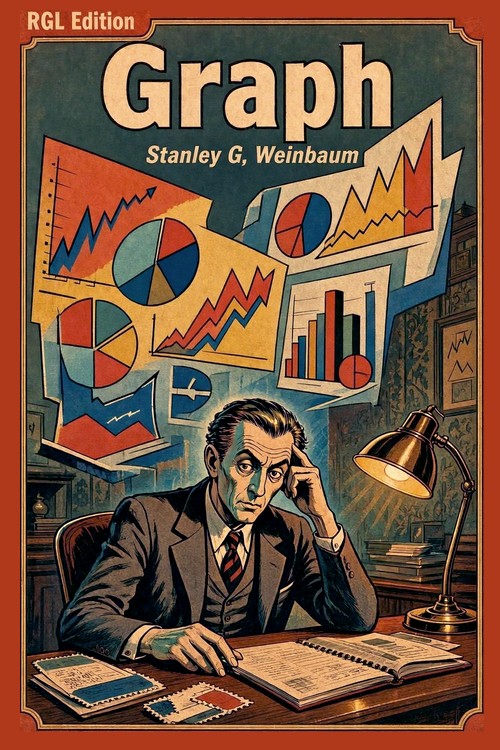
RGL e-Book Cover
Based on an image created with Microsoft Bing software
Roy Glashan's Library
Non sibi sed omnibus
Go to Home Page
This work is out of copyright in countries with a copyright
period of 70 years or less, after the year of the author's death.
If it is under copyright in your country of residence,
do not download or redistribute this file.
Original content added by RGL (e.g., introductions, notes,
RGL covers) is proprietary and protected by copyright.
RGL e-Book Cover
Based on an image created with Microsoft Bing software

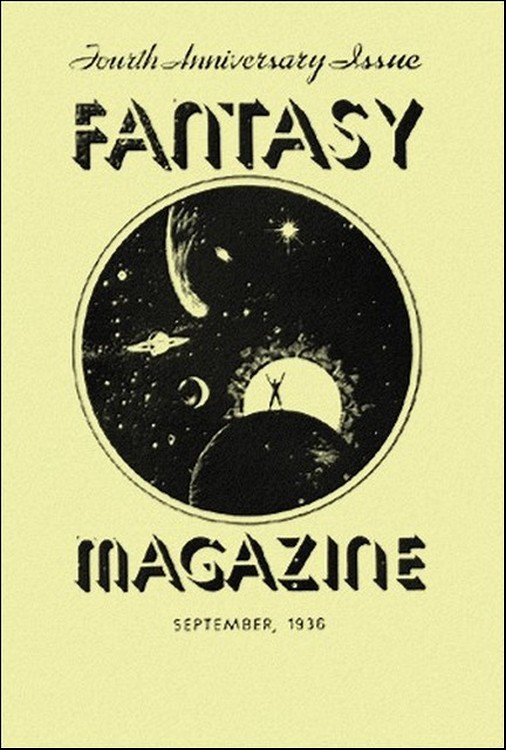
Fantasy Magazine, September 1936.
In "Graph," Stanley G. Weinbaum turns an apparently ordinary medical complaint into a thought-provoking tale about ambition, responsibility, and the hidden forces that shape a life. Wealthy mail-order magnate Isaac Levinson refuses to believe that his recurring illness has anything to do with the business empire he has spent twenty-five years building, even as his doctor insists that charts, statistics, and endless work may lie at the heart of the problem. As Levinson struggles to reconcile duty, success, and personal well-being, Weinbaum crafts a subtle speculative story that asks whether a human life can truly be reduced to numbers and trends, and what happens when the graph of a man's existence begins to reveal unsettling truths.
"YOU'RE on the mend again," said Dr. Felix Kurtius, tossing his black case carelessly on the desk. "Let's see how permanent it is this time!"
Isaac Levinson—mail-order Levinson—rolled down his sleeve and stared sardonically at the doctor.
"Thanks," he growled. "I've heard that before."
"You're feeling better, aren't you?"
The merchandise king nodded reluctantly, staring about his elaborate office. "Sure," he said. "But for how long? And anyway, why don't you do something? Is this the new medical practice—to let a patient get well by himself? For that I don't need a doctor!"
"I gave you my suggestions," retorted Kurtius. "Three and a half years ago—when you first called me—I told you what to do. Don't blame me because you refuse to follow my advice."
"Vacations!" sneered Levinson. "Rest—change—travel—retire! Could I leave my business with conditions like they were?"
"You certainly could! What's a little more money to you—or a little less?"
"Money—bah! It's my business that needs me."
"Same thing."
"No," said Levinson abruptly. "Not the same thing! My stockholders, my employees, I have obligations to them. The business must be run right, or the one loses money and the other jobs. Could I let some schlemiehl make a botch of things while I was telling how the biggest tarpon got away from me. Oser!"
"Just excuses," observed Kurtius. "What you mean is that you didn't want to leave."
"Couldn't is what I said."
"Wouldn't is what you mean!"
The doctor gestured at the fittings of his patient's office. "You don't mean to tell me you're so busy that you haven't time to walk two blocks to my office, do you?—Instead of having me call here to examine you?"
Levinson silently indicated the welter of papers on his desk. "And that's what you've wedded to!" scoffed Kurtius. "Charts, summaries, statistics. Any clerk could tabulate them for you."
"Charts and statistics," growled Levinson, "are the life-blood of my business."
"And your business is the life-blood of you!"
"Yet you want I should get away from it."
"That's my advice. No man can live year after year on his own blood. You can't; that's the whole trouble with you. That's why medicine or operations are perfectly useless in your case."
"Bah!" Levinson was frowning again. "I have a notion that you doctors recommend the rest cure when you don't know what's wrong. I don't want to rest; I want something that will put me in shape to keep on working. I don't believe it's my business that's doing this to me; for twenty-five years I've lived, eaten, slept, and dreamt this business, and never, until that first time I called you, have I felt an hour's sickness. And now these damned spells—better, worse, better worse—How could it be my business?"
"Well," observed Kurtius, "there's no way of proving it to you. I've told you my diagnosis; that's all I can do. You'll find out sooner or later that I am right."
"I don't believe it." said Levinson stubbornly.
"Well, as I said, there's no way of proving it to you."
"You doctors," continued Levinson, "spend your efforts treating symptoms instead of causes. Because I am tired, I must go somewhere and rest; because I can't sleep, I must get out somewhere and exercise; because I have no appetite, I must go away from my business! Why don't you find why I am tired, and can't sleep or eat? I should run my business like that and in a year I'd be broke—machullah!"
"Didn't you ever hear of functional disorders?" queried Kurtius mildly.
"Am I the doctor or you?"
"Functional disorders are those where there's nothing the matter with the patient—that is organically. Nothing wrong except in the mind or nervous system."
"Hah! Imaginary sickness I've got."
"It's not imaginary. Functional troubles are just as real as organic ones, and sometimes a damn sight harder to treat—Especially,” he added, "if the patient won't cooperate."
"And you think my business is doing that?"
"Just as I told you."
"Bah! For more than twenty years I have had no trouble. And why do I get better and then worse again? You should make a study of your cases."
"Do you think I don't?" snapped Kurtius. "I can give you this case history by heart. Why, look here! Here's something you ought to be able to understand!"
He reached toward his black bag, noting that the catch had opened, spilling a stethoscope and a paper or two on the littered desk. He seized a paper and spread it out before his patient. "What's that?" grunted Levinson.
"Graph of your metabolism," replied the doctor. "Make a study of my cases, eh! Here's your chart month by month for three and a half years."
Levinson scanned the irregular black lines. Suddenly he narrowed his eyes, leaned closer. A moment more and he burst into a snickering laugh.
"What's the matter?" queried Kurtius impatiently.
"The chart!" chuckled Levinson. "Hee-hee! It's a graph of our sales I was looking at before you came! Case-record, huh?" Kurtius glanced at the paper, frowned perplexedly, and suddenly gave vent to a shout of laughter. "Ho!" He roared, slapping the desk. "Funny! Oh, Lord!"
"What's that funny?" asked his patient.
"The graph! The sales-chart!" bellowed the doctor. "Your business doesn't affect you, eh? Look!"
He pulled another bit of paper from his bag, spread it beside the first.
"Here's your metabolism! Look it over!"
Peak for peak, valley for valley, the two graphs were identical!
Roy Glashan's Library
Non sibi sed omnibus
Go to Home Page
This work is out of copyright in countries with a copyright
period of 70 years or less, after the year of the author's death.
If it is under copyright in your country of residence,
do not download or redistribute this file.
Original content added by RGL (e.g., introductions, notes,
RGL covers) is proprietary and protected by copyright.