
RGL e-Book Cover©
Roy Glashan's Library
Non sibi sed omnibus
Go to Home Page
This work is out of copyright in countries with a copyright
period of 70 years or less, after the year of the author's death.
If it is under copyright in your country of residence,
do not download or redistribute this file.
Original content added by RGL (e.g., introductions, notes,
RGL covers) is proprietary and protected by copyright.
RGL e-Book Cover©

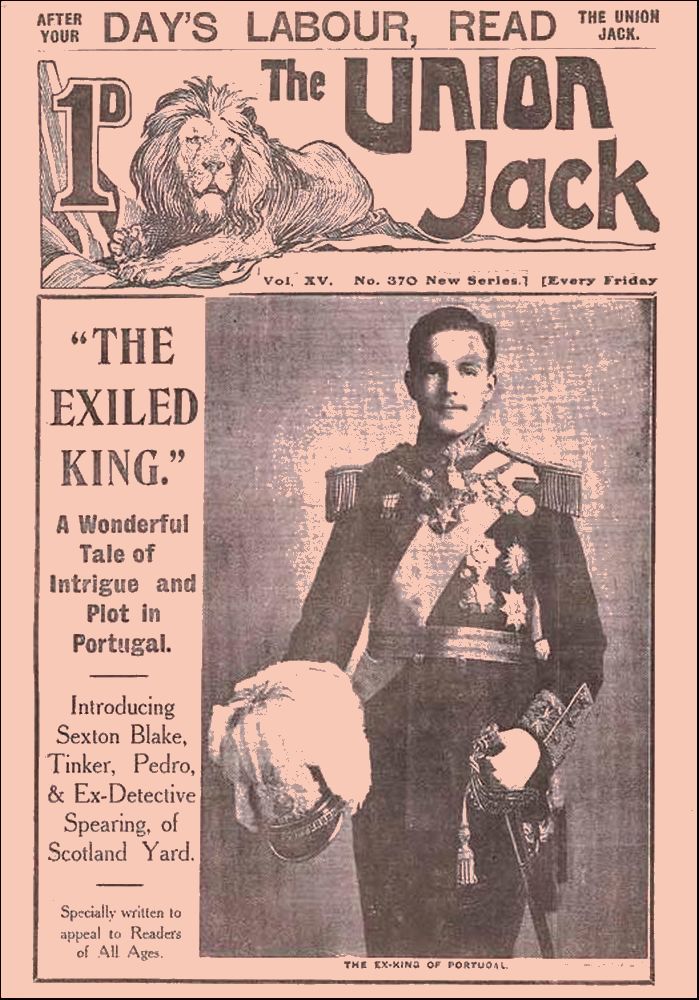
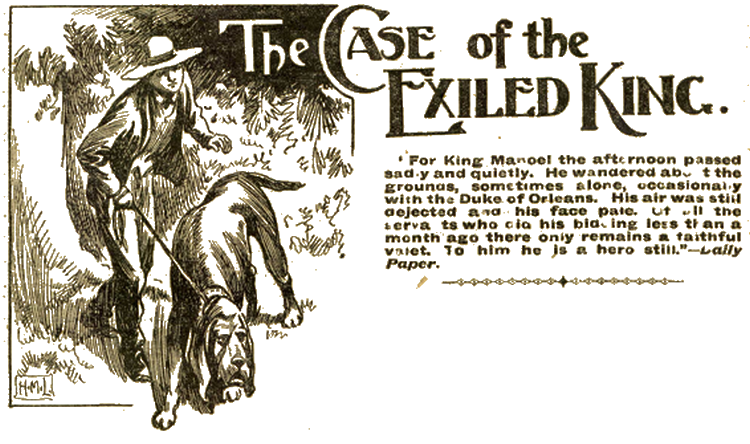
IF England is the last refuge of the Anarchist, so is the Soho district of London the heart and brain of the quarters of these fugitives. It is there that, forced from his own country, he plots and plans to return, though, in many cases, not for his country's good. The detective force of Scotland Yard watches over him with an almost paternal care, but even all its efforts cannot prevent some of the mad, cruel plans of these men being carried through.
Passing through Soho in the daytime, a casual observer would notice nothing in particular about it, He would certainly see that over most of the little shops are foreign names, and that the children who play in the gutters are certainly not of the country, but of the men he will see little. Perhaps they go early to work, perhaps they lie uneasily behind four walls until the darkness that is to them light, comes to them, it is at night that the male section begins to live.
There are small cafés here, too, almost Continental in their feral smell and dirt, and in them you will find men of many races, For the most part they are black-haired men, with faces adorned by a scrubby beard, and with something in the eyes—a quick look at each new-comer—that suggests the fugitive. Yet these are the men who may be called the leaders of the part. The others you will only see by walking the streets late at night. Perhaps you will hear a door open and shut very quietly, a figure will appear on the pavement, look up and down the street with quick, suspicious eyes, then move hurriedly away—always close to the shadow of the wall.
Roughly, in a few words, that is the Anarchist section of Soho, and Little Garland Street is, perhaps, the dingiest, ugliest street in the web of thoroughfares. There are houses in it, commonplace enough: in themselves, where the lives of kings have been sworn away, where men have plotted to murder in the name of justice and liberty.
Number Thirteen Little Garland Street is a dingy, almost paintless house, with windows that always seem to be covered by grimy blinds, as if the occupants neither wished to observe or be observed. Often a week would go by without so much as a glimmer of light in the windows, then would come a day when they were illuminated, and from time to time men would come slinking down the street, tap hurriedly on the door, and pass in, At such times one or more well-built men might be found lurking at either end of the street, and despite the darkness it was seldom that they failed to closely notice the faces of the men who passed along to Number Thirteen.
It was on the night of the twenty-seventh of January, in the year 1908, that two men stood by the entrance to Little Garland street that is nearest to Shaftesbury Avenue. They were both big men, one of them possessing a breadth of shoulder that detracted considerably from his height. The policeman on duty a short distance away could have told you that this man was Chief-Inspector Spearing, of the C.I.D., Scotland Yard, and that the man with him was Detective-Inspector Martin, his chief assistant.
"I don't see why the meeting should be anything out of the ordinary, sir," Inspector Martin said.
"I do," Inspector Spearing answered sharply. "Have heard from the authorities at Lisbon; they say there are rumours of a plot to wipe out the whole of the Braganza family, King Carlos, his two sons, and Queen Amélie."
Inspector Martin shrugged his shoulders, and did not look in the least impressed.
"What makes them think that there is anything out of the ordinary on the boards?" he asked indifferently.
Spearing peered sharply at a tall man who went slinking by before he answered.
"Garcia de Lara has left Portugal, it is believed, for London," he said.
Inspector Martin whistled softly, impressed at last.
"The man who was said to be in the last plot," he muttered, "and is supposed to have killed or planned the assassination of——"
The inspector stopped abruptly, and for a moment his fingers touched Inspector Spearing's arm.
"Look!" he whispered.
A tall man, shabbily dressed, yet with a distinct air of authority about him, had turned into the street, and was now passing on the opposite side of the pavement, where a small general shop stood. As he passed the window the light from it fell upon his face.
"Garcia de Lara," Inspector Spearing growled in a low tone.
If the Portuguese knew that he was being observed he showed no sign of it, but went on quite calmly and rapped on the door of Number Thirteen. It was opened almost immediately, and he passed in.
"Do you think it means trouble, sir?" Inspector Martin asked eagerly.
"Yes!" growled Inspector Spearing.
In a plainly-furnished room, situated in the back of Number Thirteen, sat six men, each one of a distinctly different type, as could be seen by the light of the solitary flaring gas-jet.
Garcia de Lara lounged on a chair by the window, a slight tinge of red in his sallow cheeks, a look in his eyes that might have been either madness or fanaticism. Near to him was a big, hulking man, fairish of hair, and with the broad features of a Russian, with "curiously" colourless blue eyes, sat two men, shabby and thin-faced, who could be mistaken for nothing but Portuguese, On the table before them were bottles of wine and glasses. The remaining two men it would not have been easy to discover the nationality of, though it was obvious that they were not British.
A very ordinary scene, which might have meant nothing more than that the occupant of the house was entertaining his friends, yet Inspector Spearing would have told you that the presence of Garcia de Lara was quite enough to prove that this was something more than that.
There were no skulls and cross-bones, no masks or daggers, not one of the things that the uninitiated have learnt to believe essential to a meeting of Anarchists—which this was.
Garcia doe Lara had been speaking in French, in the cold, dispassionate voice that seldom varied in tone, and now he was obviously waiting for the others to answer him.
The Russian's thick lips moved once or twice, as if he intended to do so, but he kept silence. The Portuguese by the table looked thoughtfully at each other and then at the man by the window, while the others fidgeted with the cigarettes that they had rolled, and forgot to light them.
It was Garcia de Lara who eventually broke the silence.
"It is agreed?" he asked quietly.
"Yes," the Russian growled, and the others nodded.
"You will quite understand," Garcia de Lara continued, "that the sacrifice of the lives of some of our comrades cannot be avoided."
"Unless another opportunity is waited for," one of the Portuguese put in.
Garcia de Lara shrugged his shoulders, and his dark face was as cruel as a tiger's.
"Another opportunity?" he sneered. "Why, yes, you would wait for when there was no risk, and just—er—remove the one man. This time there must be risk; but think what it means—not only the man himself, but those who would come after him, the whole confounded family wiped out."
"De Lara is right," the Russian said; "such a chance may not come our way again."
Garcia de Lara looked questioningly from face to face, and each man nodded to him in silent agreement. A cruel smile curled his thin lips, then he rose and crossed to the table. He poured himself out a glass of wine, and waited for the others to follow his example. They did so, and rose to their feet.
"To the day!" Garcia de Lara cried, and the flush on his face was deeper and his eyes were like dark, polished steel.
"To the day!" the others echoed, and drank.
And so, as men might pledge a comrade or drink to an anniversary, the fate of a king was sealed.
"MR. SPEARING was here this morning, sir," Tinker said, as Sexton Blake entered the consulting-room.
"Anything important, my lad?" the latter asked, with a touch of weariness. He had been out all night to finish a case, and now that it had been brought to a successful conclusion the reaction had come upon him.
"I don't know, sir," the boy answered; "but he seems to be mighty worried about something."
Sexton Blake dropped into a chair, lit a cigar, and lay back with closed eyes, his face drawn and tired-looking.
"It will have to be something very urgent to drag me out to-day," he said. "Is he coming back?"
There was no need for Tinker to answer, for there was a re-sounding knock at the door that was easily recognised as that of Inspector Spearing.
"Shall I show him in, sir?"
"Yes," Sexton Blake answered indifferently.
When Inspector Spearing entered the room it was quite plain that something was distinctly the matter. His always-red face was of a deeper shade than usual, and he carried himself with the exaggerated official swagger that was always his when he was in a tight corner and needed assistance. That he dis-liked coming to Sexton Blake no one knew better than the famous detective himself, although he had never desired the praise that should have been his for putting the authorities back on to a trail that they had lost.
"Morning!" Inspector Spearing jerked. "Thought would just call in and see you."
The trace of a smile curled Sexton Blake's lips, for he knew that the worthy official was not in the habit of wasting time making calls, although they were good friends.
"Sit down," he said. "Try one of the cigars on the table, I fancy you will find them a little unusual in their excellence. "They belonged until yesterday to a certain Crown Prince I have had the honour of assisting."
Inspector Spearing plumped himself down heavily into a chair, took one of the cigars, and tried to light it without cutting the end off. He adjusted the mistake, with a growl, but even then lit the cigar so that it began to burn all down one side.
Certainly all was not going well with the inspector, though, apparently Sexton Blake failed to notice the fact.
"Got a letter to post," Spearing said gruffly, breaking the silence. "Can Tinker go?"
"Certainly," Sexton Blake agreed.
The letter was produced-and given to Tinker, and the boy hurried from the room. As he did so, Sexton Blake raised himself a trifle in his chair, and the lids went up from his eyes.
"Now that you have got rid of Tinker, what is it that you want me to do?" he asked.
Inspector Spearing removed the cigar from between his lips and glared at it as if he owed it a grudge.
"Who said I wanted anything?" he demanded.
Sexton Blake's eyes closed, his body became limp, and he was once more the utterly weary detective.
"I am very glad to hear it," he said, in a low voice. The fact is, that I have been taking rather a lot out of myself of late, and I can do with a rest."
"Beautiful day, isn't it?"
Inspector Spearing rubbed at his bristling hair and breathed hard.
"Look here," he growled slowly, as if it cost him an effort to utter each word, "Garcia de Lara is in London—old haunt at No. 13, Little Garland Street."
Sexton Blake was sitting up in his chair again, and though his face was still weary it had hardened in every line.
"Garcia de Lara," he muttered; "the murderer of the prince."
"And the murderer of Carlos of Portugal if we're not careful," Inspector Spearing said grimly.
Sexton Blake rose to his feet, every line of his body and face showing alertness. He knew this Garcia de Lara, and that he was one of the most dangerous Anarchists living, more particularly because he himself had never been known to do the actual work, and, therefore, it was more than unusually difficult, to get hold of the men chosen to commit the murders that they were pleased to call justice.
"Why King Carlos?" Sexton Blake asked. "How do you actually know that there is anything in the wind?"
Inspector Spearing hunched up his great shoulders and laughed mirthlessly.
"Something's always happened after the beast's been to London!" he growled. "And police of Lisbon have already had rumours of a plot."
Sexton Blake threw away the end of his cigar, took another, and stood with it unlit in his fingers, while Inspector Spearing watched him anxiously.
"For the sake of argument," he said at last, "we will take it that Garcia de Lara is planning, or has already planned, the murder of King Carlos. In that event, what do you want me to do?"
Inspector Spearing hated to ask for help, but at the present moment he put all feelings of that description from him. The message from Lisbon, the sight of Garcia de Lara, had impressed him more than ordinarily, and, though accustomed to deal with hard facts in the hard way of Scotland Yard, it was more a premonition of danger than anything else that was influencing him now.
"Question is—what can we do?" he snapped.
"Only one thing, my friend," Sexton Blake answered, without hesitation. "Garcia de Lara must not be allowed out of sight for a second."
"Seen to that already," Inspector Spearing said. "The attempt will be made—"
"If it is made," Sexton Blake murmured. But the other did not heed the interruption.
"In three days' time," Inspector Spearing continued, "King Carlos is at present shooting over his estate that lies on the opposite side of the Tagus to Lisbon. He is to return on the first of next month, and an assassin could choose no better time. King Carlos is a brave man, and he is certain to drive through the streets."
The inspector groaned, and rubbed away savagely at his short hair.
"Kings are more trouble to the police than burglars," he said.
Sexton Blake did not answer at once, but paced the room, his hands clasped behind his back.
"I think you may be right about the date of the attempt," he said presently, "so why not take extreme measures as has been done before?"
"What mean?" Spearing jerked.
"Place a guard over the house, and forbid Garcia de Lara and his friends to leave it until after a day from now," Sexton Blake explained. "It will then be impossible for any of them to reach Lisbon by the first."
"Don't care about it, but thought of some such thing my-self," Inspector Spearing growled. "I'd better 'phone."
A few seconds later he was at the instrument, impatiently waiting to be put through to Scotland Yard.
"That you?" he snapped. "Put me through to Inspector Martin, What? I'm Spearing!"
Another short pause, then the inspector spoke again.
"Martin!" His voice was quick and strictly official in tone. "Send men to Little Garland Street to guard the house. Understand? The same thing that we have done before. No one must leave there. Yes, better go there and see to it yourself."
The receiver clicked on to its hooks, and Inspector Spearing turned back to Sexton Blake.
"Can't make it out," he growled, "I'm not a fanciful man, but I'm fairly on edge over this."
Sexton Blake nodded, reseated himself, and lit the cigar that he had been holding in his fingers.
"You had better stop here for a while," he suggested. "In an hour or so we might go down Soho way, and see that everything is all right."
"Right!" Inspector Spearing growled.
During the next hour it could not be said that the worthy official of Scotland Yard appeared to be at his ease. He fidgeted in his chair, paced up and down the room, and generally performed in a manner that plainly indicated the perturbed state of his mind. At the end of that time Sexton Blake rose to his feet, sighed a little wearily, and picked up his hat.
"Ready," he said simply. It was just after midday when Sexton Blake and Inspector Spearing turned from Shaftesbury Avenue, and made their way towards Little Garland Street.
"Has it struck you, my friend," the former murmured, "that we are most probably putting ourselves to a great deal of trouble for nothing?"
"No," Inspector Spearing growled.
At this hour of the day there was nothing particularly attractive about Soho, the wintry sun showing up the ugliness of its buildings, and the vice stamped only too plainly on the faces of some of the inhabitants. The sort of place that. if you had been through it in the daytime, you would instinctively avoid at night.
Round towards Little Garland Street the two detectives turned, and as they casually entered it they were to learn that Garcia de Lara and his comrades were not to be caged so easily.
A police-whistle shrilled from the centre of a group of writhing, struggling men, who were fighting in the road at a spot practically opposite No. 13. Windows of other houses had been thrown open, and dark faces looked out evilly.
"Trouble!" Sexton Blake said between his teeth, and broke into a run.
Inspector Spearing was a big man, and few would have given him credit for the speed he displayed. Straight at the struggling crowd he threw himself, jerked a man out of his way by sheer strength, and got right through to where the fight was thickest.
Sexton Blake paused by the edge of the crowd, looking for one particular man—Garcia de Lara. The detective knew only too well that these fighting men were nothing better than tools in the hands of this fanatical Portuguese, and the capture of the man was all that he desired.
From out of the struggling mass in the roadway a sinewy form rose, and one glance at the face was enough for Sexton Blake. It was Garcia de Lara, the man who had sworn that King Carlos and his family should die.
Sexton Blake was not a big man, but what he lacked in weight he made up in science. Two men went down under his fists, and then he was face to face with Garcia de Lara.
For a moment the two men stood motionless, measuring each other's strength; then Sexton Blake leapt, ducking under the knife that the Portuguese had ripped out from beneath the collar of his coat. Sexton Blake's right hand flashed upwards, but the blow missed the point of the chin, and to avoid the knife he was compelled to run in and grapple.
The men swayed backwards and forwards, their faces close together, the one with murder in his eyes, the other with a grim determination that nothing save death would baulk.
"Confound you! Garcia de Lara snarled breathlessly. "Do you think——"
Sexton Blake snatched a hand from round the other's body, and got his fingers to his throat. There was a grim little smile on his lips, the smile of a man who means to win at any cost.
"I shall foil you," he said coolly, his fingers tightening their grip. "It is hounds like you who——"
The sentence ended in a gasp as a stick struck Sexton Blake across the head, and he Blake into a heap in the road. For a moment Garcia de Lara bent over him, the knife held suggestively in his hand, then he turned and forced his way through the crowd.
The back of the fighting men was broken, and Inspector Martin rose to his feet, dragging with him a handcuffed man.
"Hot work!" he panted.
Inspector Spearing, gripping a man neatly by the biceps, looked round sharply, and saw that four stalwart plain-clothes men were holding a similar number of foreigners. Then his jaw dropped, and in his excitement he almost let go of the man he was holding.
"Garcia de Lara?" he cried. "Where is he?"
The answer was dramatic enough, for Sexton Blake came staggering forward.
"Where is he?" he asked faintly. "Someone knocked me out, but I saw Hughes and Davis tackle him. Where are they now?"
"Probably chasing him, sir," one of the constables answered.
"They may get him, after all."
This hope was not to hold for long, however, Round the corner came two men, one Supporting the other, whose face was ghastly pale. He held a handkerchief to his chest, and when he moved it it showed red.
"What's happened?" Inspector Spearing jerked, hurrying to meet the men.
"Knifed, sir." the injured man answered faintly "We chased our man, but a whole crowd of the beasts here got in between us, and when we tried to get through I landed this."
Inspector Spearing glared about him at the crowd that had gathered, at the house that be had meant to keep sealed, at the dark faces that peeped from the windows.
"We had better be going." Sexton Blake said quietly, "unless you want to risk a rescue being attempted."
Spearing looked about him, and despite the temper that he was in, he saw that Sexton Blake was correct. The crowd had drawn nearer, some of the men muttering angrily, and it only needed a spark to set the whole thing aflame.
"Right." he said. "we'll be going."
Half-an-hour later a taxi-cab dashed into the yard of Charing Cross Station, and Inspector Spearing and Sexton Blake alighted from it and hurried into the station. As they reached it, a big man stepped forward.
"Any news?" Spearing asked, sharply.
"Garcia de Lara left by the Continental express, sir," the man answered.
"Left?" Inspector Spearing gasped, and fairly snatched his watch from his pocket. It had stopped.
"I hope there's nothing wrong, sir?" the man said, anxiously.
"No." Spearing answered mechanically "You can go."
The man left, and Inspector Spearing stood looking dismally about him.
"After all there may be anything to your fears," Sexton Blake murmured. "You had better notify the Lisbon police that Garcia de Lara has left-this country "That is all that it is your duty to do."
"Duty be hanged!" Inspector Spearing snapped fiercely.
"Feel sure Carlos is to be murdered, and—duty or not—mean to try and prevent it."
Sexton Blake stifled a yawn, and looked up at the station clock.
"I shall have time to pack a few clothes before the mail train leaves Victoria," he said.
"Do what?" Spearing gasped. "Why pack?"
"I am going to Lisbon," Sexton Blake announced, and turned towards the exit.
FEBRUARY in Lisbon is a very different matter to the same month in England, and as Sexton Blake and Inspector Spearing alighted from the train, after their tedious journey through Spain, the sun was shining brightly out of a blue sky. Perhaps the light was made to look stronger by the white buildings, which caught it up and threw it back dazzlingly.
Neither for the weather nor the beauties of Lisbon had Inspector Spearing any eyes. He had left England convinced that Garcia de Lara was plotting against the life of King Carlos, and the long journey had given that belief time to strengthen, if that were possible As for Sexton Blake he, too, had somehow become obsessed with the same idea, and he heaved a sigh of relief when Lisbon was at last reached. It was none too soon either for already it was the afternoon of the first day of February, and before dusk fell King Carlos would cross the Tagus and enter his capital.
There was a short delay at the station, which made Inspector Spearing more anxious than ever, but at last he passed with his companion out into the street. During the train journey they had had time to discuss a plan, and the one that they had decided upon was simple in the extreme. They would go at once to the chief of the police in Lisbon, tell him of their suspicions. and, if possible, help him to keep Garcia de Lara safely out of the way for a day or so.
Ay, it was simple enough, and it was hard to imagine that it could go wrong. But Fate is a curious thing, with a trick of having her own way of playing her trump card when she thinks best, and when that happens plans do not count for such.
First of all, Sexton Blake and Inspector Spearing failed to find the officer in charge of the Municipal Guard for the excellent reason that that worthy was already out making what he considered to be adequate preparations to ensure the safety of King Carlos and his family. From here the two detectives hurried to the barracks, once again to receive a check. The commander had left with his men, and there was no one there with authority enough to act, even if they believed in the actual danger.
Inspector Spearing's face was gloomy as he turned once more into the street, for he could only hope now that the authorities had acted on the urgent warning messages that he had sent them. Sexton Blake's face expressed nothing; the only change about it being that it looked a trifle thinner, with the lines about the mouth deeper graven.
"What do?" Inspector Spearing jerked.
"Nothing," Sexton Blake answered, "It seems to me that we have had our journey for nothing. We can only hope that the police here know their work."
Inspector Spearing obviously doubted this, for, as he passed one of the Municipal Guard he growled deep down in his chest at the insignificance of the little man, who appeared to be all sword, revolver, and striped cotton trousers.
At another time, Lisbon might have appealed to the two detectives, but they had other things than beauty to think about now, and they did not even notice the parks, nearly forty in number, for which the city is famous. All they thought of was that, within an hour or so, Dom Carlos would land by the Praça do Commercio, and that—Garcia de Lara was in Lisbon.
For many years past the Republican party had been uncomfortably active, and it was in its name—without its consent—that such men as Garcia de Lara worked.
The two detectives made their way through the narrow streets that lie in the heart of the city, and past the great market-place, where may be seen as fine a show of fruit as can be seen in any country in the world.
Lisbon is famous for its fruit and poverty.
Of the fruit, it is enough to say that it is magnificent, but the poverty it is impossible to describe. It is everywhere.
Round the entrances to the market, in every corner of the squares and open places of the city, and most, perhaps, along the bank of the Tagus, at the part where the docks lie. There these men—and women—outcasts from Heaven knows where, are to be found by day and night, and at the latter time it is as well to give them a wide berth, for poverty is an ugly thing to have always gnawing at you—poverty and hunger—and the waters of the Tagus are deep and swift.
Not until the market-place was reached did Sexton Blake pause, apparently to light a cigar. He was within a few feet of a group of four men, who, judging from their belled trousers and short coats, were from the provinces. He spoke Portuguese fairly fluently, and it was something that one of the men said that had made him pause.
"Perhaps nothing will happen," were the words. "But there are strange rumours in the city, and there are many who say that Carlos will sleep heavily to-night."
Sexton Blake passed on, without saying anything to Spearing, but the few words had told him the state that Lisbon was in.
He saw, too, that the faces of many of the men wore a half-eager, half-anxious expression, which seemed to grow more pronounced as they drew nearer to the Praça do Commercio, where was the landing-stage at which King Carlos would arrive.
The streets leading down to the square were crowded with eager sightseers, forcing their way forward to catch a glimpse of their king, and Sexton Blake smiled grimly as he realised how thin their loyalty had been proved by recent events.
At the edge of the square, Sexton Blake and Inspector Spearing were brought to a halt by the Municipal Guard, and a few words in an authoritative tone caused the men to draw aside, and the detectives entered the square itself, turning to the right and taking up a position under the colonnade of the Government buildings that stand there.
Save for soldiers and guards, the square had been cleared, so that the detectives could see Dom Manoel, the second son of the king, waiting on the landing-stage for the arrival of his father. With him were a number of officers and members of the Government.
Dom Manoel looked no more than his age, which was seventeen, and it would have been hard to realise that in a few minutes——
A band struck up sharply, playing the national anthem, the crowd forced forward against the guards and troops holding them back, nearly breaking through the cordon, and King Carlos stepped into view—an exceptionally large and heavy man, yet with something about his walk and bearing that plainly roved that his size was not the result of an inactive life. With him was his wife, Queen Amélie, acknowledged to be one of the most beautiful queens that any country has ever seen. Behind them followed the Crown Prince, a well-built lad with a bright, intelligent face.
For a few seconds only the little party stood on the landing-stage, but in that time Sexton Blake could see that. Queen Amélie looked about her nervously. No woman had better reason than she to fear the assassination of her husband.
"Not much enthusiasm," Inspector Spearing growled, noticing that the crowd had scarcely raised a sound. "Look like murderers—most of 'em!"
Before Sexton Blake could answer, King Carlos, the queen and the two princes had stepped into the carriage, the horses were swung round towards the great entrance to the city, and mounted officers fell in beside it.
"It's here, if anywhere," Sexton Blake said in a low tone, end for once he knew what it was to have a heart beating fast with nervous dread.
Garcia de Lara was in Lisbon, and that was enough to——
A sharp report! Then a great silence as if the crowd had caught its breath, then another shot.
A wild scream of terror broke from Queen Amélie, then King Carlos rose in the carriage, swaying on his feet.
Three shots rang out, practically together, and a wild-looking man dashed forward and clambered on to the back of the carriage., With the bravery of despair, the queen turned and thrust the bouquet that she was carrying into the man's evil face, but it was too late, Again a shot had sounded, and King Carlos had dropped forward across the body of his elder son.
It had all happened so suddenly, that it seemed nothing more than a nightmare, and probably Sexton Blake was the first to recover himself. He broke from the crowd, and dashed for the carriage, to get his hands on the foul wretch who had fired the fatal shot at the king, but there was someone before him, An officer's sword, flashed, and the murderer lay still on the ground.
The scene that followed is not easy of description, for even those people who were there were so startled that their accounts of the assassination differ to no small extent. It was just a medley of plunging horses, shouting men, shrieking women, and straggling shots, in the midst of which the coachman of the royal carriage whipped up his horses and made a dash through the archway.
Five minutes later three mutilated bodies were carried away by the soldiers, and as Sexton Blake saw it, he turned to Spearing. The latter's usually red face was white, but there was something in his eyes which showed that it was not fear that caused his pallor.
"We have failed," Sexton Blake said, in a low voice.
"We had no chance!" Inspector Spearing growled. "But one day I will put my hands on the real murderer—Garcia de Lara.
Sexton Blake shrugged his shoulders, and began to force his way through the excited crowd.
"You may not get the chance," he said.
Inspector Spearing's face was grim and hard. In the course of his career he had seen many unpleasant sights, but never before such a one as this.
"It must come!" he answered sternly. "And, when it does—I take it!"
Garcia de Lara is Freed, and Mr. Spearing Worries.
MR. SPEARING paused outside the entrance to Scotland Yard, and his face showed a hesitation that was new to him. Two years and more had passed since he and Sexton Blake had failed through sheer bad luck to prevent the assassination of King Carlos and the Crown Prince of Portugal. Two years, and during most of that time Garcia de Lara, their moral murderer, had been in prison on account of an offence committed in Britain.
That Garcia de Lara was not a man who stopped at half-measures, Mr. Spearing knew full well, and the moment that he had heard of his release he had decided that King Manoel, the boy ruler of Portugal, was in danger. He alone remained of the direct heirs to the throne, and it was scarcely likely that Garcia de Lara, would rest content until he, too, was out of the way.
With a shrug of his shoulders, as if to throw away all hesitation, Mr. Spearing entered Scotland Yard, and without difficulty was passed through the office of his successor.
"Very busy," Chief-detective-inspector Martin said shortly, looking up from his desk.
"Glad to hear it," Mr. Spearing snapped. "If there's any thing I can do to help you—do it with pleasure."
Inspector Martin looked annoyed. The retirement of Mr. Spearing, to start a private agency, and his own promotion to the present rank that he held was comparatively recent, with the consequence that he was still very much on his dignity. It may be added that Mr. Spearing had not left the Force without a pang of regret, and it still annoyed him to see another man in the shoes that he had filled so well. Perhaps it was only natural that he should regard Inspector Martin as an usurper, while the latter was quite convinced that under his leadership the detective force of Scotland Yard would reach a degree of proficiency that it had never attained before.
Apart from that the two men were very good friends.
"Thanks, we can do our own work," Inspector Martin said sharply.
Mr. Spearing shrugged his square shoulders, and looked uncommonly as if he doubted it.
"Keeping an eye on Garcia de Lara?" he asked.
Inspector Martin shook his head, and there was a smile of contempt on his lips.
"Why should we?" he demanded. "The man has just done two years for attempted murder, and now he's out a week. Don't see why we should interfere with him so long as he behaves himself."
"I do!" Mr. Spearing jerked. "You forget—he was the real murderer of King Carlos and his son—can't prove it, but know it."
Even then Inspector Martin did not look in the least impressed, but tapped impatiently with his fingers on the papers that littered his desk.
"I can't say that I agree with you," he answered indifferently. "I don't suppose that De Lara will look for trouble so soon after doing a couple of years."
"Bunkum!" Mr. Spearing snapped, and Inspector Martin was promptly very much on his dignity.
"Pardon me, Mr. Spearing," he said icily, "but I am really very busy to-day. Good-morning."
The ex-official of Scotland Yard went redder than usual, but he checked the angry words that came to his lips.
"Tell you one thing," he said gruffly, "advise you to go through the records, then you'll find that after a man has done time he usually gets to work again at once. Imprisonment gives him time to scheme."
"Bunkum!" Inspector Martin exclaimed, repeating the other's sentiment. "You don't mean to tell me you think it likely that, even if he did have a hand in the assassination, that he'll play the same game again?"
"What I do mean," Mr. Spearing persisted bluntly. "The man's half mad, the worst and most dangerous type of Anarchist, and he does not forget, if you do, that there is still a Braganza on the throne of Spain. Wait!"
Mr. Spearing jerked out the last word as Inspector Martin would have interrupted him, and there could be no doubt that he was in deadly earnest.
"We know that when Carlos and his son were murdered that it was intended to wipe the whole family out," he continued impressively, "for the number of the assassins proves that, and it was only luck that saved Manoel."
"What does that prove?" Inspector Martin sneered.
"Nothing," Mr. Spearing admitted, "but I'll tell you something. For two years Garcia de Late has been in prison, and for two years no real attempt has been made on the life of King Manoel."
"What does that prove?" Inspector Martin asked again.
"That the Anarchists of Lisbon are waiting for their leader."
Inspector Martin had been smiling, but now his face set hard, and he looked questioningly at Mr. Spearing.
"Suppose you are right," he said slowly, "what can we do?"
"That's what I want to know," Mr. Spearing answered shortly. "Thought you might take steps in the matter."
Inspector Martin fidgeted with the accumulation of papers on his desk, and when he did speak his voice was steady with suppressed emotion.
"Look here, Spearing," he said. "You know as well as I do, having held my post, that I am absolutely powerless, though, Heaven knows, I am beginning to believe that you are right. Still, what can I do?"
"Nothing," Mr. Spearing answered shortly. "Thought I ought to warn you, though."
Inspector Martin rose, and held out his hand.
"I can only say this," he said. "If you are taking the affair up I am glad, and there is anything in which the Yard can help you, yow have only to say the word."
"Thanks," Mr. Spearing jerked. " Sha'n't forget."
Then he turned and left the office, knowing that he could do no more.
Out on the pavement Mr. Spearing hesitated, his brain full of thought of Garcia do Lara. The memory of the awful scene that he had witnessed.in Lisbon never left him, and now that the real operator of the outrage was a free man again it came back to him more vividly than ever. Mr. Spearing was far from being a sentimentalist, but one incident of the assassination was clearer always than the others—a brave woman leaning over the back of a carriage, striking at a murderer with her bouquet.
It was no business of his that the young King Manoel might he in danger, but he had sworn when he stood in the square at Lisbon, and had seen the bodies being driven away, that some day Garcia de Lara should pay for it.
And William Spearing was a man who kept his word.
A taxi driver raised his hand questioningly, and after a moment's hesitation, Mr. Spearing entered the vehicle.
"Baker Street," he ordered.
So full of thoughts of Garcia de Lara that Mr. Spearing did not even notice when his destination was reached, and the driver had to tap on the glass to acquaint him of the fact.
He found Sexton Blake in his consulting-room, a letter in his hand.
"Thinking of Garcia do Lara?" he queried, looking up with a smile.
"Yes!" Mr. Spearing jerked.
"So was I," Sexton Blake said. "From what the papers say Portugal is in a very bad way just now, and the Republicans look like rising at any moment. If they do there is no telling how many of the army and navy will remain loyal to their young king, but I should say only a small part of it."
"Hang the Republicans!" Mr. Spearing snapped.
"Certainly," Sexton Blake agreed blandly; "a good many of them probably deserve it."
"Don't mean that," Mr. Spearing explained. "I was thinking of De Lara. Rather trust myself to the mercy of the Republicans than to him."
Sexton Blake nodded, and glanced again at the letter in his hand.
"Precisely," he said, "If there is an uprising he would probably get his chance—or make it."
Mr. Spearing thought again of the terrible scene that he had witnessed in the Praça do Commercio, and his shoulders were squared sharply.
"Thought of going to Lisbon," he growled.
"Good," Sexton Blake said, "we can go together."
Mr. Spearing's eyebrows went up until they seemed as if they would disappear into his hair.
"Why?" he gasped.
"For two reasons," Sexton Blake explained. "In the first place, it may surprise you to hear that I have had an eye kept on Garcia de Lara since his release from prison, and that I know that he left yesterday for Lisbon."
A shrill whistle broke from Mr. Spearing, and his face set grimly.
"Second reason?" he demanded.
"This."
Mr. Spearing took the letter that was held out to him, and as he read it he looked more surprised than ever. The writing was not that of an Englishman, though the English itself was quite good.
"Sir," it ran, "I am doing myself the honour of calling upon you in the morning at eleven o'clock, concerning a mission of great secrecy and importance.
""Carlos da Conda."
Mr. Spearing read the brief letter through twice, but it naturally gave him no clue, and he turned to Sexton Blake.
"Wonder what it is?" he said.
"Not being a thought-reader, I am afraid that I can't tell you," Sexton Blake answered drily, "but I have been able to obtain a little information concerning this Carlos da Conda.
He is a captain in the Portuguese Artillery, and is attached to the staff of General d'Alvarez. The latter is just passing through London, on his way back to Lisbon, hence the presence of Captain da Conda. I may also add that the general has a daughter who is reputed to be very beautiful, and there my knowledge ends until——I fancy this is he."
A sharp knock had come at the front door, and a few seconds later Tinker entered.
"Captain Carlos da Conda." he announced.
A man of about thirty, with the upright figure of a soldier, entered the room. That he was not English was plain, and he had the well-cut features of the best class of Portuguese. He stood just inside the doorway, his heels drawn together in military fashion, looking doubtfully from Sexton Blake, who had risen, to Mr. Spearing.
"I am Sexton Blake," the former explained: "this is Mr. Spearing, late of Scotland Yard. You are, I believe, Captain da Conda of the Portuguese army?"
Captain da Conda bowed stiffly, with a certain nervousness in his manner that one would have thought unusual with him.
"May I ask? " he said in excellent English, "how you happen to know that I am in the Portuguese army?"
Sexton Blake pushed a chair towards his visitor.
"Is not General d'Alvarez passing through London?" he answered, "and is there not a Captain Carlos da Conda with him? It is unlikely that there would be two of that name in London at the same time."
"Let that pass, Mr. Blake," Captain da Conda said hurriedly. "My business is urgent, and I must see you alone."
Mr. Spearing moved towards the door, but Sexton Blake motioned him to remain.
"With your permission, Captain da Conda," he said quietly. "I should like Mr. Spearing to remain. If you are prepared to trust me you have my word that you may trust him, and I should gather that in the task you wish me to undertake there may be an element of danger where two men would be better than one. Under those circumstances there is no man I would choose rather then Mr. Spearing."
Captain da Conda looked again at the burly form of the ex-Scotland Yard man, and his face relaxed.
"You are right, Mr Blake," he said, "The mission that I wish you to undertake, under certain conditions, may quite possibly mean danger."
Captain da Conda's eyes asked a question, and the face of the famous detective answered it, for there was no fear there.
"It will not be a new experience," he murmured.
"Rather like it," Mr. Spearing jerked, trying to hide the satisfaction that he felt in being concerned in the case. Probably under any circumstances he would have gone to Lisbon, but it would have had to have been at his own expense, so that this arrangement was far more satisfactory.
Captain da Conda did not continue at once, but fidgeted uneasily in his chair.
"Let me assure you of one thing," Sexton Blake put in, reading the man's thoughts. "It is not difficult to see that you have come to me unwillingly, and that you would rather leave this task unattempted. No, let me finish, You may tell me frankly what it is you want done, and if it is something that I do not care to undertake, why, I shall decline, and anything you have told me will go no further."
"You swear to that?" Captain da Conda asked eagerly.
"It is unnecessary," Sexton Blake answered with a touch of dignity.
The Portuguese bowed, with the air of a man who has been reproved.
"The case," Sexton Blake prompted.
"To kidnap a man in Lisbon," Captain da Conda answered.
Even Sexton Blake started, while Mr. Spearing, remembering a recent unpleasant experience, frowned heavily.
"Pardon me, but the explanation is crude," Captain da Conda said hurriedly. "What I should have said is this—there is a certain man in Lisbon who will shortly be in grave danger."
"He might be warned," Sexton Blake suggested.
Captain da Conda pulled nervously at the ends of his moustache.
"There you are wrong," he said. "For certain reasons, which do not concern you at present, it is impossible to give him warning, and I fancy that even if you did he would take no notice of it. Therefore it is essential that he shall be kept safe against his will and be removed from Lisbon not later than Monday next." Sexton Blake was sitting back in his chair, an almost listless expression on his face.
"That is when the danger to him will occur?" he asked.
"It is possible," Captain da Conda answered hesitatingly; "but again, that does not concern you. All that you need to know is—on my honour as a soldier—that I am doing this for the man's good, and that, as a matter of fact, I am running a good deal of risk in doing so. You follow me?"
"It is not difficult," Sexton Blake assured him. "Pray continue—you mentioned something about conditions."
"They are these," Captain Conda said eagerly. "You must ask me no questions with regard to the identity of this man, and should you discover who he is either after or before you kidnap him you will swear still to continue your work, taking my word for it that to act in that way is for his good."
"And how long is this man to be kept a—er—guest?"
"A week, perhaps less," the Portuguese answered readily. "Most probably I should ask you to take him to England and let him free. Under any circumstances I promise you that his detention will only be temporary. Will you do it?"
Sexton Blake sat back in his chair, and the expression of his face was thoughtful. During his career he had undertaken some curious cases, but scarcely one that had opened in such a mysterious manner as this. The very mystery of the thing appealed to him, and it was only the unknown motive of this Captain da Conda that caused him to hesitate at all.
"Will you do it? " the officer asked again.
"Yes," Sexton Blake answered simply.
A look of relief came into Captain da Conda's eyes, and he rose to his feet, at the same time drawing some banknotes from his pocket.
"You will leave for Lisbon to-night," he said, "and stay at the Continental Hotel, where I will call upon you. I will leave you the sum of two hundred pounds for expenses, and when the work is done you will not find me lacking in generosity."
Sexton Blake waved the notes away with an air of dignity that meant more than words.
"It will be time to speak of that when the work is finished," he said quietly.
In one of the best sitting—rooms of the Hotel Metropole sat Senhorita Marguerita d'Alvarez. Certainly the papers had spoken nothing more than the truth when they had described her as beautiful. To a large degree she might have been mistaken for a British girl, but the skin was of too pure an olive for that, the eyes too large and lustrous. In age she could have been little more than twenty, and a certain girlishness of figure made her appear even younger. Yet, despite this air of youth there was something about the face that spoke of determination.
She sat with a book in her hands, but only now and again did sought the door, as if in expectation of some one's arrival.
There was a knock, and Marguerita d'Alvarez rose to her feet as the door opened to admit Captain Carlos da Conda. She looked at his face questioningly, and held out a pair of little hands with a gesture that was singularly appealing.
"You have done it, Carlos?" she asked in a low voice.
"Yes," the man answered firmly; "for your sake."
With a cry of relief the girl advanced, and there was a pair of arms ready and willing to receive her.
"You must see that I am right, Carlos," she said, a little later. "He is so young—and those men—"
She ended the sentence with a shudder, and nestled closer into her lover's arms.
"I know, little one," he said soothingly, "but, where persuasion has failed force must be used. Why"—he held her out at arm's length, and looked into her eyes—"you cannot think it wrong? Would your father be the leader of it if he were not sure; should I follow him, even for your sake, if it was not right?"
"No, my Carlos, no," the girl answered quickly. "But this boy, he is different, and I am thinking of what his mother has suffered already."
Captain da Conda drew the girl closer to him, and tenderly stroked her dark hair.
"The cause must come first with me, sweet," he said softly, "but even then one can still have a heart."
With a little cry the girl drew away, for there was a step in the passage. The next moment the door opened to admit a man of about sixty, and it would not have been difficult to guess that this was General d'Alvarez, a man who had won his honours by more than courting kings. A hard man one would say at first glance, and yet there was a world of affection in his eyes as he looked at his only daughter.
"Ah, Marguerita, this will never do," he said with a smile. "You must know that I cannot spare Da Conda just now. There is much of importance to attend to."
Captain Carlos da Conda drew himself upright and saluted.
"You will find me ready, sir," he said quietly.
In Lisbon—Something of the Truth.
"WONDER what the game is?" Mr. Spearing said, making himself comfortable on the verandah of the Continental Hotel, Lisbon.
Sexton Blake nodded down towards the empty space that lies between the building and the Tagus, and his eyes were on a group of a dozen or more men who were nearly hidden by the shadow of a long wooden shed.
"They might tell you better," he answered quietly.
"Don't fool!" Mr. Spearing snapped angrily. "What can men like that tell us—loafers for the most part?"
Sexton Blake shrugged his shoulders, and smoked on with quiet enjoyment.
"In the course of my career," he said, "I have often found it useful to cultivate the loafer. Throughout the day he has nothing to do but listen to other people's conversation, pick up rumours, and generally make himself a walking newspaper. Much of the material that he gains is useless, but here and there is the thing you want to know."
To say that Mr. Spearing looked satisfied with this explanation would be untrue, but then he was not in the most amiable frame of mind. For two days he had been in Lisbon with Sexton Blake, but, try hard though he had, he could discover no trace of Garcia de Lara. That he had come to Lisbon there was no doubt whatever, but after that all trace of him had vanished.
That was what worried the worthy ex-official of Scotland Yard. An actual danger he could face, and most probably overcome, but this working in the dark rendered him helpless. For the time being he was not troubling himself about the affairs of Captain Carlos da Conda, as at present that officer had not put in an appearance.
He looked down into the open space, then above the sheds to where the blue-blackness of the river was broken by the lights of many ships, including those of most of the Portuguese navy.
"What learn down there?" he jerked, nodding towards the group of men who stood in the shadows.
"Down there—nothing, my friend," Sexton Blake answered coolly. "When men hold their conversations in dark places it is as well to give them a wide berth; but there is the market-place, the public cafés, even the street corners, and each one of those has yielded me information—always the same."
"What's that?" Spearing demanded, trying not to look interested.
"That there are rumours of an uprising," Sexton Blake answered meaningly. "In the market-place I learnt that the Republicans have been, for a long time past, buying large stores of guns and ammunition. In a café I heard a sergeant— admittedly the worse for the cheap wine of his country—say that the army did not care a hang for the king, and at the street corners, why, the conversations dropped every time that a Municipal Guard drew near."
"But what does it all mean?" Mr. Spearing asked in a puzzled manner.
Sexton Blake flicked the ash from his cigar, and looked down into the open gate again. As he did so the group of loafers split up—a Municipal Guard was approaching—but they did it slowly, and with the air of men who are sure that it will not be long before the shoe is on the other foot.
"It means," he said slowly, "that a revolution has been spoken of in Portugal for more then thirty years, until the idea of it has become a standard joke. Very shortly, however, that joke is to be turned into a grim tragedy."
Mr. Spearing laughed, and when he spoke his tone was sarcastic.
"Go back to England—while there's time," he suggested.
But Sexton Blake's face hardened, and he looked behind him as if to make sure that there was no one else on the verandah.
"It is because there is to be a revolution that we are here." he said, in a curiously level voice. "There is some one who will suffer when it happens, and, for some reason or other, Captain da Conda means to protect him. "Of course you know that General d'Alvarez is believed to be strongly in favour of the Republicans."
"Of course," Mr. Spearing agreed. but the words did not carry conviction. "Can't see what all this has got to do with the business though."
"I can," Sexton Blake persisted, "and, what is more, it has given me a fairly strong clue to the identity of the man we have got to—er—mind.'
"Who is he?"
Sexton Blake shook his head, and pulled away steadily at his cigar.
"I may be wrong," he answered, "so I will not speak until I know."
The flash of a searchlight passed across the front of the hotel, lingered on the buildings up the hill, and was gone.
"There's one more thing," Sexton' Blake added. "Lisbon would stand little chance of resisting if it were bombarded from the river. See how it runs up, tier after tier—it would be as easy as shooting bottles."
"Won't come to it," Mr. Spearing growled.
Sexton Blake peered down into the open space again, where the group of men had reassembled.
"It will come not later than Tuesday morning he said coolly. "To-day is Friday, so we still have three days of peace before us."
"Mad!" Mr. Spearing snapped, but before he could say more the long French window behind him opened, and Tinker ushered a tall figure through.
"Captain da Conda, sir," he announced.
The Portuguese officer came out hesitatingly, and his eyes, accustomed to the light, peered awkwardly through the darkness at the faces of the detectives.
"Pardon for not coming earlier, gentlemen," he said. in a low tone, "but there has been urgent business to transact."
"So I should say," Sexton Blake agreed. "With a revolution threatening, you naturally must have your men ready to put it down."
Captain Carlos da Conda started, but there was not light enough for him to see closely into the speaker's face.
"Revolution!" he said hurriedly; but his attempt at surprise could scarcely have been termed a success.
Sexton Blake did not speak, which was a good deal more trying for the officer than if he had.
"They have talked of it for many years," he said hurriedly.
"Why, yes," Sexton Blake agreed; "but of course that does not concern us."
"Of course," the captain said eagerly, "I have come to talk of your task. What preparations Have you made?"
"Enough," Sexton Blake replied. "If you go down the Tagus for a mile you will find a motor-boat waiting there. It is seaworthy enough to make a journey to one of the fishing villages along the coast quite sate, and I can assure you that, once I have the man, he will only go when you give the word.
"Not before!" Mr. Spearing jerked confidently, his left hand on the swelling muscles of his right arm.
"There is accommodation fer both the men and—a lady," Sexton Blake added.
There could be no doubt this time that Captain Carlos da Conda started badly, but again when he looked into the detective's face he could read nothing there. It was as placid as if its owner were talking about the weather.
"It is unnecessary," the Portuguese said hurriedly, but his voice lacked the power of conviction.
"When do we get to work?" Sexton Blake asked. "If the affair is to be settled by Monday there is none too much time."
"There is a car waiting now," Captain da Conda answered.
"I will take you to the place, where you will probably succeed."
Sexton Blake nodded, and a minute or two later he and Mr. Spearing left the hotel and entered a large car that was waiting. The windows of it were closed, despite the fact that the night was warm, and Sexton Blake saw that they had been covered sufficiently thickly with varnish to make it impossible to see more than a blur of anything that was passed.
"You will excuse the precaution," Captain da Conda said politely, as he closed the door of the car, "but I do not wish you to know the identity of the man I am helping until the affair is all over."
The car moved rapidly, moving round a diversion so that the detectives could guess that the driver had had instructions to make the journey longer in appearance than it really was. At the end of half an hour it stopped, and De Conda opened the door and alighted.
The road in which the car had stopped was a quiet one running between hedges, and a glance round showed that it lay above the main part of the city. There was little time for observations of that kind, however, for Captain da Conda hurried the two detectives a hundred yards or so along the road until he came to a gate in a hedge. On the other side of the hedge there were thick trees, but through them it wad possible to see the lights of a large building.
"This is where he walks at night," the officer said, in a low voice, "I wish you to see the spot now so as to take your bearings, and on the night chosen my man will drive you to it. The rest I leave to you."
Sexton Blake glanced into the grounds and nodded.
"That is enough," he said coolly.
"Feel like a criminal!" Mr. Spearing muttered; but the others did not hear him.
The motor-car was re-entered, and inside half an hour it stopped again outside the Continental Hotel.
"I will come in with you, gentlemen," Captain Da Conda said. "There are one or two things to arrange."
Sexton Blake led the way towards the staircase, but before he could reach it a manservant stopped him.
"There is a lady to see you, Senhor," he said. "She is waiting in your room."
Captain da Conda smiled grimly, and turned towards one of the public apartments.
"I will await you, Mr. Blake," he said.
"You are the Captain da Conda?" the servant asked quickly.
"Yes," the officer answered, in surprise.
"Then the lady wishes that you shall go with Senhor Blake."
It was not often that Sexton Blake was surprised, but he certainly was now. So far as he knew there was no lady in Lisbon with whom he was acquainted, so who could it be? If he was surprised, Captain da Conda looked absolutely astounded as he followed up the staircase.
Sexton Blake pushed the door of the room open, and, as he did so, a girl in evening dress rose from a chair and confronted him. Her beautiful face was deadly white, and her fingers clutched at the bosom of her dress as if she were in pain.
"Carlos!" she cried wildly, as Captain da Conda entered. "Thank Heaven I have found you in time!"
The Portuguese officer stood stock-still, his lips parted, his face blank, and it was only as the girl advanced towards him, that he managed to pull himself together.
"What has brought you here, little one?" he asked quickly
"Father is searching for you, Carlos," the girl interrupt hysterically, "He has guessed the truth—he has spies everywhere—and he swears that he will kill you."
Sexton Blake and Mr. Spearing moved as if to retire, but Captain da Conda motioned them to remain.
"This is the Senhorita d'Alvarez," he said some reason she thinks that I am in danger."
"Oh, but you are!" the girl wailed, clinging to his arm. "My father knows that Mr. Blake was to do the work, and he will come here, Listen!"
The last word broke from the girl in a shriek, and she would have fallen had it not been for the support of her lover's arm.
From the passage came the clink of spurs and the jingling of a sword.
Captain da Conda stood motionless, his face white and set, his eyes hard; but it was Sexton Blake who made the first move.
"If there is to be trouble this is no place for a lady," he said calmly, and half carried the girl into the next room.
As he closed the door behind him the one giving on to the passage opened, and a tall man in the uniform of a general entered.
Neither Sexton Blake nor Mr. Spearing had difficulty recognising in him, by his published portraits, General d'Alvarez.
The old soldier's face was deadly white, and he gripped at the hilt of his sword so that his knuckles showed white. For a moment it looked as if he would then and there spring on Captain da Conda, but by an obvious effort he controlled himself and closed the door.
"So you are here, you cur! " he said, in a voice shaking, with passion; "you and your paid traitors."
Captain da Conda's face had been dead white, but now it flushed angrily.
"What do you mean?" he asked coldly.
"Mean?" the general cried. "Bah! Don't think to lie your way clear. I know what you mean to do, and thank Heaven I am in time to stop you."
The old man's sword flashed out, and there could be no doubt that he intended to use it. Sexton Blake took a sharp step forward, but it was not from him that protection was to come.
The door of the inner room was flung open, and with a cry of terror Marguerita d'Alvarez rushed between her lover and her father.
The sight of the girl seemed to paralyse the old man; his sword-arm dropped limply to his side, and his mouth gaped foolishly. But not for long.
"Go!" he said sternly. "The carriage is waiting, and I will join you when I have finished with this traitor."
Then it was that the slip of a girl showed that she was not lacking in the spirit that she had inherited from her father. She did not move, but just stood there looking quietly into his angry face.
"He is no traitor," she said slowly, "If there is anyone to condemn it is I."
The general reeled as if he had been struck, and it was the girl who again broke the silence, speaking in a curiously level, cool voice.
"I know what you have been planning for years," she said, "and in my heart I have prayed that you shall succeed, because I thought that what my father did must be right. Then I knew that if was to be quite soon, and with that knowledge came the realisation of what it would mean to a woman—one who has suffered."
"They would not have been harmed if I could have prevented it," General d'Alvarez said, in a hoarse voice.
"If you could help it—no," Marguerita agreed. "But you know very well that you could not. There are men following you who would stop at nothing, not even the blood of a boy who has really done them no injury save that by accident he has become a king."
"Silence!" the general thundered, his eyes turning to Sexton Blake and Mr. Spearing.
"There is really no need. general," the former said protestingly. "You surely do not imagine that I have not guessed who it is that I am to kidnap and keep safe?"
"You know?" the general muttered thickly.
"King Manoel of Portugal," Sexton Blake answered him.
General d'Alvarez buried his face in his hands for a moment like a man thoroughly overcome.
"After all these years!" he said brokenly. "I have worked all this time to free my country from its bondage, and now all is over."
Captain de Conda had listened so far in silence, but now he stepped forward and drew nearer to General d'Alvarez.
"You are wrong," he said, "When I undertook to save the king because—the reason does not matter—I made sure that, whatever happened, my act should not interfere with the revolution, I have the word of these gentlemen that even it they discovered the identity of the man that they would not reveal it."
The general looked quickly in the direction of Sexton Blake, a questioning expression in his eyes.
"What will you do?" he asked dully.
"Save the king," the detective answered calmly.
"But the revolution, the —"
"Revolution!' Sexton Blake echoed, like a man who does not understand. "I have heard such a thing rumoured for years, but my work has nothing to do with politics. If it has to come it will come, and it would only mean that they would take the first step instead of you."
"Yes, it would only mean that," the general agreed eagerly. "That a revolution must come in such a country as this is inevitable, and no one hopes more than I do that it will be effected with as little bloodshed as possible. If a warning given to-day—save for the exact date it is unnecessary, for they know what to expect—it could do no good."
Sexton Blake bowed with a touch of stiffness in his manner.
"It might be well to take the Senhorita home," he suggested, and opened the door for them to pass out.
Marguerita d'Alvarez moved towards the door, leaning on the arm of Captain da Conda, but she paused when she reached Sexton Blake.
"You will save him?" she pleaded.
"You have my word," the detective answered earnestly.
"Perhaps I am hoping that you will succeed, Senhor," the general put in; "but I must warn you that I shall work against you. It shall be a fair fight."
The door closed behind the two men and the girl, and Sexton Blake turned to Mr. Spearing, whose face was blank with amazement.
"What do you think of it?" he asked calmly; "kidnapping a king to save him from his enemies."
"Garcia de Lara was enough," Mr. Spearing answered slowly; "but this does me."
Sexton Blake's face set hard, and his jaw went forward into the hard lines that were always there when he was up against a desperate fight.
"We will save him," he said quietly.
The First Move—News of Garcia de Lara.
A DUSTY Portuguese, obviously of the lower class, lounged along the dusty road that encircled the grounds of the Necessidades Palace, in which King Manoel was in residence. Fifty yards behind him came another man, heavy of build for a native, yet wearing the garb of the country. Opposite to the garden entrance the first man paused; then lazily lowered himself on the grass bank, and proceeded to roll a cigarette. The other man came up, nodded to him, and seated himself beside him.
Apparently the road was empty save for these two men.
"It's a risk,?" the big man said in English, and anyone acquainted with Mr. Spearing would have recognised that' worthy by his voice. " Can't see what good we're doing."
"For goodness' sake don't look so active," Sexton Blake, for he was the other man, answered. "You'll never see a Portuguese sit up with a stiff back like you've got. Remember that you don't want to work—don't want to do anything save lie in the sun and smoke cigarettes."
"Do I?" Mr. Spearing growled. discontentedly. "Infernal tight coat, and beastly hot weather—try the temper of a saint."
"It'll be hotter still by Tuesday," Sexton Blake remarked grimly. "I shouldn't much care to be one of the defenders of a place like this—they could blow it to atoms in an hour. Whoever built it was asking for trouble."
Mr. Spearing looked round about him discontentedly. He had been willing enough to run risks when he had merely believed that it was Garcia de Lara who had to be fought; but matters were shaping very differently now. At least General d'Alvarez had to be reckoned with, and that meant also the forces at his command. He might not believe that Sexton Blake and Mr. Spearing would only concern themselves with the task that they had undertaken, and if that were the case he would probably take effective steps to keep them silent.
"Humph!" Mr. Spearing growled, "Wish I'd never taken job on."
Sexton Blake shook his head, and settled himself still more comfortably on the grass, his broad-brimmed hat tilted over his face.
"Oh, no you don't," he answered. "Think of it, man: you're going to be in one of the most important historical events of modern times. A crown is to be melted down to pay the salary of a president, a king is to become merely a man, and you and I are going to see that he does not become a corpse, It'll be no easy job either."
"No harder than before," Spearing growled, and his expression showed that Sexton Blake had spoken the truth. The ex-official of Scotland Yard was not the subtle thinker that Blake was, but he was a man who loved being opposed to odds for the sheer joy of overcoming them.
"Why harder?" he demanded.
"The explanation is simple," Sexton Blake told him. "When first we came out here we had only King Manoel's friends to consider, but now we also have his enemies to avoid. and they are far the more likely to watch him closely. General d'Alvarez is bound to have friends—all them spies if you will—among the officials at the court, and by now he has most certainly warned them of what is in the wind."
"Then why waste time here?" Mr. Spearing growled. "Can't see what good we're doing."
"We shall waste just as much time as will enable that man to pass us and get out of sight," Sexton Blake answered, nodding down the hill in the direction of the city. A man of the peasant type was coming leisurely upwards, but he was the only one to be seen.
"What then?" Mr. Spearing jerked.
"We shall then make certain whether Garcia de Lara knows of King Manoel's nightly walk," Sexton Blake answered. "A man of his type usually knows most things, and that is why there is no time to be lost. In all the wineshops of Lisbon the possibility of a revolution is being discussed, and probably De Lara knows that it is a certainty. He is a man who would be certain to identify himself with such a movement—for his own ends.
"Humph!" Mr. Spearing grunted discontentedly.
The peasant drew nearer, nodded to the detectives, and passed on, a bend in the road soon hiding him from sight. Still Sexton Blake waited for five minutes before rising and crossing to the gate that gave admission to the grounds of the palace. There was a lock on it, but it was rusty with age, and it came away bodily when Sexton Blake pressed against the gate.
At this spot the grounds were heavily wooded, but even then a glimpse of the palace could be caught through the trees, among which a path ran.
"What can we find here?" Mr. Spearing asked discontentedly; but Sexton Blake did not answer him. He had stepped to the right side of the path, and was peering at the ground that lay just behind a clump of trees.
"Yes, Garcia de Lara knows," he said grimly.
Mr. Spearing stared at the ground, too, his brows contracted, but he could see nothing unusual there.
"Guess work," he growled.
"On the contrary, fact," Sexton Blake assured him quietly. "If you look just here you will see that the twigs lying on the ground are mostly crushed, and that there is not as much moss on the bark of this tree as on the others. It is surely not necessary for me to point out that the moss has been rubbed away by a man's shoulder and the twigs broken by his feet?"
"Doesn't prove that it's De Lara," Mr. Spearing said grudgingly.
Sexton Blake shrugged his shoulders, and moved back into the roadway, as there was the chance at any moment of being seen in the grounds.
"At present, no," he agreed; "but making sure must be our next task."
"How do it?" Mr. Spearing demanded.
"Pedro," Sexton Blake answered laconically, leading the way down the hill.
Only a few hundred yards down the road a ragged boy lounged by the hedge, and it would have been hard to identify him as Tinker had it not have been for the presence of Pedro. The great hound rose to his feet as his master approached, but lay down again at a word from Tinker.
"The gate on the right," Sexton Blake ordered briefly.
"There is a group of four trees on the right-hand side of the path, it is behind the third one that you will take up the scent."
"Right, sir," Tinker answered brightly. "Where shall I find you?"
"In the market," Sexton Blake answered. "We shall not be in disguise, and you will be able to speak to us under the pretence of wanting to sell Pedro. If anyone suspects that you are following a trail pull up at once."
Tinker nodded, and lounged away with the bloodhound, his master and Mr. Spearing going down the hill. He had no difficulty in finding the gate leading into the grounds, and he entered without hesitation, for there was nothing of fear in him when he was at work for Sexton Blake. He found the group of trees easily enough, and the disturbed moss and the crushed twigs told him plainly why he was to try and pick up a trail from there. He looked round quickly, to make sure that there was no one about; then stooped and touched the ground with his hand.
"Find!" he ordered.
Pedro sniffed round eagerly, but did not start off at once, as would have been the case with a hot scent. Then it must be remembered that the ground was hard as flint, and would not hold a scent well.
"Find!" Tinker ordered again; and Pedro bayed softly and tugged in the direction of the gate.
Whoever the man was who had stood behind the trees he had come from the road, and not the palace, and that seemed to be pretty good proof that he was not there for a lawful purpose. Only one thing Tinker feared, and that was that Pedro would follow the trail of his master; but he quickly found that this was not the case. Sexton Blake had turned down towards the Tagus, but the bloodhound led in the opposite direction.
He moved on slowly and hesitatingly, from time to time looking up into Tinker's face as if to say that it was not his fault that the scent was a faint one. As a matter of fact, it was a good thing that the trail was not easier to follow, for then Pedro would have been tugging hard on his lead, and it would, have been obvious the work that he was engaged upon.
At the end of the grounds Pedro turned into the Rua do Borja, which runs along the back of them; then to the left and past the military hospital, where the sentries on duty stared after the great hound.
Tinker moved slowly, whistling carelessly as he went; but he did not fail to notice the exact route. More than once Pedro stopped, the scent failing for a moment, but the boy allowed him to find it without encouragement, knowing how essential it was for him to avoid suspicion.
Through the Calçada da Estrela they went, and so down into the city itself. Here the streets, for the most part, were narrow and cobbled, and Tinker dreaded the idea that Pedro would be beaten. Time after time it seemed that he was, but still he kept slowly on, his muzzle to the ground.
Out in the comparatively deserted roads there had not been much need for caution, but all that was changed now, and as Tinker saw people turn and stare after the bloodhound he decided upon taking a great risk. For a moment he halted and freed Pedro from his leash, letting him move on alone, risking being able to capture him again if the scent grew hot enough for him to quicken his pace.
The ruse worked, for no longer did people stare at Pedro, save out of curiosity, and certainly they took no notice of the ragged urchin who ambled along behind him as if he had nothing whatever to do with him.
In this way the Rua de São Paulo, which lies close to the market, was reached, and Tinker had to hurry his pace to keep up with Pedro. Besides, it would never do for the bloodhound to actually turn into any place, for if Garcia de Lara was there it would be quite likely to rouse his suspicions.
In this Rua de São Paulo there is a small wineshop known as the San Vincento. It is like many others to be found in Lisbon, and if there is a distinguishing feature about it it is difficult to discover. There is the usual "Cerveja" sign over the door, and inside may generally be found a dozen or so Portuguese of the lower class. Also the interior smells strongly of garlic, which again is common to such places. The owner is a large oily man, with eyes that always seem to be in danger of being swallowed up by his fat cheeks.
It was towards the door of this place that Pedro went, and Tinker was only just in time to prevent him entering.
"Follow!" he whispered sharply; and Pedro turned reluctantly away, and kept at the heels of his young master.
The market lay only a single street away, and Tinker turned into it with Pedro at his heels. At first, however, he failed to find his master, but eventually he came upon him ostensibly bargaining, in bad Portuguese, over the price of some peaches.
"Buy a dog, Senhor?" Tinker said, in broken English.
Sexton Blake turned carelessly, and anyone standing by would certainly have said that he did not know the ragged urchin.
On the other hand, Mr. Spearing looked at him questioningly, an eager light in his eyes.
"What good is it?" Sexton Blake asked indifferently.
But Tinker understood the real meaning of the question.
"He is of the best, Senhor," he answered in his bad English. "If you ask them at the San Vincento, which is in the Rua de São Paulo, they will tell you of him."
Just for a moment a gleam of understanding came into Sexton Blake's eyes, then his face once more wore an indifferent expression.
"I have no time to talk of it now," he said. "Bring him to the Continental Hotel in an hour."
Tinker bowed gracefully, and departed, and Sexton Blake continued his bargaining over the peaches. This was soon finished now, however, and he strolled out of the market with Mr. Spearing.
"Might hurry," the latter growled.
"We might," Sexton Blake agreed; "but we shall not. Unless I am very much mistaken General d'Alvarez will see that we are not lost sight of for long. There is no reason that he should know too much of our movements."
The two detectives strolled through the hot sunlight to the Rua de São Paulo, and they had no difficulty in finding the San Vincento. Outside it Sexton Blake paused, looking up at the sign as if trying to make sure that it was the place he wanted, but as he turned to enter a hand touched him on the arm.
It was one of the Civil Guard who had accosted him.
"A thousand pardons, Senhor," he said in a low voice, "but there are better places for refreshment."
Sexton Blake thanked him in broken Portuguese, at the same time looking at him questioningly.
"It is easy to explain, Senhor," the Civil Guard said, as he turned and walked beside the detective. "This is a time when Lisbon is not as it might be, and the San Vincento is not a good place for a stranger to choose."
Sexton Blake looked beautifully surprised.
"It has an evil name," the Civil Guard continued. "I should advise the Senhor to try the hotel on the left."
With bows they parted, and as Sexton Blake moved off in the direction indicated, there was a smile on his lips. On the other hand, Mr. Spearing's face was set grimly.
"You saw?" the latter growled.
"Yes," Sexton Blake answered coolly; "Our friend Garcia de Lara is in the San Vincento."
King Manoel Receives a Present—An Attach and a Promise.
"SENHOR SEXTON BLAKE," a manservant announced, standing aside to permit the detective to enter the courtyard of General d'Alvarez's house, which was situated beside the barracks. Like many other Portuguese buildings of the better class, this one can best be described as being built round its courtyard, instead of the latter space being in front of it.
In the centre of this particular one a fountain played, palms showed up against the white of the walls, and long cane chairs were scattered about, their backs gay with cushions.
It was four in the afternoon, and for the time of the year the sun was blazing down hotly, so that the solitary occupant of the courtyard had drawn her chair into the shade. And yet the pale face of Marguerita d'Alvarez did not suggest that the girl felt the heat; rather, one might have thought, she sought the shadows to hide the tell-tale marks beneath her eyes.
She rose quickly as Sexton Blake entered, her lips a trifle apart, her eyes asking a question.
"All is well, Senhorita," he assured her quickly.
"Ah, I was afraid," she answered in a low voice. "Where the cause is concerned my father has no mercy, though he is the kindest man living in all other ways. He considers it his duty to allow the people to decide what shall be done with the king, and so—"
"But I forget, Senhor—pray be seated."
Sexton Blake complied, and looked curiously at the girl as she sank into her own chair. When he had consented to come to Portugal he had had an idea that his task had to do with the young monarch, but not for a moment had he expected it to develop in such a dramatic fashion. Now he had to face a revolution, the planning of General d'Alvarez to upset his schemes, and, worst of all, the murderous intentions of Garcia de Lara.
It was enough to make any man hesitate, especially when it is considered that in two days the work had to be carried out if failure was to be avoided.
"You are ready to save King Manoel?" the girl asked eagerly.
"I have already told you that it shall be done," Sexton Blake answered her quietly; "but it is not only the opposition of your father that I fear."
"Surely that is enough?" Marguerita d'Alvarez said in a shaking voice. "It is terrible to think what may happen to that boy—he is even younger than I am—unless he is removed from Lisbon. He is brave, too, for he must know that something is coming. The air is full of it, the voices of the people are hushed, even the soldiers show it in their bearing. Yes, he must know, but he will not leave of his own free will, It is a trait of the men of the House of Braganza."
"You have influence at Court?" Sexton Blake asked, with a touch of eagerness. "It would even be possible for you to see the king himself?"
Marguerita d'Alvarez smiled, and her face became very beautiful.
"Yes," she answered. "As a child I was much at the Court, for my mother and Queen Amélie were great friends. Manoel and I played together years ago, and perhaps it is because of that that I want to save him."
"Good!" Sexton Blake said in a tone of relief. "Please listen carefully to what I am about to tell you. I wish you to go to King Manoel and ask him to accept for a few days the bloodhound that I have brought from England. He must promise, if you have influence enough for that, that he will on no account walk in the grounds without him. You understand?"
"Why, yes," the girl agreed, and her face was puzzled in expression; "but is it so—"
"It is a question of his life or death," Sexton Blake put in earnestly. "There is a danger hovering over Manoel greater than that of the revolution, and unless you do as I ask you, it is possible that Portugal will have lost its king without having had the trouble to remove him."
"How?" Marguerita d'Alvarez gasped.
In as few words as possible Sexton Blake told her of Garcia de Lara, and that he had already discovered that the Anarchist had been lurking in that part of the grounds of the palace where King Manoel was accustomed to walk at night.
"To-day is Saturday," he said in conclusion, "and to-morrow night I hope to succeed in my work. But there is still to-night to pass, and it is impossible for me to be near enough to King Manoel to protect, though I shall not be far away if he is in the grounds, the sort of blow that will be struck at him will be swift and sudden, but I fancy that it will not succeed if Pedro is there."
Marguerita d' Alvarez rose to her feet, her beautiful face wearing a very determined expression.
"I will go at once, Senhor Blake," she answered. "Where is the hound?"
"My boy has him outside," Sexton Blake told her. "It will be well not to delay, for such a man as Garcia de Lara may risk striking even in the daytime should the chance to do so arise."
Marguerita Alvarez picked up a large-brimmed hat that lay on a chair, and quickly put it on.
"It will be as well if I go to the palace alone, Senhor," she said. 'It is likely that my father has given orders for you to be watched, but the mere fact that you have come here will tell him nothing.'
Sexton Blake bowed an assent, and walked from the building with the girl beside him, Outside on the pavement Tinker lounged with Pedro, and the detective took the hound's lead and placed it in the girl's hand.
"You must make him promise," he said earnestly.
"He shall," the girl answered with determination. "Good-bye."
"One thing more," Sexton Blake added quickly. "Is it still possible to depend upon the help of Captain da Conda should it be necessary?"
The girl shook her head sadly, and the tears were in her eyes again.
"No," she answered; "my father has sent him on duty to the further end of Lisbon. He is a soldier, and I would not have had him disobey even for my sake."
Sexton Blake stood hat in hand, and watched Marguerita d'Alvarez walk leisurely towards the Palace of the Necessidades.
Pedro turned and looked back wonderingly at his master, but made no attempt to break away from the girl.
"Hope he doesn't come to any harm, sir," Tinker said anxiously.
"Manoel?"
"No; Pedro, sir."
The Palace of the Necessidades was brilliantly illuminated, for King Manoel was in residence, also a number of the most notable Royalists in Portugal had dined there that Saturday night. Naturally enough, during the dinner politics had not been mentioned, for it was possible that even among the ranks of the Royalists there might be a man who was not above taking a price for his loyalty.
A certain gloom had prevailed, too, for there was not a man present who did not know that a storm hung over Lisbon, and that at any time it might burst. Even then, however, the majority of the Royalists believed that the Army would hold to their king, and that if a revolution did break out that it would be quickly quelled. But there were a few among their number who were not so sanguine, and the sight of the beautiful palace added to their doubts. They could not help contrasting its splendours with the ever-present poverty of Portugal, and that most of the men of the lower classes were only too ready to believe that a Republic would do away with it all.
It was this splendour of the House of Braganza, this failure to understand the value of money, that had to a large extent been the cause of the brutal assassination of King Carlos and his eldest son. Men like Garcia de Lara did not stop to consider, they merely acted in the only way that seemed possible to them.
Unreasoning madmen, certainly, yet with reason enough to await an opportunity and take it.
Even the queens of Portugal had done much to foster this feeling of resentment in the people—unwittingly, Heaven knows-
The feeling of gloom that possessed everyone at the palace heralded the early departure of the guests, so that by ten o'clock only the military governor of the palace remained with King Manoel. The latter's boyish face had aged more than it should have done during the two years that he had occupied the throne, and there were lines about the mouth and eyes that looked pathetically out of place.
"Is there any more news?" King Manoel asked, lighting a cigarette and sinking back wearily in his chair.
"No, sire," the governor answered. "It is just the same— the people talking in whispers at the street corners, the word revolution on too many lips to make me easy in my mind."
"Then you think it will, come?"
"I am afraid so," the governor replied. "Ever since the lamented death of your father the Republicans have been working to such an end, and we know that they have contrived to get quantities of weapons and ammunition into Lisbon."
King Manoel flushed, and impatiently flicked the ash from his cigarette.
"Why was it not stopped?' he demanded.
The governor of the palace shrugged his shoulders, and his face was gloomy.
"It would have meant the storm breaking sooner," he said. "You must remember one thing, sire—you cannot trust the Army.
King Manoel rose to his feet and paced up and down the room, all the boyishness gone from his face. There was no dread there, but just a look of profound melancholy. The horror of his father's and brother's death had never left him, and perhaps he wished that he, too, had shared their fate.
"Surely something can be done?" he said, at last.
The governor did not answer at once, and it could plainly be seen that there was something in his brain which he hesitated to put into words.
"Your plan?" King Manoel demanded.
"That you go to a place of safety," the governor answered slowly.
The blood flooded up into the young king's face, and his hands were clenched.
"Never!" he cried. "I may be a poor king, but I will show my people that I am not a coward! If they rise against me I am ready to face them, whatever happens!"
"It would probably mean death," the governor said impressively.
King Manoel drew himself up proudly, and there was still no fear in his dark eyes.
"I can meet it," he answered simply, and moved towards the door, "I will go into the grounds, general, I must think."
The governor of the palace would have followed him, but he waved him back.
"Alone!" he said, with determination.
"But think, sire," the governor protested. "There are those who must know of your night walks in the grounds, and if——"
"If it has to come, as well sooner as later," King Manoel interrupted, and added, with a wan smile: "Besides, you forget that I now have a new friend to protect me."
He whistled softly, and Pedro, who had been lying in the corridor, came bounding to his side. He had only been with the young king » few hours, but in that time, with ready instinct, he had recognised a lover of animals.
"It was Senhorita d'Alvarez who brought him to you, sire?"
"Yes," King Manoel agreed, a smile on his lips. "We are old friends, she and I, and she made me promise that if I went into the grounds at night I would take him with me."
The governor of the palace started badly, and his face set hard.
"She said no more?" he asked sharply.
"No. I asked the Senhorita why I was to promise, but she would not tell me."
"Then perhaps I can, sire," the governor said earnestly.
"We know General d'Alvarez to he one of the leading men of the Republican party. His daughter would quite likely know something of his plans, though loyalty to a parent would prevent her revealing them to you. All she could do was to attempt to guard you against the danger that threatens—out there."
The governor pointed a shaking hand towards the grounds.
"You must not go, sire!"
King Manoel drew himself up proudly, and looked the old man straight in the eyes.
"You have served my family well, general," he said coldly, "but I have yet to learn that the time has come when you shall give me orders! I am going into the grounds alone, and if danger is there, as you say, why, as I have already told you, I am prepared to meet it now as later. You will on no account follow me!"
The governor of the palace bowed in assent, but there was fear in_his eyes as he looked after the retreating figure of the young king.
"May heaven protect him!" he muttered.
King Manoel, with Pedro trotting behind him, passed out into the dark gardens of the palace. There was little moon, but that made no difference to the king, who knew every inch of the place by heart. When his chances of coming to the throne had been remote, he had been permitted to roam them when he chose, and he had kept the habit after a dual tragedy had made him a king. It seemed to him that the dark grounds were the only place where he could think clearly, and certainly he wanted to think to-night.
Passing the ornamental parts of the grounds, King Manoel struck into the narrow track that ran among the trees of the small wood, but he did not trouble to think of the danger that might be lurking among the shadows of the trees, He was thinking bitterly that the poorest of his subjects had no cause to envy him.
A low growl from Pedro snapped the young king's train of thought, and he looked sharply about him.
"What is it, Pedro?" he asked, as the great bloodhound still growled.
The answer came swiftly end dramatically enough. From out of the shadows of the trees a tall man leapt, and even in the darkness could be seen the gleam of a knife in his upraised hand.
The suddenness of the attack threw the young king off his balance, and it was only the forethought of Sexton Blake that saved his life.
The knife of the would-be assassin flashed down at him, but before it could reach its mark Pedro had leapt, It was at the man's throat that the bloodhound jumped, but he sprang short, only crashing into him, and sending him down heavily.
Garcia de Lara—for he it was—was on his feet in an instant, but in his fall he had dropped his knife. With a cry of rage, he turned on his-heels and disappeared among the trees, but when Pedro would have followed, King Manoel called him back. The young man was pale, but otherwise he was quite collected.
He had scarcely recovered from the first shock when the sound of running feet reached him, and he braced himself for what he believed to be a second attack. There were evidently several of the scoundrels, and they were coming to complete the work.
Two men dashed along the path, and Pedro leapt forward to meet them. This time, however, his greeting was friendly, and King Manoel stared in amazement at the two men who confronted him.
"Thank heaven you are safe, sire!" the slighter-built of the two men said quickly. "I feared something of this kind, and that was why I sent you Pedro."
"You sent me—Pedro?" King Manoel echoed slowly. "I do not understand."
"Certainly, sire," Sexton Blake said coolly. "Perhaps I had better explain."
"Yes," King Manoel answered, in a dazed manner.
"I am Sexton Blake," the detective explained, "and this is Mr. Spearing, late of the British detective force."
"Ah, now I remember you, Senhor!" King Manoel said eagerly. "On one occasion you served my father well."
"And I would have served him better had not luck been against me," Sexton Blake answered earnestly. "If I had reached Lisbon an hour earlier he would not have died on that day."
King Manoel bowed his head, perhaps to hide the grief that was on his face.
"I know who planned the assassination," Sexton Blake continued, " and it is because the same man is in Lisbon again that [ am here, too. He was the man, who attacked you just now."
"He must be arrested!" King Manoel said hotly. "You must find him for me, Mr. Blake!"
The detective did not answer at once. He was thinking how very soon it would be that this young king would no longer be in a position to give orders, but he could not tell him so.
"I will do my best, sire," he answered.
King Manoel put out his hand again, a smile on his lips.
"I have not thanked you yet, Senhor Blake," he said, "but be sure that at any time you need my assistance it is yours."
"There is one way in which you can pay the debt—if you care to call it such—at once, sire," Sexton Blake replied. "Will you meet me here at the same hour to-morrow night? You know that I am your friend, so you need not fear to come."
"But why—" King Manoel began, only to be interrupted by the detective.
"I can state no reason now, sire." the latter said quickly. "You must trust me that it is for your good."
"I will," King Manoel said firmly.
"Then with your permission we will escort you back to the palace."
Five minutes later, the young king was safe within the walls of the palace, and Sexton Blake and Mr. Spearing passed out through the main entrance.
"Ought to have chased Garcia de Lara!" Mr. Spearing jerked.
"And lost an opportunity that we might never get again," Sexton Blake said drily. "To-morrow we shall take King Manoel into safety."
General d'Alvarez and Garcia de Lara—An Awkward Arrest.
THE muck that General d'Alvarez's horse was in showed that he had been riding hard, and he swung out of the saddle a trifle stiffly when he reached his residence. On his face, however, was an expression of complete satisfaction. A man took his horse, and as he entered his house a servant approached.
"A Senhor Garcia de Lara to see you, your Excellency," he announced.
General d'Alvarez frowned. He was tired, and the hour was late—in fact, not far short of midnight.
"It is impossible," he answered sharply. "Request him to call in the morning."
"He refused to go, your Excellency" the servant said apologetically, "He states that his business is of the utmost importance."
General d'Alvarez frowned. They were strange times in Portugal, and at such periods one meets equally strange people on strange quests.
"Very well. I will see him," he assented. "Show him through to my private room."
The general entered his own apartment, which looked something between an armoury and a study, and threw himself wearily into a chair. A few seconds later Garcia de Lara entered.
He looked pale, and his clothes were stained by the earth upon which he had fallen, but his eyes gleamed brightly. General d'Alvarez glanced at him sharply, and reached for a drawer of his desk in which a revolver lay, for, as we have said, there were strange doings in Portugal just then, and there was something about this man that suggested danger.
Garcia de Lara noticed the action, and smiled grimly.
"You need have no fear, general," he said coolly, "I am a friend of the cause, not its enemy."
General d'Alvarez started, but hastily pulled himself together.
"Explain," he said coldly.
Garcia de Lara took a seat, without being asked to do so, and coolly faced the general.
"It has been said," he remarked meaningly, "that General d'Alvarez is a good Republican, and that in the case of a revolution there are more unlikely things than that he would lead it."
"Wait"—the general would have spoken angrily, but De Lara checked him—" that is neither here nor there. I have merely come to furnish you with a piece of information."
"At a price?" the general sneered—for such a thing was not unusual in his experience.
"No!" Garcia de Lara answered sharply. "Listen to what I am going to tell you. We in Lisbon know that there will shortly be a revolution, and we also know that there are many Republicans who bear no ill-will against the boy who is dubbed a king. But the people, those for whom the Republic is to be created, may not be so merciful, and when Lisbon falls, they will expect Manoel to be delivered into their hands."
General d'Alvarez drew his breath in sharply, for he was beginning to see daylight. The interference of Sexton Blake and Mr. Spearing into the affair had troubled him, for though he himself was one of those who bore no enmity to the king, he regarded it as his duty to see that he was captured if possible.
"Well?" he demanded.
"There have been rumours," Garcia de Lara continued, and his tone was a very meaning one, "that it is possible that King Manoel will be spirited away from Lisbon before any danger arises. I even know that a certain Sexton Blake is planning that now."
General d'Alvarez started to working.
"What more do you know?" he cried.
"That to-morrow night King Manoel is to meet this Sexton Blake just within the grounds of the palace. I can show you the spot," Garcia de Lara answered slowly.
General d'Alvarez was too amazed to speak at once, and it was only by an effort that he recovered his composure.
"How have you learnt this?" he asked.
Garcia do Lara shrugged his shoulders, and there was a cruel little smile on his lips.
"It is scarcely necessary to explain," he replied. "It is enough that what I am telling you is true. At half-past ten to-morrow night the king is to meet this Sexton Blake. What other reason can he have to see him but to take him away?"
General d'Alvarez pulled nervously at the ends of his white moustache as he realised the truth of it. He knew, as a fact, that Sexton Blake and Mr. Spearing had come to Lisbon solely for the purpose of saving the young king. How they had contrived to make the appointment with him did not matter, as there could be no doubt that when it was kept they would take the opportunity of getting him away from Lisbon, by force or otherwise.
"I should think, general," Garcia de Lara observed, breaking in upon the other's thoughts, "that such men might easily be mistaken for spies. It would be a pity, of course, if they were arrested, and afterwards found to be innocent—a pity, but quite unavoidable."
"What proof have I of this?" the general asked slowly.
"That to-morrow night you will find King Manoel at the spot I mention."
General d'Alvarez straightened his shoulders, and all doubt left his face.
"I shall be there," he said grimly, "I will see to it that King Manoel is kept safe—in his palace."
Outside, on the pavement, Garcia de Lara paused and chuckled evilly.
"Of a certainty you will find him there," he muttered, "and I shall have seen to it before that he cannot escape."
Sexton Blake looked distinctly pleased with himself as he sat in his private room at the Continental Hotel mid-day on the Sunday. Everything had worked far better than he had dared to hope, and it seemed certain to him now that he would be able to get King Manoel away from Portugal before the fighting began. Of Garcia de Lara he had no particular fear, though he intended, if possible, to lay him by the heels so soon as the more important part of his task was completed.
The satisfaction was reflected upon the face of Mr. Spearing, for that worthy was thinking what a magnificent advertisement he would get when the truth of the saving of the young king came to be known. He, too, had no intention of leaving Garcia de Lara at liberty for long, though on what charge he could be arrested he did not at present know.
As Tinker entered the. room his master looked up quickly. The detective had deemed it advisable not to appear too active and in consequence he had left certain of his preparations to Tinker, knowing that the boy could be trusted to carry them out to the letter.
"Everything all right, my lad?" he inquired.
"Yes, sir." Tinker answered. "The car will be ready at the time you mention, and I've been down to the launch to make sure that all is right. It is ready to sail at any moment."
"Good!" Sexton Blake said.
Mr. Spearing was looking out of the window; but he turned suddenly, a worried look on his face.
"There's a party of soldiers entered the hotel," he said gruffly—"part of General d'Alvarez's crowd."
The smile left Sexton Blake's face, and he rose to his feet.
"It cannot be anything to do with us," he answered; but there was no conviction in his tone. "Most probably they—"
There was a knock at the door, and an officer in the uniform of the Artillery entered. It was possible to see a file of men waiting in the passage.
"The Senhores Sexton Blake and Spearing?" the officer demanded brusquely.
"At your service." Sexton Blake assured him; but his face was cold and hard.
The officer drew further into the room, motioning his men to follow him, and his fingers rested suggestively on the hilt of his sword, for there was something about the expression of Sexton Blake's face that suggested trouble.
"I have orders to arrest you!" the officer said sharply.
Mr. Spearing had little knowledge of Portuguese, but he understood what the soldier was saying and his face went positively purple with anger.
"Get out!" he jerked, advancing threateningly.
"Don't be a fool!" Sexton Blake put in quietly. "Resistance cannot help us."
Mr. Spearing controlled himself, though still choking with anger; and Sexton Blake turned once more to the officer of Artillery.
"May I ask on what charge General d'Alvarez is having us arrested?" he asked.
"Spies," the officer answered shortly. "The information was lodged by a certain Garcia de Lara."
Sexton Blake was not in the habit of showing emotion, but he certainly did so now. His face went deadly white, and the hand that he held out towards the officer trembled slightly.
"Fools!" he began hoarsely. "They do not know——"
"I have my orders; that is all that concerns me!" the officer interrupted sternly. "Have I your word of honour that you will offer no resistance? Otherwise I must handcuff you."
"You have my word," the detective assured him. "Waste no time, for I must see the general at once."
The soldiers divided into two parties, so that the detectives would have to march between them; then the officer looked questioningly at Tinker. Sexton Blake knew what he was thinking, and put his thoughts into words.
"You have no order for his arrest," he said sternly. "Surely you are not afraid of a boy, save when he is—a king?"
The captain of Artillery swung round upon Sexton Blake, but the latter's face expressed nothing but a sneer.
"March!" the officer snapped; but for a moment Sexton Blake paused to speak to his young assistant.
"Do everything as if I were here," he said meaningly.
"Yes, sir." the boy answered; and it was obvious that he understood.
Down the staircase the two detectives were marched, while servants and guests in the hotel stared after them and whispered together. Perhaps at another time they would have ventured to question the officer, but just then Lisbon was not a place in which it was wise to ask too many questions. No, it was well to let them go, and wonder.
Out into the blazing sunshine Sexton Blake and Mr. Spearing were escorted. The former was quite cool and collected now, and did not appear to feel his position in the least; but Mr. Spearing's round face was red with anger, and he glared about him savagely.
"What going to do?" he asked, in a jerky whisper.
"Tell General d'Alvarez the truth," Sexton Blake answered coolly. "If it is right that Garcia de Lara has lodged information against us, it means that he knows of the meeting we were to have had with King Manoel to-night, and he has taken the surest means of having us out of the way while he accomplishes his foul work. It is Garcia de Lara who will keep our appointment, and that means——"
"Murder!" Mr. Spearing gasped hoarsely. "Must do something!"
"We must trust to d'Alvarez, if we cap do nothing else," Sexton Blake continued, with a touch of bitterness. "If we cannot keep our word and get Manoel out of the country, we may at least contrive to keep him safe from the knife of De Lara."
"Fight the blessed army if-we don't!" Mr. Spearing snapped.
At this hour of the day, when the sun was at its height, the streets of Lisbon were far from crowded, and even the men and women who still paraded them took little heed of the soldiers and the two men in English dress, who were obviously their prisoners. True, most of them glanced: back over their shoulders; but it was with a quick, nervous motion, as if afraid of being caught in the act of doing so.
The walk to the barracks was not a long one, and on arriving there the two detectives were ushered through a short passage, and into a small apartment that gave upon the street. The walls of the place were of stone, and over the solitary window, from which a view of the street could be obtained, there were iron bars.
"Your pardon, seniors," the captain of Artillery said, more politely now that his mission was successfully accomplished, "but I must search you."
"Do what?" Mr. Spearing snapped.
"There is no object in resisting," Sexton Blake said quietly, speaking in English, and trusting that the soldiers did not understand the language. "If you are violent, it only means that you will be manacled."
With a very bad grace, Mr. Spearing submitted to being searched, but all that was taken from him was his pocket-knife. Sexton Blake was treated in the same manner, and the officer smiled as a revolver was handed to him.
"Britain must be a dangerous country to live in, Senhor." he sneered; but Sexton Blake only shrugged his shoulders, and did not answer in words.
A minute or so later the detectives were left alone in their cell, and it was curious to notice the different manner in which they took their imprisonment. Mr. Spearing, his face very red, glared about him as if trying to find something to vent his rage on; but Sexton Blake, his face pale and drawn, stood with his back against the stout wooden door and looked keenly about the room.
"Done!" Mr. Spearing growled savagely. "Will be like it was with Carlos—too late."
"Wait!" Sexton Blake answered quietly. "We have nine hours before us in which to act—nine hours in which to save King Manoel from death."
"Nine hours. What of it?" Mr. Spearing cried. "Couldn't get out of here in ninety!"
Sexton Blake crossed to the window and gripped the two stout iron bars that made it impossible to escape that way. He shook them sharply, but they did not so much as jar in their sockets. Of a certainty it seemed that General d'Alvarez had meant to choose a safe prison for them.
To-day was Sunday. On the morrow—or by the Tuesday, at the latest—the revolution would have broken out; but it was not of that that Sexton Blake was thinking just now. It was Garcia de Lara who presented the gravest danger. In little more than nine hours he would keep the appointment made by King Manoel, and then—why, a revolution would matter little to the House of Braganza, and another vile crime would have been enacted in the name of liberty.
There were sharp footfalls in the stone passage that led to the cell, then the door opened, and General d'Alvarez entered. The men with him would have followed, but he waved them back and closed the door behind him. Whatever the general's faults, no one could have accused him of cowardice. Mr. Spearing glared at him with hands clenched, but Sexton Blake bowed coldly, his eyebrows raised inquiringly, as if he awaited a explanation.
"I have to apologise, Senhores," the general said quietly; "but I am sure you will understand that under the circumstances there was no other course for me to take. It there is anything that you require you have only to ask for it."
"The information that you received was from a certain Garcia de Lara?" Sexton Blake asked sharply.
General d'Alvarez started, but bowed in assent.
"And I believe." Sexton Blake continued, "that you have no personal animosity against King Manoel; that so far as you are concerned, he will not be injured when a certain thing happens?"
"I shall do my best to prevent it," the general answered earnestly; "you have my word of honour for that. But until the revolution has taken place—there is no need to choose words now—King Manoel must remain in Lisbon."
"If that is the case, you will set us free at once," Sexton Blake said meaningly. "Do you know who this Garcia de Lara is, and why he told you of the meeting that was to have taken place to-night?"
"He is a revolutionist, nothing more," General d'Alvarez answered, but his eyes asked a question.
"He is the virtual murderer of King Carlos and his eldest son," Sexton Blake said slowly, "and he is in Lisbon for one reason only—to assassinate King Manoel. Last night he made an attempt, but fortunately we were able to foil it. He knows of the meeting that I had planned for to-night——"
"To abduct King Manoel?" the general put in sharply, but Sexton Blake paid no heed to the words.
"Knowing what he does of the coming revolution," he continued. "he found no difficulty in inducing you to keep us out of the way, especially as you would probably have made us prisoners in any case. That leaves him free to keep the appointment that King Manoel made with me, and to-night there will be no one to save him. You understand?"
General d'Alvarez caught his breath sharply in. He was a soldier, but not of the type who loves fighting for fighting's sake.
That the revolution would mean bloodshed was inevitable, but, so far as he was concerned, there would be as little taking of life as possible.
"You are sure of this?" he asked huskily.
"You have my word for it," Sexton Blake answered quietly.
For a little while General d'Alvarez was silent.
"I will save him," he said at last. "You may sleep quietly, knowing that he will be safe."
He turned towards the door, but before he could open it, Sexton Blake's hand touched his arm.
"You will set us at liberty?"
General d'Alvarez bowed, a grim little smile on his lips.
"When there is a new flag flying over the palace," he answered, and the next moment the door closed behind him, and the detectives heard the bolts grate into their sockets.
Marguerita d'Alvarez's Offer—A Daring Escape.
"DONE!" Mr. Spearing growled gloomily.
"At least Manoel will be safe," Sexton Blake said in a tone of relief.
"What's good of that?" Mr. Spearing snapped. "Swore to get him out of Lisbon, and here we are—prisoners!"
The last words seemed to rouse Sexton Blake, and he once more turned to examine the room. One thing troubled him considerably, and that was whether General d'Alvarez would content himself with saving King Manoel from Garcia de Lara, or whether he would take the opportunity of saving him only to make him a prisoner. The latter course appeared more than a little likely to the detective. He had made all his preparations to abduct the boy king that night, and now it seemed as if all his planning would avail him nothing.
"Door's no good—sound as a rock," Mr. Spearing growled, turning from his examination of it. "Window's barred!"
"As I have noticed, my friend," Sexton Blake answered drily. "It is a curious thing that prisons are usually constructed that way."
Mr. Spearing glared savagely at his friend, for he, too, felt the position keenly. He had set his heart on bringing Garcia de Lara to justice, and he was not the type of man who takes defeat kindly.
"Don't fool!" he snapped.
"Fool?" Sexton Blake raised his eyebrows questioningly. "In the next few hours there is no time for that. By nine o'clock we must get out of here, or admit ourselves beaten."
It was Mr. Spearing's turn to raise his eyebrows, and he rubbed at his bristling hair in the manner that was common to him when he was puzzled.
"Impossible!" he said shortly.
"Yet, the apparently impossible has been accomplished before," Sexton Blake remarked, "and much may be done in nine hours."
He crossed to the window, and again examined the two iron bars. They were set into the stone work at the top, but at the bottom it was a bed of concrete, a matter of six inches through, that held them, and it was to that that Sexton Blake turned his attention. If the cement could be cut away from even one of the bars, it would be possible to crawl through into the street.
But how was it to be done?
Sexton Blake peered closely at the cement, and his keen eyes made out the very smallest possible crack in it. This ran right across the whole bed, and a chisel would very quickly have removed it and so freed the bars. Where, however, was a chisel or any other tool to come from?
"No use!" Mr. Spearing growled disconsolately, examining the crack too.
"I'm not so sure." Sexton Blake answered quietly, and drew from his pocket a bunch of keys, from which he removed one that was obviously a latchkey, as it was fully six inches long.
"Keep by the door," he ordered, "and tell me if you hear anyone approaching."
"What going to do?" Mr. Spearing jerked in surprise.
"Work!" Sexton Blake answered simply.
Placing the end of the key against the cement the detective began to move it backwards and forwards, much as one sharpens a tool, and then Mr. Spearing understood. When the end of the key had been ground to a point, it would not be unlike o small chisel, but even then it seemed impossible that it would be strong enough to operate on the cement.
Steadily Sexton Blake worked away at the key, until the monotonous motion made his arm ache, but the metal was tough material, and it was fully an hour before he had accomplished his object. Then he turned towards Mr. Spearing, who stood, a gloomy expression on his face, with his back against the door.
"Is there a sentry there?" he asked.
"Can't hear one," Mr. Spearing answered, "Must be at end of passage."
Without further ado Sexton Blake stooped and removed his right boot, and holding it by the toe, so that it formed a rough hammer, he struck the first blow of the series that he hoped would enable them to win their way to freedom. The boot heel fortunately made little noise when it struck the head of the key, but Sexton Blake was compelled to hit gently, for fear that a passer-by might hear and grow curious, It was not likely, but it was not a time to take risks.
The point of the key slipped from time to time away from the little crack in the cement, but the detective persevered, chipping away the tiniest fragments at a time. Once or twice he stopped to allow people to pass in the street, and at one time he had to wait for fully a quarter of an hour while some urchins amused themselves by staring in through the bars.
It was slow work, slower even than Sexton Blake had expected, but the set of his mouth showed that he had no intention of giving if up on that account. There was only a chance that he would be successful, but even that was not to be ignored.
Three o'clock passed, then four o'clock, and even then the impression made upon the cement was so slight that most men would have given up the work in sheer despair.
Just after four footsteps sounded in the passage, the door of the cell opened, and a soldier entered with a tray of food and drink. Sexton Blake's eyes lit up as they rested upon the knives, but. he soon discovered that he was to have no chance of making use of them. Even to have used one in an attempt to frighten the soldier would have been of no avail, for during the few seconds that the door of the cell was open, the detectives could see other soldiers waiting in the stone corridor.
General d'Alvarez was not a man who left anything to chance.
"The Senhores will eat," the soldier said civilly, "It is the general's orders that they shall have all that they require."
The man placed the food on one of the benches that were the sole furniture of the cell, seated himself. on the other, and coolly proceeded to roll a cigarette. For the first time Sexton Blake was glad that his work had not progressed rapidly, for the soldier looked keenly about the cell to make sure that everything was in order.
Despite the position that the detectives were in, they contrived to do full justice to the meal, knowing that they would soon require all their strength and nerve. They ate quickly, however, for the fleeting minutes were precious as the hours of some days, and it was not long before they had finished.
"The Senhores are satisfied?" the soldier inquired politely.
"Yes," Sexton Blake answered.
Having examined the tray to make sure that there was not a knife or fork missing from it, the soldier departed with it, and once more only the two detectives were left in the cell. It was now just after five, so that more than half the time had gone in which they had to make good their escape.
There was no delay about Sexton Blake in continuing the work, and slowly but surely he was succeeding in making the crack in the cement wider. It would still be a long time, however, before the bar would be free. If only he had a larger implement to force into the crack it might have been possible to lever the weakened cement away.
At six o'clock Mr. Spearing took a turn with the improvised chisel, for by then Sexton Blake's arms had become positively numb with the strain that he had put upon them.
It was dusk now, and very soon darkness would fall with the suddenness that it does in hot climates, and it was only by touch that Mr. Spearing was able to find the crack in the cement.
"Stop!" Sexton Blake ordered suddenly, and he spoke none too soon. The door of the cell opened, and someone came quickly in.
It was Marguerita d'Alvarez, the daughter of the general!
Even Sexton Blake could not suppress a gasp of surprise, while Mr. Spearing stared at the girl with the eyes positively bolting out of his head.
"Quick!" the girl said. in an agitated voice. "Quick— escape. The sentry has gone to another part of the building —I have sent him—there is just time."
Marguerita d'Alvarez stood by the open door, one hand pointing to the way of escape. But Sexton Blake did not move.
"Ah, but you must not waste time," the girl pleaded. "At any moment the sentry may return. I have waited all day for this moment, ever since I learnt what my father had done. Oh, be quiet!"
But Sexton Blake did not move, and there was a curious little smile on his lips.
"Senhorita,"" he said quietly, "I know that you are acting in the way that you believe to be best, but it is impossible for us to accept your offer."
"But why?" the girl cried, looking with frightened eyes out into the corridor.
"Because I cannot accept the sacrifice," Sexton Blake answered. "You are the daughter of General d'Alvarez, who holds us prisoners here, and you owe loyalty to him rather than to the king."
"I-" the girl began, but Sexton Blake interrupted her gently.
"Would Captain da Conda approve?" he asked.
Marguerita d'Alvarez drew her breath in with a little sobbing note, and for a moment held her hands to her eyes.
"It was for the best," she whispered.
Sexton Blake drew nearer to her, and with his hand on her arms urged her out into the way to liberty that he had refused to take.
"This is for the best, too, Senhorita," he said softly. "There are some things that a man cannot do, and one is to permit a woman to suffer for him if it is in his power to prevent it."
Marguerita d'Alvarez drew her slim figure up, and looked gratefully at the detective.
"You should have been a soldier, Senhor," she said.
"There are other ways of serving one's country, Senhorita," Sexton Blake answered quietly. "Now hurry, for I fancy that I hear the sentry returning."
For a moment the detective raised the girl's hand to his lips, then the door closed behind her, and the bolts were slid softly into their place.
"What was it all about? Mr. Spearing demanded, for he understood very little Portuguese.
"I am afraid that it is a secret, my friend," Sexton Blake answered coolly, "And now to work."
For the next two hours the detectives laboured in turns, but the work seemed to progress more slowly than ever, and even into Sexton Blake's eyes there crept something very like a look of despair.
"We must escape in less than an hour if we are to do anything," he said wearily. "If only we had something to lever into the crack it would be simple to get the bar out——"
He stopped abruptly, and drew away from the window. The next moment a glint of steel showed outside, and a man looked in through the window.
He was a soldier of the Artillery, and he carried a rifle on which was fixed a bayonet. For a few seconds he stood looking in, then he moved on again.
"You saw?" Sexton Blake whispered, with a curious eagerness in his voice.
"Yes," Mr. Spearing growled discontentedly. "D'Alvarez makes sure of us."
"But the bayonet," Sexton Blake continued quickly, "Can" you see that if we had that we could finish the work in a few seconds?"
"I can see it," Mr. Spearing sneered. "Haven't got it—what's the use of talking?"
Sexton Blake's face was working with an excitement that was unusual with him, and his eyes were gleaming with a new hope.
"Listen," he said sharply, "if that man comes back we shall have our chance. I will wait under the window, and as he looks in I can get him by the throat. You will drag the rifle through the window, and with the bayonet finish our work.
Mr. Spearing's only answer was a grunt, but he drew nearer to the window, underneath which Sexton Blake was already crouching.
"We must make him look in," the latter whispered. "As he passes, call out to him."
Five minutes went by before the sound of footfalls heralded the approach of the sentry, and both the men in the cell were breathing heavily with the excitement that possessed them.
"Now," Sexton Blake ordered.
Mr. Spearing thrust himself close to the bars, ready to thrust his hands out.
"Hi!" he called.
The sentry, who had been just about to pass, stopped and turned towards the window, without the slightest suspicion as to why he had been called out to.
"The Senhor- " he began, but before he could utter more Sexton Blake's hands had shot out between the bars and his fingers had the soldier by the throat, choking back the cry that started to his lips. At the same time Mr. Spearing snatched at the rifle and dragged it into the cell.
The sentry struggled hard to free his throat, tearing at Sexton Blake's arms with his hands, but he might as well have tried to pull a liner's cable loose.
"Keep still!' Sexton Blake ordered sharply, "and you will come to no harm, If you struggle I shall be compelled to squeeze the life out of you."
Apparently the sentry realised that he could do nothing, for his efforts relaxed, and he hung limply under the detective's hands.
"Quick, the bayonet!" Sexton Blake ordered, but Spearing needed no telling. Already he had forced the weapon into the crack of the cement and was levering away cautiously for fear of breaking the strange tool.
There was the clatter of something on the floor, then Sexton Blake felt the bar on his right side drawn away.
The way to freedom was open!
"Hoist me up," he whispered; "I'll risk the fall, but I dare not let go of this man."
Mr. Spearing hoisted with a will, holding Sexton Blake by the legs, and the detective went headfirst out of the window. With the skill of a wrestler, however, he contrived to butt into the sentry in doing so, throwing the man back and falling upon him. The next second Mr. Spearing was also out on the pavement.
"The sentry?" he jerked.
Sexton Blake cautiously released his fingers from the man's throat, but he need not have been so careful. In falling the soldier had struck his head against the stone pavement, and he was safe to remain stunned for some minutes at least.
"We'll win," Mr. Spearing growled triumphantly, but even in the darkness he could see that Sexton Blake's expression was not one of complete confidence.
"What's wrong?" he demanded.
"You forget that General d'Alvarez and Garcia de Lara will also keep the appointment," he answered meaningly. "Which of us will win?"
Mr. Spearing squared his great shoulders, and looked down at the motionless form of the soldier.
"We shall," he answered with conviction.
King Manoel Knows His Friends—But Holds Firm.
THE road that ran alongside the grounds of the Necessidades Palace was dark as pitch as Sexton Blake and Mr. Spearing moved along it. They kept close to the hedge, feeling their way, for otherwise they might easily have passed the spot they sought, the gate that gave admission to the grounds. Suddenly they stopped, for ahead of them, with no lights burning, was a large motor-car.
"Wait," Sexton Blake whispered. "I will go on alone. If you hear the call of a bird follow me."
On hands and knees, as cautiously as any Indian, Sexton Blake drew near to the car, and he was soon able to see that it was deserted. There was no man in the driver's seat, and it was not likely that there was anyone occupying the closed-in body.
Anyway, Sexton Blake was compelled to risk that, and he rose to his feet and peered into the interior. It was empty, right enough, save for a thin coil of rope that lay on one seat, and the detective smiled as he saw it. The call of a bird broke from him, and very soon Mr. Spearing was beside him in the darkness.
"You see?" Sexton Blake whispered, pointing into the car.
Mr. Spearing saw the coil of the rope, and grunted deep down in his chest.
"What mean?" he asked.
"It is the car that I arranged for Tinker to have ready," Sexton Blake explained. "He has done his work well."
Even in the darkness it was possible to see that Mr. Spearing's face wore a doubting expression, and he rubbed sharply at his short hair.
"The general?" he said suggestively.
"I have not forgotten him," Sexton Blake answered, "and I think we may conclude that he has not arrived yet, for seme-one would be in charge of the car."
Without further words Sexton Blake moved on, Mr. Spearing following close behind him, and still keeping under the shadow of the hedge. It was very near now to the hour when Manoel would keep his appointment, and even Sexton Blake could not entirely repress a sense of excitement that took possession of him as he drew nearer to the gate leading into the grounds of the palace.
The question was, what did General d'Alvarez intend to do?
Did he mean merely to save the young king from the knife of Garcia de Lars, or did he intend to see that King Manoel did not escape from Lisbon by making him a prisoner?
Everything pointed to the fact that the revolution would break out on the next night, so that even if the disappearance of Manoel became public property it could make little difference to the course events must take.
The garden gate was reached, and as Sexton Blake crouched beside it a hand reached out and touched him on the arm.
"I'm glad you've come, sir," the voice of Tinker whispered.
"Garcia de Lara or someone has been prowling around the trees for more than an hour. He was here when I arrived."
"The general?" Sexton Blake queried.
"Haven't seen him, sir," the boy answered. "I daresay he made sone excuse to be at the palace if he wanted to watch the king."
Sexton Blake's face was very grim as he entered the grounds with Mr. Spearing. Somewhere among the trees lurked Garcia de Lara, a man who held life cheaply, and who would think nothing of murdering the detectives if they stood in his way of the greater crime. Only one thing was in favour of the detectives, and that was that De Lara believed them to be safely in prison, and therefore he would not be looking for them in the wood. He would only be expecting the one man, the one for whom his knife was meant. Last night the presence of Pedro had upset his plans, but this time he would be ready for it.
Garcia de Lara would he waiting close to the track, and so it was that Sexton Blake and his companions skirted the wood, keeping to the right, and moving so that not even the snapping of a twig could betray their presence. As long as De Lara was at liberty King Manoel would not be safe, and therefore the detectives not only wished to save the king but to capture his would-be assassin.
"Wouldn't mind a revolver," Mr. Spearing growled.
"Silence!" Sexton Blake whispered sharply, but he had been thinking the same thing, for it was a nervy game crawling unarmed through the wood.
Not until he was almost at the open ground did Sexton Blake turn towards the track along which King Manoel! would come, end every second he fully expected to hear Garcia do Lara moving in the shadows, or to feel the sting of a bullet.
"Pity can't get him before Manoel arrives," Mr. Spearing whispered, and as Sexton Blake heard the words the expression of his face changed. At all costs he was prepared to keep the young king safe, and now a plan to do so presented itself to him.
In the darkness one man looks very like another, and Garcia de Lara had no reason to expect that anyone save King Manoel, his intended victim, would pass along the track among the trees.
"We can," he answered simply. "Stay where you are, and I will go to the end of the path and walk this way, Garcia will strike, thinking that I am the king——"
"Too risky!" Mr. Spearing objected in a husky whisper.
"Better let me go."
Sexton Blake laughed noiselessly at the idea of the burly form of Mr. Spearing being taken for that of the boy king.
"No," he said; "you will remain here, and when he strikes you will come to my assistance."
Before more could be said Sexton Blake slipped away into the darkness, going willingly to take a risk from which most men would have drawn back. Somewhere among the trees that bordered the track a man with murder in his heart was waiting, waiting for one man to come along the track. And— well, one man looks much like another at such times.
Sexton Blake had promised Marguerita d'Alvarez that he would save King Manoel, and if he failed it would not he because of refusing to take risks.
The detective knew well enough the danger into which he was deliberately going, but if he thought of it at all it was only to put it away from him. During his career he had faced death on a hundred occasions, and he was not afraid to do so now.
Besides, if the truth were known, a certain pity for this young king had taken possession of him, and even without the promise that he had made to Marguerita d'Alvarez he would still have acted in the same way. Only one thing troubled him—would he be able to get King Manoel away to safety that night?
There was no time to be lost in speculation of any kind, however. It was a time tor action, nothing more.
Sexton Blake reached the open part of the grounds, and for a moment paused and glanced at the lights in the windows of the palace. The strains of music reached him, and he smiled grimly, remembering what a change another night was to see.
There would be music then—the music of guns, the shrieking of shells, the drum-like rattle of the machine-guns, the sharp spitting-note of rifles.
Then Sexton Blake turned into the track that ran among the trees, and walked slowly down it, bending so that his figure should appear no taller than King Manoel's.
How soon would Garcia de Lara strike?
In his time the detective had been up against some nervy tasks, but this one most probably eclipsed all of them in that respect. On each side of him trees rose darkly, and it was impossible to tell behind which one the would-be assassin was lurking. At any moment he might strike, and Sexton Blake hoped fervently that he would depend upon a knife again and not a revolver. If he used the latter it meant almost certain death, and the detective's muscles tautened as if he steeled himself to receive the bullet.
Half way down the path he went, and as he thought that he heard a rustle among the trees to the left of the path he did not hesitate for a moment, though his hands clenched at his sides.
Ah! This time there was a distinct rustle behind Sexton Blake, and he swung round, at the same time flinging himself to the ground. It was well that he did so, for even then a knife only just missed his shoulder before Garcia de Lara went tripping over him.
The would-be murderer was on his feet first, for Sexton Blake had received a kick on the head that had dazed him for the moment, and he raised the knife that he still held in his hand.
With a crash the bushes among the trees parted, and Mr. Spearing and Tinker came charging out into the open, barring the way back to the road.
Garcia de Lara did not hesitate. Fanatic though he was, he had no intention of being, made a prisoner, and he bolted along the track and in the direction of the palace. Spearing started to follow him, but stopped to bend over Sexton Blake, who was just struggling to his feet.
"Hurt?" he jerked anxiously.
"No," Sexton Blake answered. And the knowledge that Garcia de Lara was escaping brought his strength back to him.
"After him! He must not get away!"
Along the track plunged the two detectives and Tinker, but even the short delay had allowed Garcia de Lara to almost reach the open. Once there he might make off in any direction, and then——
There was a shot, a scream of pain, then the sound of voices raised excitedly.
Had the would-be assassin succeeded, after all? The thought was in the mind of both the detectives, and they dashed on wildly and into the open. As they reached it a bullet cut close by Sexton Blake's cheek.
"Hold!" a voice cried—and Sexton Blake recognised it as that of King Manoel—"they are friends!"
The next moment the detectives were face to face with a little group of men who stood round a body that lay still upon the ground. It was Garcia de Lara, and a glance at him showed that at the hand of someone he had received the reward that he deserved.
Four men stood round the body, and Sexton Blake recognized them as King Manoel, General d'Alvarez and another officer.
"What has happened?" the boy king asked excitedly.
"The man who tried to murder you last night is dead, sire," Sexton Blake answered coolly. "I knew that the attempt would be made, and therefore I came here first, so that the blow should be aimed at me. It was aimed, but it failed."
General d'Alvarez had been staring in blank amazement at the detective, but now he took a quick step forward, his face working angrily.
"Arrest those men with him."
One of them moved forward as if to obey, but Captain da Conda hesitated.
"They are spies," the general continued. "I had them arrested this morning, but somehow they must have contrived to escape. They are dangerous men, and——"
"My friends," King Manoel interrupted sternly, "last night they saved my life, and that scarcely seems the act of a spy, general."
The young king's voice was cold and hard, and there was a dignity about him that was almost strange in one so young.
General d'Alvarez looked savagely at the detectives. Sexton Blake returned his look with a smile on his lips; but if looks could have killed the general would most certainly have died under the one Mr. Spearing favoured him with.
"Senhores," King Manoel continued, "I shall be honoured if you will come with me to the palace. I am sure that General d'Alvarez will apologise for his mistake when we reach there. Come, Senhores."
Leaving the body of Garcia de Lara where it had fallen, the little party moved back towards the palace. King Manoel moved with a certain new dignity, but the face of General d'Alvarez was sullen as he followed behind. He had fancied that he had effectually got the detectives out of his way for the time necessary for the completion of his plans, yet here they were, not only safe, but on friendly terms with the king.
As for Captain da Conda, his face expressed nothing save a certain surprise, and the same might have been said of his brother officer.
In one of the gorgeous rooms of the palace, one of the rooms that had done so much to stir up the resentment of the poor of Portugal, King Manoel! turned and faced General d'Alvarez.
His young face was a little pale, and his eyes looked as if he needed sleep.
"Your explanation?" he demanded coldly.
"There is none to give, sire," the general answered slowly. "I received information that these men were spies, and had them arrested. How they have escaped I do not know."
King Manoel smiled wearily, and passed a hand across his face.
"You will be busy if you arrest all the spies in Lisbon," he answered slowly.
Then General d'Alvarez made a last desperate effort to get the detectives into his power again.
"It is possible that I am wrong, sire," he said coolly; "but at least I will keep these men under guard until they are proved innocent."
King Manoel's face flushed angrily, and he drew himself up proudly until one forgot his youth in his inherited dignity.
"General d'Alvarez," he said coldly, "I must ask you to retire and leave me with my friends."
"Friends?" the general sneered.
General d'Alvarez's face went black with anger, then paled. He raised his hand to the salute, and moved slowly towards the door.
"I should advise your Majesty not to leave the palace," he said, stopping by the doorway.
"Why?" King Manoel asked, without interest.
"There are rumours in Lisbon that threaten a storm," the general answered eagerly, snatching even at this chance to accomplish his ends.
"The House of Braganza has weathered storms before," the young king said coldly; "and, thank Heaven, there are still loyal men left in Portugal!"
Advice Refused—A Warning that was Ignored.
ONLY Sexton Blake, Mr. Spearing, and Tinker remained in the presence of King Manoel, Captain da Conda and the other officer having departed with General d'Alvarez.
"I have not yet thanked you, Senhores," the young king said, holding out his hand, which Sexton Blake took and raised to his lips.
"It is unnecessary, sire," he answered. "Even an enemy would surely not wish to see you foully murdered?"
King Manoel sunk wearily into a chair, motioning the others to be seated.
"Yet there are people who envy me my crown," he said in a low, strained voice. "They do not know what it means to wake each day and wonder what the night will bring, to always have memories of a father and brother lying dead, and never to know how soon——"
He broke off abruptly, and his face, which should have been that of a boy, was that of a man.
"Sometimes I wish that I had shared their fate," he continued. "I have tried to please these people of mine, but they will not understand."
Sexton Blake bent forward from his chair, a touch of eagerness on his face.
"Why not give it all up, sire?" he asked. "Why not go quietly away, and lead the life of any other private gentleman? There is always Britain to welcome you, and there——"
"Stop!" King Manoel cried, almost pleadingly. "Can you imagine that I have not had thoughts like that? But I have steeled myself always to remember that I am a Braganza, and that my place is here among my people."
"Glad you like them," Mr. Spearing growled under his breath. "Rather live in a bear-cage myself."
Sexton Blake was not going to give in so easily, however.
"You have said, sire, that you regard me as a friend?" he continued earnestly.
"Ay, a friend among enemies!" King Manoel said bitterly. "Whom can I trust about me? The general who kisses my hand and takes the oath of loyalty? The officials who have fattened here in this palace? Is one solitary man of them to be trusted?"
"Then come away," Sexton Blake said again. "Take the advice of a friend, and leave before it is too late."
The boy king started, for there was something curiously impressive in the detective's voice.
"What do you know?' he cried. "What fresh danger is there?"
Sexton Blake would have given much to speak the whole truth, but greatly though he desired to do so, his word of honour prevented him.
"It is enough that I know there is danger, sire," he answered, "and that I am doing all in my power to guard you from it. For you to remain here can serve no good purpose—none!"
King Manoel was silent for fully a minute, his eyes searching the detective's face,
"You say that there is fresh danger," he said at last. "Already you have saved me from one in the shape of the man who would have killed me. What do you know, that you should be here in Lisbon to save me? Who brought you here——"
King Manoel caught his breath in sharply, and a look of understanding came into his eyes.
"I think I understand," he said, slowly. "It was your hound that was sent to protect me, and it was the Senhorita d'Alvarez who brought him to me. Ah, yes"—his voice had grown infinitely weary— "I understand."
"Enough to make you take my advice, sire?" Sexton Blake asked, anxiously.
King Manoel sprang to his feet, the blood rushing to his face.
"No!" he cried. "Whatever the danger—and I think I know what it is, —I stay and face it as others have done before me."
Sexton Blake bowed, realising that all the arguments he could bring would not move the young king from the stand that he had taken.
"I will ask you one favour," he said, earnestly. "May Mr. Spearing and myself remain in the palace for two days, sire?"
"Two days?" King Manoel echoed, and his eyes were wide. "Is it so soon?"
"You consent?" the detective asked, avoiding the question.
"I shall need my friends," King Manoel answered, simply.
Later that night Sexton Blake and Mr. Spearing slept in their rooms in the royal palace, Tinker having departed after receiving some whispered instructions from his master.
And in the great state bedroom of the Braganzas, King Manoel lay awake, though his eyes were heavy with sleep.
From time to time they sought the painting of his dead father, which hung on the wall opposite to him.
"How soon?" he muttered, with a little catch in his voice.
"The Senhorita d'Alvarez," the usher announced.
King Manoel looked up eagerly from the papers over which he had been poring in his study. At all times, the business of a state was naturally irksome to one of his years, and just now he felt the weight of his responsibilities more than ever. The cloud that had hung above him ever since the foul murder of his father and brother hovered lower than ever.
Marguerita d'Alvarez smiled brightly as she entered the room, but there was something in her eyes that showed that this was no casual visit. Besides, was it likely that she would make a call unattended, even upon King Manoel, unless there was every reason for doing so? She would have raised the king's hand to her lips but he prevented it by bending and kissing her fingers instead.
"Senhorita," he said earnestly, "this is the first opportunity that I have had of thanking you for helping to save my life. If it had not have been for the bloodhound that you sent me, Portugal would have had another king by now."
Marguerita d'Alvarez looked earnestly into the face of the young king.
"Unless they chose the opportunity to become a Republic, sire," she said softly.
King Manoel started, and his brows drew together. As had already been pointed out to him, this beautiful girl was the daughter of General d'Alvarez, who made little secret of his strong leanings towards the Republican cause. Even if she did not know the full truth concerning the plotting that was going on, it was likely that she knew much of it.
"I am weary of hearing of this coming Republic, senhorita," King Manoel answered sharply. "Is it not possible to talk of pleasanter things?" He raised his shoulders in a shrug of dejection, and his face was very gloomy.
"What would I not give to return to the days when we played together, Marguerita," he said, softly. "Life was worth living, then, and I remember that I told you that some day we would be married."
"It is because of those days that I have come to you now, Manoel," Marguerita d'Alvarez said pleadingly, dropping back into the familiar speech of her youth, "I want you to leave here to-day. The Senhores Blake and Spearing have everything ready, and you——"
"But what is there to fly from?" King Manoel interrupted, looking searchingly into the girl's face.
The girl looked quickly away, and every vestige of colour left her face.
"Alas, I cannot tell you that, sire," she answered.
"And I cannot go," the young king said, grimly, but added, with a touch of tenderness, "Whatever happens, I shall not forget your warning, and that you tried to help me."
With her face working with emotion Senhorita d'Alvarez bent over the king's hand; then she turned and left the room. She had tried her best, and had failed. The door had scarcely closed behind her before Sexton Blake and Mr. Spearing entered, and King Manoel at once turned to them, a curiously grim smile on his lips.
"I think we need no longer talk in puzzles, Senhores," he said, slowly. "The revolution is to start to-night?"
"What revolution, sire?" Sexton Blake asked, innocently.
"The one that you are here to save me from," King Manoel answered, " but which I am going to stop and face."
The First Shot—The King Kidnapped.
MIDNIGHT of October 3rd.
The great pile of the Necessidades Palace lay still and dark, almost gloomy in its dark outlines, which were only broken here and there by a light in a window. Outside the main entrance to it, sentries paced as usual, yet there was a difference in their bearing. From time to time they stopped and stood in an attitude that suggested listening, and would then glance up at the windows of the palace, more particularly one window, and smile grimly.
From the front of the palace the lights of the ships in the Tagus could be seen, merchant vessels, liners, and the warships of the Portuguese Navy, which had recently been ordered into position there.
If one moved away from the palace, down into the streets of the city, it would have been to find that men stood at their doors, listening, as the sentries were listening.
That very afternoon, Lisbon had been stirred by the news of the murder by an officer of Dr. Bombarda, a leading revolutionary, and the knowledge had caused Royalists to shake their heads knowingly. Only a spark was needed to bring about an outbreak, and then——
Boom!
The gun sounded almost exactly on the stroke of midnight, and the sentries before the Royal Palace stopped in their pacing and stared down towards the Tagus with eager eyes.
Boom!
A second gun shattered the still air, and the two sentries drew together, their eyes gleaming with excitement.
Boom!
With monotonous regularity twenty-one reports rang out, and then; from the direction of the city, which should have been sleeping at such an hour, faintly came the sound of cheering, followed by a few scattered shots.
"At last, comrade!" one of the sentries cried, and with their guns at the trail, both men broke into a run, going in the direction of the city.
Inside the palace lights sprang up, a bugle sounded hoarsely, and a window was thrown open. As a man thrust his head and shoulders out, a great arm of light swept from the Tagus, ran across the front of the palace, and for a moment showed the man at the window to be the military governor. His lined face was white and hard, and his lower jaw dropped a little. Then the light moved on, but only to return to the palace again.
"With a choking cry the old soldier, General Faresea, turned end ran from his room to that of King Manoel, which was situated only a short distance away down the corridor, but he was not the first to reach there, for Sexton Blake, Mr. Spearing beside him, was already knocking on the door.
"Sire!" General Faresea cried wildly. "The revolution!"
"The door of the room opened, and just inside the room stood King Manoel, his boyish face very set and determined, fully dressed in the uniform of a general of his army. There was something strangely dignified about him, and for a moment the sight of him held the detectives and General Faresea silent.
They knew that the end of the kingdom of Portugal had come, and that the boy who stood before them was soon to be an exile.
"You must leave at once, sire!" General Faresea cried, breaking the silence. "Whatever happens, you must——"
"I shall stay here!" King Manoel interrupted in a hard voice. "Do you think that I fear a rabble that the army will soon overcome?"
A bugle rang out again, calling the troops to arms, but General Faresea knew how few would answer, save to go over to the side of the revolutionists.
"The Army is against you.'" he said huskily, "I think that some of the officers will remain loyal, but what will they be able to do against the rest?"
King Manoel's fingers gripped hard on the hilt of the sword that he was wearing, but the look of determination never left his face.
"I will fight if there are only a dozen men with me," he answered sternly. "Call the guard, general, and we will decide what is best to be done."
From some distance away came the sharp crackle of a volley, and, as he heard it, General Faresea dropped to his knees and seized on the hand of his king.
"You must leave!" he pleaded. "You need not go far, just to a place where you will be safe should the scoundrels bombard the palace. Then, if all is well, you will be able to return, No one will know that you have gone, and I swear——"
"Perhaps no one would know," the young king interrupted coldly, " but that is no reason why I should be a coward. I tell you"—his voice became passionate—"that I remain here!"
Sexton Blake and Mr. Spearing stood by and said nothing. If the pleading of the old general did not prevail, how could they hope to succeed?
"Enough, general," King Manoel continued, as Faresea would have spoken again. "We will go to the council-chamber. Let all the loyal officers in the palace come to me there."
With dignified mien the young king passed out into the corridor, and even as he did so a shell shrieked over the palace.
"The navy, too," he muttered, but there was no fear in his eyes.
Left together, Sexton Blake and Mr. Spearing looked at each other questioningly.
"Failed!" the latter jerked.
"Not yet," Sexton Blake answered sharply, and his shoulders went back with a jerk. "Not until King Manoel is dead or a prisoner have we failed, and there is time yet to save him."
"Follow me."
The detective had only been a few hours in the palace, but during that time he had not been idle, and he had made himself acquainted with practically the whole of it, knowing that that knowledge would soon be of use to him. He led the way now down the corridor, into a narrower passage, and so to a door that opened on to the grounds. This he opened, and whistled softly as he passed out.
The figure of Tinker emerged from the darkness, and the boy showed no more excitement than usual, despite the firing that had now grown almost incessant.
"Yes, sir?" he queried.
"Everything is ready?" Sexton Blake asked sharply. "The car is waiting?"
"Yes, sir; but how——"
"It is no time for questions," Sexton Blake interrupted sternly. "Stay with the car to make sure that no one tampers with it."
"Never get him to it!" Mr. Spearing jerked doubtfully.
"I fancy that we shall," Sexton Blake answered, as he turned back again into the palace.
This time he made for the great council-chamber, and when he and Mr. Spearing reached it they found a matter of two score men there. Most of them wore the uniform of the troops then stationed at the palace, but a few were higher officials of the Court. In the midst of them stood King Manoel, pale but determined. He smiled as the two detectives entered.
"These gentlemen are pleading as you have done," he said quietly, "but I have told them my decision. I learn that I can depend upon the two hundred soldiers who remain in the palace, and that with them I am going to make a stand until I am killed or captured."
"I fancy that will be soon, sire," Sexton Blake answered sternly. "The troops from the barracks near by are sure to attack the palace."
King Manoel unsheathed his sword, and his eyes glittered.
"They will find me ready," he said, between his teeth, and turned to General Faresea.
"Do your best with the troops that you have," he ordered. "If an attack is made upon the palace I myself will lead a sortie."
Among the gentlemen present was the Duke of Oporto, uncle of the king, and heir to the throne. He moved forward now as if to protest, but before he could do so Sexton Blake touched him on the arm and motioned him aside.
"Dom Afonso," he said, in a low voice, "is it your desire that the king shall be taken away?"
The Duke of Oporto looked sharply at Sexton Blake, perhaps wondering at the confidence that his tone suggested at a time when the hearts of all the other men present were filled with dread and apprehension.
"I want nothing better," he answered quickly; "but you have heard, he will not go. He is a brave boy, but to stop here can only mean death."
"There is a way," Sexton Blake assured him, sinking his voice low. "I came to the palace solely for the reason of saving his Majesty. A powerful car is waiting now at the end of the grounds. In a short time it could be at Cintra——"
"But he will not go," the Duke of Oporto muttered.
"He will go," Sexton Blake persisted coolly, "You heard what he said about leading a sortie? Very well. Shortly there will be an attack made from the grounds of the palace and that will be King Manoel's chance to prove his words. You will make no effort to keep him back, but will allow him to lead the soldiers out to repel the attack."
"And then?" the Duke of Oporto asked eagerly, guessing what was in the detective's mind.
"The king will unfortunately be made a prisoner," Sexton Blake explained.
"Yes, it is the only way!" the duke agreed, after a pause. "I will take the men out now. I must leave you to do the rest."
The Duke of Oporto hurried from the room, and only King Manoel and the two detectives remained in it.
"Still planning for my safety?" the king asked grimly.
Sexton Blake shrugged his shoulders, with the air of one who has quite given up hope.
"What is the use?" he asked.
Shells were shrieking over the palace of the Necessidades, and not a few were finding their mark. Already a portion of the left wing had been reduced to ruins, and in other places great gaps showed in the walls. At the windows stood grimly the couple of hundred or so soldiers who remained faithful to their royal master, but they could do nothing. Of what avail would their rifle fire have been against the great ships' guns that were hurling their shells from the Tagus? They could only wait to die heroically when the revolutionists considered that the time had come for the palace to be taken by storm.
Possibly a few of the men would, in their hearts, have liked to go over to the enemy, but if that was the case, a glance at their officers would have prevented them from doing so. Each of the officers stood with a revolver in his hand, and the soldiers had no difficulty in guessing what that meant.
At the centre window stood King Manoel, General Faresea beside him, and Sexton Blake and Mr. Spearing only a short distance away.
"It is to be hoped that an attack is made soon," the king said, in a low voice. "It is this waiting for death that is so hard."
He had scarcely uttered the words before the crackle of rifle-fire broke out near at hand, and there could be no doubt that it came from the grounds at the back of the palace. From the sound there were not more than a score of men there.
"At last!" King Manoel cried, swinging round. "Who will follow me?"
He dashed out into the corridor, brushing aside General Faresea as he tried to restrain him, and forty or fifty of the men by the windows turned to follow their leader.
"Come back, sire!" General Faresea cried wildly, and as he did so, Sexton Blake's fingers closed on his arm.
"Let him go," he whispered sharply. "My car is waiting, and within a few minutes King Manoel will be on the way to Cintra. Do you understand?" General Faresea did understand, and a look of relief crossed his face.
"Thank Heaven!" he muttered.
Without further loss of time, Sexton Blake and Mr. Spearing charged after the soldiers who had followed the king, and they reached the grounds only a few yards behind them.
With his sword drawn, and his eyes blazing, King Manoel dashed ahead of his men, straight towards the little wood from which tongues of flame were darting. If he had paused to think it would possibly have occurred to him that not one of his men was struck, but the fighting spirit of his race was aroused, and he thought of nothing but the enemy that lay before him. Perhaps, who knows, he hoped that a bullet would end all his troubles for him.
Straight across the grounds the men dashed, and Sexton Blake and Mr. Spearing had no little difficulty in catching up with the boy king. Then side by side with him they ran, and straight among the trees.
It was fortunate that King Manoel was led from his troops by some little distance, so that they dared not shoot, or it might have gone hard with some of the men who, under the Duke of Oporto, were trying to save him.
As the three men entered the wood the "enemy" retreated towards the roadway, but without hesitation King Manoel followed, ready for the worst or best.
Right to the hedge he and the detectives went, and out into the roadway.
With a gasp of amazement King Manoel halted, for the road was deserted save by a powerful motor-car, the engine of which was thudding in readiness to be off.
"What does it mean?" he panted, swinging round upon Sexton Blake, and perhaps he already guessed something of the truth.
"It means safety, sire," the detective answered coolly, then his hands leapt out and he had imprisoned King Manoel's arms.
"Quick!" he cried. "Into the car!"
Mr. Spearing's great arms gripped King Manoel, lifted him bodily, and fairly thrust him into the waiting car, despite all his struggles, and at that moment the troops came charging out into the roadway.
"They are retreating towards the town!" Sexton Blake cried, and as if to confirm his words a volley of bullets, whistling high above their heads, came from that direction.
King Manoel tried hard to call out, but Spearing's hand was over his mouth, and he could make no sound as his soldiers charged past him, The next moment, with Sexton Blake at the wheel, the great car had leapt forward, and was tearing away from the bombarded palace. It was only then that Mr. Spearing removed his hand from the young king's mouth, but still retained a grip of his arms.
"May as well keep quiet, your Majesty!" he growled.
"Going to save you, whether you want to be or not."
"It is an outrage! Let me go!" the king cried. "What does it mean?"
"Simple enough," Mr. Spearing answered shortly. "Come from England to save you, first from Garcia de Lara, which Pedro here did, then from those curs. Going to do it—that's all."
Yes, so far the detectives had succeeded in their quest, and it seemed certain that they would get safely away with the prize that the more fanatical part of the revolutionists coveted. Not that the danger was over yet by a long way, a fact which even Pedro seemed to appreciate, for he would not lie down, but stood with his paws on one of the window-sashes, his little eyes looking out into the darkness.
"Take me back," King Manoel pleaded. "If I am to leave my kingdom it shall not be as a coward."
But Mr. Spearing's hands never relaxed their grip on his arms. He had come a long way to accomplish his object, and nothing would induce him to go back now.
The Ambush—The Escape of King Manoel—Pedro on the Track.
SEXTON BLAKE knew little of the road over which he was travelling, and as soon as he was well clear of the palace he pulled up, while Tinker lit the great headlights. Even then he knew that there would be danger enough, for the roads of Portugal are not noted for their regularity even on the main routes, which for the present the detective meant to avoid. Cintra was his objective, but he knew that it would be unwise to attempt to go there by the direct route. His best plan was to strike inland, and work back gradually to his destination. A car from Lisbon might attract unpleasant attention, but one going in the opposite direction would possibly pass unnoticed.
Before he started off again Sexton Blake stepped to the back of the car, and looked into the white face of King Manoel.
"Senhor Blake," the latter said quickly, "cannot you realise what this means to me? It brands me a coward, and people will say that I fled before I was even certain that I had lost my throne. Take me back. You have accomplished that which you believed to be for the best, but I—must go back."
"To what, sire?" Sexton Blake asked quietly. "I tell you that the throne is irretrievably lost, and there is no need to lose your life with it. The truth with regard to your escape will soon be known, of that I give you my word of honour."
But King Manoel's face showed no sign of relief, and he lay back limply with Mr. Spearing's hand on his arm.
"Have I your word that you will not attempt to escape?" Sexton Blake asked.
"No!" the young king answered, between his teeth.
"Then I fear that Mr. Spearing must still inconvenience you," Sexton Blake said drily, and clambered back into his seat.
Once more the motor-car moved forward, tearing along the narrow roads, and more than once having a narrow escape from being turned over. But Sexton Blake drove with all the skill that would have brought him to be a prince of racing drivers had he been inclined to take up that career. Even Tinker gripped hard at the side of the seat as the car swung round some of the corners, and inside Mr. Spearing and King Manoel were jolted from side to side.
For close upon two hours Sexton Blake drove furiously, keeping inland all the time, until the sounds of the bombardment of Lisbon had become faint in the distance. Then he slackened his speed, and preceded more carefully, though even then the pace of the car was by no means slow.
Another hour passed, and back in the car King Manoel sat motionless. He no longer pleaded to return, evidently realising that it would be of no avail; but from time to time his eyes kindled as he heard the faint booming of the guns. He knew what was going on in Lisbon, and his heart ached that he could not—
A sudden cry from Sexton Blake, a sharp twist at the wheel, and the car ran up a bank and stopped just after rounding a turn.
Right across the road, revealed plainly by the headlights, was stretched a body of men. From their garb they were evidently peasants, and they were armed in all manner of ways.
Some carried guns, others had ancient swords strapped to their sides, every man carried a weapon of some description.
The sudden stopping of the car flung Sexton Blake and Tinker from their seats, though fortunately without injuring them and as they scrambled to their feet they were surrounded by the peasants, who brandished their weapons menacingly.
Sexton Blake strove to move back towards the wrecked car, but the crowd barred his way.
What had happened to King Manoel and Mr. Spearing?
Sexton Blake shuddered at the idea of the young king falling into the hands of these men, for he had no doubt that they were revolutionaries, and of the description that fights not only for their liberty but against the people they believe to have robbed them of it.
A tall man, better dressed than the others, forced his way. through the crowd and confronted Sexton Blake.
"Who are you, Senhor?" he demanded sternly.
"A British traveller," Sexton Blake answered angrily. "By what right do you question me?"
The Portuguese shrugged his shoulders, and his smile was grim.
"At such times one is careful," he answered, nodding in the direction of Lisbon. "You come from there?"
Before Sexton Blake could answer the crowd parted, and the two men carried the limp form of Mr. Spearing to his friend's feet. With a gasp of dismay Sexton Blake dropped on his knees beside him, and found to his relief that Mr. Spearing was apparently only stunned. Then he rose to his feet again, and sternly faced the leader of the revolutionaries. But all the time he was wondering what had happened to King Manoel, and every second expected a cry of triumph to herald his recognition and discovery.
"By what right do you question me?" he asked again.
"I am the leader of the men from Tarona, Senhor," the Portuguese answered readily. "We are marching to Lisbon to help our comrades in the great cause."
He peered closely into Sexton Blake's face, as if trying to read his thoughts, and his manner changed.
"The—er—accident is to be regretted, Senhor," he said more civilly. "You are at liberty to proceed. You will find Tarona no more than ten miles from here, and I see that your friend is already recovering."
The man bowed, with all the grace of his race, then turned and gave a sharp order to his rabble of followers. In a moment they had fallen into something like military order, and were marching away in the direction of Lisbon.
Sexton Blake dared not approach the wrecked car at once, for more than one man turned and looked suspiciously over his shoulder, and it was not until they had turned the corner that he hurried to it.
A sharp cry broke from him, and he reeled back as if he been struck. King Manoel was not there!
Mr. Spearing had just risen shakily to his feet by the aid of Tinker, and he came staggering to his friend's side. He had no need to ask a question as he looked into the interior of the car.
"Gone!" he gasped. " Have they—got him?"
"No," Sexton Blake answered, with a certain relief in his voice. "It only means that when the smash came, and you were stunned, King Manoel took the opportunity of escaping. He was seated by the door close to the hedge, and he must have managed to slip out unobserved in the darkness."
"And where's Pedro, sir? Tinker asked. And for the first time Sexton Blake saw that he was missing.
"He must have gone with the king," he almost groaned; then pulled himself together and emitted a shrill whistle. Twice he repeated it, then Pedro bounded over the hedge and came to his master's side, looking up inquiringly into his face.
"What do?" Mr. Spearing jerked, though he swayed on his feet from weakness, for he had been badly knocked out.
"We must find the king," Sexton Blake answered through his lips. "He will make back for Lisbon, and think what that will mean when daylight comes. Probably the peasants are arming all over this district, and if he is found.
The detective ended with a shudder that meant more than words.
"Never get there," Mr. Spearing growled, holding his bruised and throbbing head.
"You are wrong," Sexton Blake answered. "I had been bearing round towards Cintra in the last hour, and we are not more than thirty miles from Lisbon. Even if the king does not know the road, the booming of the guns will guide him."
"He can't be far off, sir, anyway," Tinker put in, "if Pedro was with him. We'll be able to run him down in no time."
"And then?" Sexton Blake queried, with a touch of weariness that was unusual to him.
"Cintra!" Mr. Spearing jerked, "after that the coast."
Sexton Blake shook his head, and for one of the few times in his life he felt himself beaten. Before long it would be daylight, and it would practically be impossible to make for Cintra without being recognised. Besides, there was another doubt in his mind which he did not confide to his friend as yet.
"We must find him," he said harshly, and stooped and fastened his handkerchief to Pedro's collar, as he had nothing else to hold him in check with.
Sexton Blake led the way over the hedge, at the spot where King Manoel must have made his escape, and he had no need to instruct Pedro what to do. The great bloodhound instinctively knew that he had got to follow the young man he had just left, and the moment he dropped his muzzle to the ground he bayed with triumph.
"Follow," Sexton Blake ordered.
Then began a piece of tracking to the success of which, probably, depended the life of a king. If Manoel was alone Sexton Blake felt convinced that he would fall into the hands of the revolutionaries long before he succeeded in reaching Lisbon, and then nothing but chance would save him from a terrible death.
The ground over which Pedro led the way was rough in the extreme, broken by coarse bushes and loose stones, as uncultivated as many other parts of Portugal. There is no country where the peasantry could live more easily than by and on the land; but the Portuguese are not at heart a race of workers— that is, the lower classes—and so long as they can just exist they care for nothing else.
In silence the two men and the boy followed behind Pedro, moving at a good pace, and Sexton Blake had every hope that it would not be long before King Manoel was overtaken.
A mile was covered, two miles, then something happened that for the time being stopped the pursuit.
For a while Mr. Spearing had been lagging behind, though his companions had not noticed it, and suddenly, with a groan, he collapsed.
"Hold hard, sir!" Tinker cried, hurrying back to the fallen man.
Mr. Spearing lay quite still, in a dead faint, but he opened his eyes when Sexton Blake held a flask to his lips.
"Go on," he said faintly, "Done up—can't move."
Sexton Blake's face went white, for he realised that every second that was lost in this way meant less chance of catching up with King Manoel, and consequently more danger for the latter, but he had no intention of deserting his injured friend.
"Try, old man," he said hoarsely.
Mr. Spearing made a great effort, and rose swaying to his feet, but only to pitch forward into Sexton Blake's arms. The blow on the head that had knocked him out had been a severe one, and he was feeling the effects of it now.
"What are we going to do, sir?" Tinker asked breathlessly.
Sexton Blake removed his coat, and folded it so that it made a pillow for his injured friend's head.
"Stay here, my lad," he answered quietly.
"But King Manoel—"
Sexton Blake was holding his flask to Mr. Spearing's lips, and if there was regret in his mind at the failure that seemed certain to be his lot, his face expressed nothing save anxiety for his friend.
The Trail at Dawn—A Near Thing—Back in Lisbon.
DURING the remainder of the night, or rather, early morning, Mr. Spearing slept soundly, and though every moment was precious Sexton Blake would not rouse him. His concern for his friend was greater than most people would have imagined, and beyond that it would have been useless to push forward with the prospect of him breaking down again at any moment. It was the wiser policy to let him recover as much as possible before a move was made.
Sexton Blake had one hope, though it was not a very strong one, and that was that King Manoel! would realise the danger of travelling by daylight. and would therefore conceal himself until night fell again before completing his journey back to Lisbon.
That the Royalists were not giving in without a struggle was plain, for all through the night the great guns boomed from the ships in the Tagus, Perhaps Sexton Blake wished that they would stop, as it would prove without a doubt that the revolutionaries had been successful, and that King Manoel could gain nothing by returning to his capital. It could only mean capture, and there was no saying to what that would lead.
With the first flush of dawn Mr. Spearing stirred, opened his eyes, and sat up. At first he looked about him in a dazed manner, but suddenly his eyes cleared, and he rose to his feet without difficulty, much to the relief of Sexton Blake, who had feared that the morning would find him still weak.
"Manoel?" Mr. Spearing jerked.
Sexton Blake shrugged his shoulders, and the light of dawn showed that his face was weary and drawn.
"We must try and find him now," he answered.
"Mean didn't follow, stopped with me?" Mr. Spearing snapped.
"Why, yes," Sexton Blake admitted. "What else could I do?"
"What else?" Mr. Spearing cried savagely. "Big enough to look after myself—shall fail now."
Sexton Blake laid a hand on the other's shoulder, and looked him straight in the face.
"Would you have left me?" he asked simply.
The anger died out of Mr. Spearing's eyes, and he held out his hand to his friend.
"No!" he jerked with conviction. "Sorry."
Sexton Blake called to Pedro, who was lying asleep, and the bloodhound rose at once to his feet and came to his master's side.
"We can still follow," the latter said, and led Pedro across the track that they had been following until Mr. Spearing collapsed.
"Find!" he ordered.
Pedro lowered his muzzle to the ground, and cast round in a circle. It was not long, however, before a joyful bay broke from him, and he tugged hard at the handkerchief that still held him.
There was no chance that he could be making a mistake, for it was more than unlikely that there was a second trail across the rough ground.
And rough it was, as the detectives could see as the light rapidly increased, Very little of it was cultivated, and that badly, and for the most part the ground was covered by coarse shrubs and plants, and the many flowers that grow wild in Portugal. Here and there a dark patch of trees relieved the monotony, and in places there were old, disused orchards, that had evidently been neglected by their owners for many a long year.
Over this ground Pedro led the way without the slightest hesitation, showing that the scent left by King Manoel was still warm.
On more than one occasion the trail diverged, as if the king had not been certain of his direction, but always it came back until it pointed towards Lisbon, and there could be no manner of doubt that he had gone in that direction. His one idea had been to return to the forlorn hope from which he had been taken by force.
With only brief intervals for rest the detectives and Tinker travelled for five hours, but still Pedro tugged at his lead, and Sexton Blake knew that he could not make a mistake. At the end of that time Lisbon lay less than ten miles away, and the booming of the guns could be very plainly heard.
"Means he hasn't been captured yet, anyway," Mr. Spearing jerked. "Wonder if he stopped at daylight, if so, must have done so soon."
A trifle to the left, and a mile or so ahead, showed a cluster of disreputable cottages and farm buildings, and it was towards these that Pedro turned, quickening his pace as he did so.
"Bet he's hidden there, sir," Tinker said triumphantly. "We'll get him right enough."
Sexton Blake peered ahead with anxious eyes, wondering if the inhabitants of the hovels would be dangerously interested in Pedro. So far as he could see, however, there was not a soul about, and he came to the conclusion that if the huts were inhabited that the owners of them had gone down to Lisbon to help in or witness the fighting.
The bloodhound raised his head and bayed as he drew near to the hovels.
"Silence!" Sexton Blake ordered sharply, and Pedro led on mutely.
Right up to the cluster of buildings he went, and stopped by a tumble-down shed and scratched at the door.
Sexton Blake looked sharply about him, but still he could see no one, and he forced open the door and entered the shed.
As he did so a sharp cry came from the darkest corner, and King Manoel, grimed with dust, rose to his feet.
"Stand back!" he cried hoarsely, "You sha'n't take me! If you try I'll walk to Lisbon as I am, and be captured by the first Republicans I meet."
There was no mistaking the young king's determination; his eyes flashed, and he held his head very erect.
"You understand me, Senhores?" he said in a cooler tone. "All last night I tramped to get back to my right place, and when the darkness falls I shall continue."
"You will be too late," Sexton Blake said quietly,
"Too late!" King Manoel cried. "Does that sound as if it is too late? Do you hear the guns? Doesn't that tell you that my faithful followers are still holding out? We'll win yet."
Sexton Blake could not help looking admiringly at the face of the king who was still little more than a boy, and a pitying smile came to his lips.
"They may hold out to-day, even to-morrow, sire," he answered, "but however many days it is the end must be the same. It is to be hoped that the fighting will be over soon, so as to save as much bloodshed as possible."
King Manoel looked at Sexton Blake suspiciously, and his hand dropped to where his sword had hung on the previous night. The detective knew what the king was thinking, and his face set sternly.
"No, I am no traitor to you, sire," he said, "or I should not be risking my life in trying to save you."
"Your pardon, Senhor," King Manoel said hastily, "but at such times one thinks evilly of the best of friends. What do you mean to do now?" The question was obviously meant only to concern the future movements of the detectives, but Sexton Blake refused to understand it that way.
"We shall take you to Cintra," he answered coolly.
King Manoel laughed harshly, and moved towards the doorway.
"I think not, Senhor," he said. "There is the open country and broad daylight, and I tell you that I go straight out into it now unless you do not hinder me going to Lisbon to-night. You cannot take me to Cintra by force. Which is your choice?"
The lines about Sexton Blake's mouth and eyes were hard, for he realised that the young king meant what he said.
"It shall be Lisbon," he answered slowly, "and with your permission we shall accompany you there."
"Why?" King Manoel demanded, in evident surprise.
"We have failed in our object," Sexton Blake explained, "but you will soon be wanting friends, sire. May I assure you that you will find them——"
"Look!" broke from Mr. Spearing.
Sexton Blake swung round just in time to see a grimy face drawn back from the doorway. The cluster of huts was not deserted after all, and at least one of the inhabitants had looked into the shed and seen the king.
Had he recognised him?
Sexton Blake did not pause to try and answer the question, but made a dash for the open. If the man had recognised Manoel he would be sure to spread the news at once, and even if he had not done so he would be certain to go to his friends with news of the discovery of the strangers in the shed.
The Portuguese, a ragged-looking man of the peasant class, was bolting over the ground like a rabbit as Sexton Blake emerged into the open, and it only required a glance to show what his objective was. A mile or so away showed another clump of buildings, and he was obviously hurrying there to arouse the inhabitants.
After him went Sexton Blake, running as he had never run in his life, for was not the liberty of King Manoel, even his life possibly, the prize to be won?
The man had gained a clear start of close upon a hundred yards, bat as he heard footfalls behind him he turned to look over his shoulder, and that proved to be his undoing. He caught his foot on a stone and went pitching head foremost.
Blake quickened his pace, if it were possible, and was almost upon the man as he rose to his feet. With a fierce oath the man dragged a knife from the neck of his shirt, and Sexton Blake was only just in time to dodge under the blow aimed at him.
The next moment he had the man's arms pinioned, squeezing his knife-wrist with a strength that made him drop the weapon from his hand.
Mr. Spearing, Tinker, and King Manoel came up at a run, the last named looking curiously out of place in his gorgeous but disheveled uniform. At sight of him the peasant tried hard to break loose, his eyes turned to the knife that lay on the ground. if ever a man meant murder he did then.
He screamed oaths at the young king, oaths that an equally common man would have struck him in the mouth for using, and King Manoel listened to him with his face full of pain.
"What have I done to you?" he asked quietly.
"You have lived while we have starved," the man cried hoarsely, then broke into shrill laughter. "But we're speaking at last—listen to them!"
He nodded his head towards Lisbon, where the guns were still, booming, but if he would have said more he was prevented by Sexton Blake thrusting a gag, made from a handkerchief, into his mouth.
"Tie his hands and feet," the detective ordered, and this was done with the aid of more handkerchiefs, and he was picked up and carried back to the shed in which King Manoel had hidden.
During the rest of the morning the little party spoke but seldom, for their thoughts were enough to occupy them fully.
King Manoel sat with his face between his hands, staring often at the captured peasant, whom he had never consciously wronged. Perhaps he was wondering why the kings who had gone before him had left him such a heritage of hate. To have been called to a throne at his age was hard enough, but when that throne tottered on the edge of an abyss it was far worse.
Mr. Spearing spent most of his time pacing impatiently up and down the shed, but Sexton Blake sat in grim silence, and if he was wondering what the next few hours were to bring, his face expressed nothing of it.
As for Tinker, he crouched by the door, on guard.
The booming of the guns was incessant as Sexton Blake, Mr. Spearing, Tinker, and King Manoel entered the grounds of the Necessidades Palace, Pedro following close upon their heels. They had left the shed the moment that darkness had hidden them, and made all speed for Lisbon, Sexton Blake making no further attempt to turn the king from his project, realising that to do so would be absolutely useless.
A change had come over even the grounds of the palace since the previous night. The wood at the end of them was now little more than a tangle of uprooted and shattered trees showing where shells had fallen, and even as they scrambled over them a shell whistled close to them and burst less than a hundred yards away.
"We are in time," King Manoel said between his teeth. "They shall see that it was not fear that took me away."
Despite the darkness there was plenty of evidence of the severity of the fight that had been raged, for King Manoel almost fell as he caught his foot in something. For a moment he paused to see what it was, and shuddered as he saw that it was the dead body of one of the Municipal Guards. He lay with his feet towards the palace, a bullet in his chest.
"So they remained faithful," he muttered, with a catch in his voice as he moved on towards the palace.
Apart from the booming of the guns there was the continual cracking of smaller firearms, and as the little party approached the dark windows of the palace a jet of flame leapt from one a them and a bullet passed between King Manoel and Sexton Blake.
"Hold!" the latter cried frantically. "It is the king!"
There was a quick exclamation from the direction of the window, then a band of ten men poured from a doorway, their guns held ready in case of treachery. At sight of their king they halted and came to the salute—a grimy band of smoke-blackened, stern-faced men, more than one of them stained with blood.
"I have come back to die with you, my brave comrades," King Manoel said in a steady voice, and led the way into the building.
Boom!
A shell crashed against the roof of the palace, bringing down a portion of the stone facade.
Yes, it seemed that King Manoel had returned there only to die.
The Last Phase—A Mother's Plea—The Escape.
INSIDE the palace had occurred a transformation that would have made the boldest man shudder. In many places windows had been pierced by shells and bullets, and there was scarcely a whole piece of furniture in the rooms in the front of the building. Chairs and tables, almost priceless in their antiquity and associations, lay in splinters; cabinets of dainty china might have been the debris from a rubbish heap, and, worst of all, in many places the carpets were stained with blood.
King Manoel passed it all with head held high and a firm upper lip, though no one realised more than he did that this was not only the destruction of his home but of his kingdom.
Through the corridor the young king went, where a mere handful of men, privates and officers firing side by side, still defended the windows. They turned and stared in amazement at their king, raised weary hands to the salute, then went on with their hopeless work, for there was not one of them who did not know that the end was very near.
There were pitifully few of them left, too, and the reason for that was not hard to seek. On the left of the corridor a door stood open, and inside lay all that was left of the gallant men who had preferred to remain faithful to their royal master.
In this way the great council-chamber, that had been the home of so many brilliant functions, was reached. The electric lighting had long since been put out by the shells, and only a couple of lamps broke the blackness of the place. It had escaped the effect of the shells, as it lay in the centre of the palace, but the fact that it was scarcely damaged only added to its desolate appearance.
"Was it worth returning, sire?" Sexton Blake asked quietly.
King Manoel had been standing with drooping head, the picture of sorrow, but now he looked up proudly.
"It is what my father would have done," he answered firmly, "and that is enough."
An officer, his uniform grimed with smoke, his left arm in a rough sling, entered the apartment and saluted King Manoel.
"Send General Faresea to me," the latter ordered.
"He is dead, sire," the officer answered in a low voice.
"Then the next in command."
A grim smile, in which there was nothing of humour, crossed the officer's lips.
"I am the only one left," he answered.
Just for a moment the young king's composure forsook him, and he held a hand over his eyes, then he was himself again, a boy who had become a man in a few hours.
"Tell me what has happened," he said in a harsh voice.
"Fighting, nothing more, sire," the officer answered drily. "We have news that almost the whole of the army and navy have gone over to the revolutionaries, only the Municipal Guard holding out, and they have been—exterminated. Twice terms have been offered to us to surrender, but we have refused them—there is still some ammunition left."
King Manoel bowed, too overwhelmed for the moment to speak, then he turned to Sexton Blake.
"Senhores," he said in a low voice, "you have done everything for me that was in your power, and it is time that you sought safety. Should we never meet again "—his shoulders went up in a suggestive little shrug—"you will know that I am not ungrateful."
With bowed head he followed the officer from the room; leaving the detectives alone. Mr. Spearing's face was twitching with an emotion that he tried in vain to conceal.
"Ghastly," he growled. "Call themselves a civilised nation!"
Sexton Blake did not answer, but stood with his brow deeply furrowed by thought.
"We must save him," he said at last.
"How?" Mr. Spearing jerked. "Tried everything and—failed."
Again Sexton Blake was silent, but suddenly a gleam of hope came into his eyes.
"There is one chance," he said eagerly, and led the way from the room.
Past the still fighting men he went, and into the apartment that, King Manoel had been accustomed to use as his study.
Most of the furniture there was wrecked, but a desk still stood in the centre of the room, and on it was a telephone.
"If it can only be used," Sexton Blake muttered, and picked up the receiver. It was the private wire to Mafra, as the detective knew.
He waited with strained face, as much anxiety in his eye as if his own fate hung in the balance, but no answer came. He hung the receiver up, so as to make a fresh call, then listened again.
"Hullo!" he cried eagerly. "The Palace of the Necessidades."
He spoke in Portuguese, having to raise his voice to make his words heard above the firing, which must have been distinguishable at the other end of the line.
"I must speak to the Queen-Mother—yes—at once."
Sexton Blake placed the receiver beside the instrument, and there was a little smile on his lips, Then he hurried from the room and down the corridor where the soldiers manned the windows.
At the end one of all stood King Manoel, a private beside him, firing steadily with a rifle, and he did not look up till Sexton Blake touched him on the arm.
"There is someone at Mafra would speak to you, sire," he announced.
King Manoel caught his breath in sharply, for he understood, and his rifle nearly fell from his hands.
"I have work to do here," he said hoarsely.
"It is your mother," the detective said softly.
Still the young king hesitated, then he laid his rifle down and went slowly towards the other room. Once he paused as to go back, but he braced himself up and kept on.
Even when he was in the room he stood looking with dull eyes at the telephone receiver, and when his hand went out to pick it up he drew it back again as if afraid of handling fire.
Sexton Blake laid his hand on his shoulder, for just then Manoel was no more a king, but a young man who had a battle to fight.
"Speak!" he said.
King Manoel picked up the receiver in trembling fingers.
"It is I, mother," he said, in a shaking voice. "Yes, still at the palace? What else would you have? Ah, no! My duty is here with the brave men who are dying for me."
Sexton Blake's hand was on the young king's shoulder again and his face was curiously tender in expression.
"Remember that you are all she has left," he said slowly. "Your father is dead, your brother—"
"Oh, don't tempt me," King Manoel moaned, "Her pleading is hard enough to withstand."
"And you must not withstand it," Sexton Blake urged. "Think, man, think! What good can it do for you to perish here? Won't you be doing your duty in escaping to do something to make your mother's life happy? "Hasn't she had enough already to bear, and will you let her go out into the world an exile—alone?
The expression of the young king's face changed, and slowly he moved his face nearer to the telephone.
"I will come, mother," he said, in a low voice.
With halting steps he moved from the room and stood in the corridor, his head bowed with misery. Then he approached the only officer left, his tongue licking his dry lips as if he found it hard to speak.
"Senhor," he said huskily, "I am leaving you. There is someone pleading whom I cannot disobey, though I want you to believe that I would far rather remain here and die with you and your brave comrades."
The officer raised his uninjured hand to the salute, and smiled through the grime of his face.
"There was never a Braganza who was a coward, sire," he answered, "and you are right to go."
He swung round to the handful of men still left, and his voice rang out clear as a bugle.
"Comrades," he cried, "a last cheer for King Manoel!
There were only a few men who were left, and their throats were dry with the smoke of their guns, but they raised a cheer which even the attacking revolutionaries must have heard.
With bowed head King Manoel passed away from them, and they turned once more grimly to the windows to use up the last of their ammunition and their lives.
In a dull, listless way King Manoel led Sexton Blake to the great stables that lay behind the palace. These had not been injured by the firing, and the half-dozen powerful cars in them were quite intact. Sexton Blake chose the largest one, and lost no time in getting it ready for the work that lay before it, one that at any moment King Manoel might change his mind.
At last it was ready, and Sexton Blake swung it out into the courtyard that gave upon the road.
"We are ready, sire," he said quietly.
King Manoel started, moved towards the car, and halted.
"I cannot go," he said brokenly.
"You must," Sexton Blake answered firmly. "It is not your life or happiness that you have to think of now, but— your mother's."
The young king stepped with dragging feet into the car. Mr. Spearing, Tinker, and Pedro following him, while Sexton Blake took his place at the steering-wheel.
With a throb of engines the car dashed out into the road and turned to the left. As it did so King Manoel buried his face in his hands.
He was leaving his kingdom for ever, leaving the brave comrades who had stood faithful to him in his adversity, and for the moment it was too much for him to bear.
Of the journey to Mafra there is little need to write, and to touch upon the meeting of mother and son is too sacred. Suffice it to say that the journey was accomplished practically without incident, and that on the morning of the next day the Royal party, including the Queen-Mother, and the ex-Queen Maria Pia, reached the coast. Queen Amélie had been prepared for a flight of this kind, and her attendants had seen that everything was in readiness. The Royal yacht, Royal no longer except name, lay with steam up off the coast waiting to carry the fugitives to Gibraltar, the British possession where the exiles would find safety at last.
A little crowd assembled on the beach, most of them women and children, for the majority of the men were away fighting in Lisbon, and, as the young king and his mother passed through them to the fishing boats that were to take them to the yacht, there were tears in the eyes of more than one of the women.
They had no doubt, probably, that their men folk were fighting for what was right, and that the promised Republic could mean the end of all their poverty and suffering; but even then they could not help feeling sympathy for the white-faced, beautiful woman and the lad with the drawn face who walked beside her like one in a dream.
At the water's edge King Manoel paused and drew away from the boat.
"I must stay!" he said hoarsely.
Queen Amélie held out a hand, and there were tears in her eyes.
"If the country does not want you, your mother does, Manoel," she said softly.
IN the beautiful garden of the Governor's house at Gibraltar sat Queen Amélie and King Manoel, to give them the titles by which people had not yet forgotten to know them. Below them stretched the blue sea, and around them were the gorgeous flowers that can even be made to grow under the glare of the sun that always pours down upon the Rock. For a long time they had been silent, the white-faced Queen scarcely ever taking her anxious eyes from the face of her son.
And on that face, young though it was, a tragedy was written, and the eyes that stared out unseeingly across the Mediterranean had neither life nor hope in them. They were the eyes of a dead man in the face of a living one.
The garden gate clicked, and two men came slowly forward. They were Sexton Blake and Mr. Spearing, looking little the worse for the adventures through which they had passed.
"I trust that we do not intrude, madame?" Sexton Blake said, with a low bow.
Queen Amélie started round, then rose to her feet, and held out both her hands to the detective.
"Intrude?" she said. in a sweet voice, tired though it was to note. "I have been waiting for this moment. I know how you have fought to bring the king—Manoel back to me, and though I offer you nothing more than a mother's thanks I think that you will understand."
Sexton Blake raised one hand to his lips, and perhaps he bent his head to hide the emotion on his face, for even a detective may be human.
The boy-king raised his bead at the mention of his name, and his eyes, which had grown deep sunken, rested on the faces of the detectives.
"I suppose I shall thank you some day," he said dully, "but just now I think that I hate you."
"I know what you will say," he continued, with a sudden burst of animation—"that it would have done no good for me to stop behind."
He dropped his head into his hands and said no more.
"Time will soften it," Queen Amélie said, with a catch in her voice. "I think you had better leave us together."
And Mr. Spearing and Sexton Blake passed through the house and out into the white road that leads down into Gibraltar.
"What a tragedy!" Mr. Spearing growled huskily. "Sorry for him."
Sexton Blake nodded, but did not speak at once.
"What do you think of doing?" he asked at last. "Do you care to stay in Gibraltar a day or two?"
"Do what?" Mr. Spearing jerked. "I'm getting back to England quick! Good enough for me!"
Sexton Blake smiled as he sat in his consulting-room in Baker Street and looked down at a letter that he held in his hand.
"I suppose you got one of these, Spearing?" he asked, looking across at the burly form of his friend. which was ensconced in the most comfortable chair in the room.
"Invitation to the wedding of Da Conda?" Mr. Spear asked. "Yes."
"Will you go?"
Mr. Spearing grinned right across his broad face.
"Bet I am," he answered. "May take the taste of the Lisbon business out of my mouth. Can't forget it."
There was a knock at the door, and Tinker looked in.
"The Senhor Carlos da Conda," he announced, taking great care to use his newly-acquired Portuguese accent.
"Captain da Conda," Sexton Blake corrected, as that gentle man entered the room.
"The little Senhor is right." Carlos da Conda said, with a smile. Then his face grew grave. "I finished the work that I had sworn to do, and then I resigned my commission."
His expression grew eager as he saw what it was Sexton Blake held in his hand.
"You will come to the wedding?" he cried. "It would not be what you would call complete without you."
"I shall be honoured," Sexton Blake assured him.
"And Senhor Spearing?"
"Coming!" that worthy jerked.
"Not to mention me, though I haven't been asked," Tinker muttered.
"In the meantime," Carlos da Conda said quite gaily, "will you honour the Senhorita and myself by dining with us at the Savoy to-night. Marguerita would wish to meet you under happier circumstances.'
Sexton Blake bowed with a grace that would not have appeared ill at Court.
"I am sure that they could not be happier, Senhor," he answered.
Roy Glashan's Library
Non sibi sed omnibus
Go to Home Page
This work is out of copyright in countries with a copyright
period of 70 years or less, after the year of the author's death.
If it is under copyright in your country of residence,
do not download or redistribute this file.
Original content added by RGL (e.g., introductions, notes,
RGL covers) is proprietary and protected by copyright.