RGL e-Book Cover©
Roy Glashan's Library
Non sibi sed omnibus
Go to Home Page
This work is out of copyright in countries with a copyright
period of 70 years or less, after the year of the author's death.
If it is under copyright in your country of residence,
do not download or redistribute this file.
Original content added by RGL (e.g., introductions, notes,
RGL covers) is proprietary and protected by copyright.
RGL e-Book Cover©

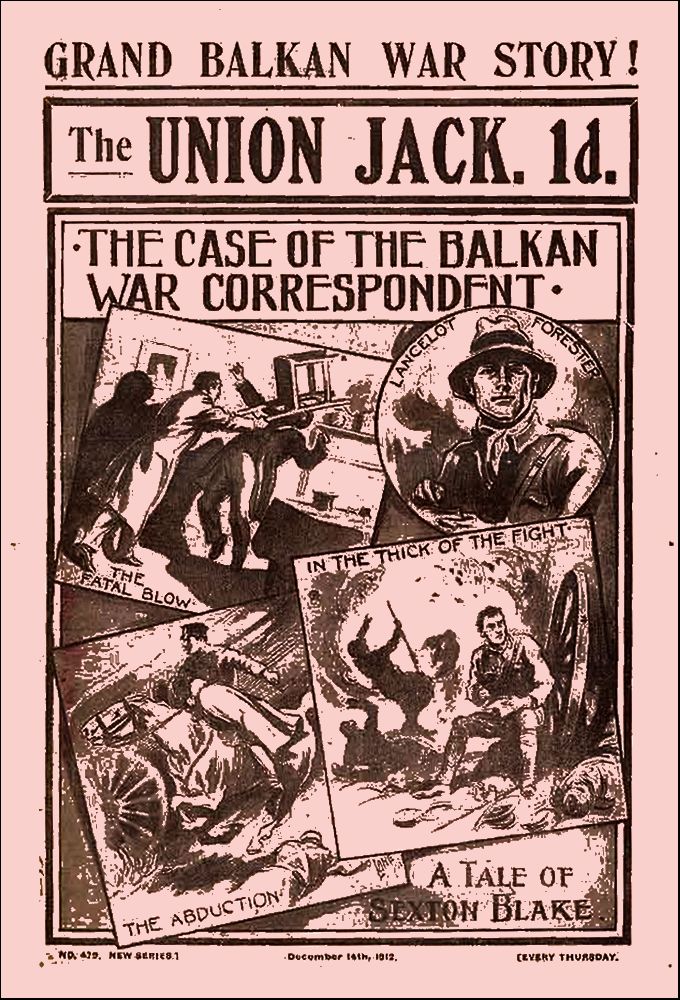
Master and Servant—The Author's Brother.
"YOU are not looking well this morning, Deeke."
"I don't feel very well, sir. I have not been like myself for some time."
"Dear me, I haven't observed that! What is the matter with you?"
"I hardly know, sir. My heart doesn't seem to be altogether right."
"Your heart—eh? That might be serious, Deeke. You had better go to a physician."
"Yes, sir, I will."
Alfred Deeke, paragon of valets and servants, placed on the table a tray containing several letters. With measured tread, stepping like an automatic figure, he withdrew from the room, and shut the door behind him.
He was a dark, clean-shaved man, and was seven years older than his master, whose age was twenty-eight. Lancelot Forester was tall and slim, with brown eyes and hair, and a moustache that he wore because it shortened the labour of shaving. He was not lazy, not in the least effeminate. He had inherited the sturdy qualities of his race, which was an ancient one.
But he had a modest nature and a retiring disposition. He was content with his own company. He belonged to no club, and it was rarely that he saw any of his small circle of friends. After the death of his father, three years ago, he had come up to London, and taken a furnished flat in Merrion Mansions, Portman Square. And he had been living there ever since. In comparative retirement, his simple wants attended to by his admirable servant.
But he was not an obscure person. On the contrary, his name was a household word. From a youth he had felt that he had the gift of authorship, and shortly after settling in London, in the vague hope of adding to his income of £400 a year, he had written a story, and sent it to a leading magazine. It had been accepted and published, and had at once attracted widespread attention. The Press had praised it in the highest terms, hailing the writer as a genius, and a new star in the literary firmament. The appearance of other tales and descriptive articles had established Lancelot Forester's fame.
He was pleased, and yet not pleased. Notoriety was hateful to him, and he was no less averse to business dealings. He had used his own name, and he was not inclined to drop it, or to cease producing fiction. But he found a way out of the dilemma. In a weak moment, the editor of the "West End Magazine" having begged for an interview with him, he had sent his servant to represent himself. And this deception had been kept up. For three years Lancelot Forester had been doing work that had steadily increased his reputation, and, meanwhile, Alfred Deeke had become known to the editors of several magazines as the gifted author. Not one of them had ever laid eyes on Lancelot Forester, who had, in other ways, succeeded in preserving his seclusion. He had refused to see journalists, returned negative answers to written requests for interviews, and ignored letters from photographers who offered to give him a sitting free of charge.
The servant having departed, Lancelot Forester glanced at his correspondence. He opened one envelope, and took from it a cheque, which he thrust carelessly into his pocket. The other letters he put aside. They were obviously from strangers, and he could guess what they contained. He turned to his work again—he was in the middle of a story—but a few minutes later he was again interrupted. Without rapping a visitor threw open the door, and entered the room with unsteady gait. He was a tall, handsome man of thirty, with fair hair and moustache, and a florid complexion. He came forward, trying to walk erect.
"Hallo, Lance!" he said. "Hope I am not disturbing you. Very busy—eh?"
"I am, rather," the author replied, as he finished writing a sentence. "But I am always glad to see you."
"I know that, old fellow. You're a jolly good sort."
"Nonsense, Rupert. Sit down, and have a cigar."
Rupert Forester dropped heavily into a chair, and fumbled with his hat and stick. He was the elder of the two brothers, and he had inherited an income of £2,000 a year and the old mansion known as Mount Royal, situated in a lovely part of Surrey. But he had been, and was, leading a fast life. He had been heavily in debt when he succeeded to the estate, and since then, through his mania for gambling, his financial difficulties had grown worse instead of better. Dissipated and reckless though he was, he had a strong hold on the affections of his brother, who had again and again assisted him.
He was usually well-groomed, and dressed with scrupulous care. But he was not so this morning. His cuffs were soiled, and his scarf was awry. There were smudges of dust on his hat, as if it had fallen to the pavement. His limbs were tremulous, and his cheeks were deeply flushed.
"I can talk to you now," said Lancelot Forester, as he turned from his work. "There is no great hurry about this—" He broke off, and stared closely at his brother. "What is the matter?' he exclaimed. "I—I believe you have been drinking too much."
"What if I have?" muttered Rupert.
"Don't talk like that. It hurts me. Why do you drink to excess?"
"Because I am worried!"
"Then you need money again?"
"Yes, I need it badly, curse the luck! That is what I have come for."
"I am afraid you have come at an awkward time."
"Don't say you have not got it! I must have it. Don't refuse."
"I don't want to, but—"
Lancelot Forester hesitated for a moment, and took from his pocket the cheque he had received by post. He endorsed it, and handed it to his brother, who glanced at it with a scowl.
"What's this?" he sneered. "A hundred pounds? The deuce take your paltry gift!"
"Won't it help you, Rupert?"
"Help me? No; it is only a drop in the bucket!"
"I can't spare more at present."
"But you must have a lot of money in your bank."
"No; my balance is not large. I am not so prosperous as you imagine. I add to my income by writing, but I do not produce a great deal of work."
"I thought you were making thousands a year, Lance, And I believe you are."
"Do you doubt my word, Rupert? Surely you don't think I would lie to you."
Rupert Forester laughed bitterly, and there was an oath on his lips as he rose from his chair. He paced to and fro, brandishing his stick.
"I am desperate," he cried, "I am almost on the verge of ruin! I am harried nearly to madness! Do you want to drive me to the wall? Will you let me go under, and flee from the country? And there is Aline Lawton to be thought of. You are fond of her, aren't you?"
"Yes; I—I am rather fond of her," Lancelot Forester answered, in a husky voice, wincing as he spoke. "Why do you ask?"
"Because she loves me, and I want to marry her."
"Yes; I know that."
"Then don't break her heart, Lance. For her sake, if not for mine, come to my help once more. If you don't it will be the end of everything for me. Aline will throw me over, and I'll go straight to the dogs."
"Don't talk like an absolute fool."
"Well, you know how matters stand."
There was silence for a few seconds, and then the author, who was very pale, sat down to his desk and filled in a cheque for two hundred pounds.
"Here you are," he said, as he gave it to his brother.
"Can't you do any better?" grumbled Rupert Forester.
"I am sorry, but I can't. For your sake I am drawing out nearly all of my balance. Won't this be of service to you?"
"It may tide me over for a time," was the sullen reply.
"I hope it will. But you ought not to be in debt."
"Come, don't preach to me. I don't like it, Lance."
"I wish you would let me talk seriously to you. Do you owe very much, Rupert?"
"A fairly large amount. The greater part of it is due to a shark of a moneylender who is pressing me for payment."
"Who is the man?"
"That fellow Shadrach, of Marylebone Lane. Confound him for a leech and a bloodsucker! If he puts the screw on me any tighter I shall have to—"
Rupert Forester paused abruptly, and bit his lip, as if he was sorry that he had mentioned the name. A shadow flitted across his face. It was not observed by Lancelot, who was deep in thought.
"I am considering how to help you," he said. "I might go to this man, and try to persuade him to give you more time, Shall I—"
"Don't think of it," Rupert Forester interrupted hoarsely, with a gleam of terror in his eyes. "That wouldn't do a bit of good. Not a bit. No, don't go near the fellow."
"Then what is to be done?"
"That don't concern you, Lance. I will fight my own battles, and I dare say I shall pull through somehow."
"Try it, at all events. Take my advice, and save yourself from ruin. There is no excuse for your folly. I am beginning to lose patience with you. I can't understand how you can be such a fool!"
Never before had Lancelot Forester spoken so frankly on the subject that had long preyed on his mind. He continued in the same vein, in stronger language, until he had administered a severe lecture. But there was not much satisfaction to be got out of Rupert Forester. He would not state clearly how his affairs stood. His mood had changed. He seemed to be anxious to have his brother believe that his situation was not so desperate as he had at first led him to think.
"Don't worry about me, old chap," he said, as he departed. "I will take care of myself."
The morning had been spoilt for Lancelot Forester. He was not now in the mood for work. He sat down in his chair and tried to write, but he could think only of his brother, who was so dear to him. He put his pen aside, and rose.
"Rupert is even deeper in the toils than he was willing to admit to me," he reflected. "He is afraid of that money lender. How can I help him? I might ascertain the man's address, and have a talk with him. He has doubtless charged an exorbitant rate of interest, and if I can induce him to accept a reasonable sum, I may be able to pay him off if he will give me a little time. That is not a bad idea. I will see what I can do!"
The amount of his brother's indebtedness, had he known it, would have appalled the author. But his surmise was far short of the mark. Having formed a resolve, his thoughts wandered to another subject. He remembered what his servant had told him.
"Deeke is certainly in poor health,' he said to himself, "and if his heart is troubling him, it is a serious matter. I don't know what I should do without him. I could not find anybody to take his place. I ought to get married, now that it is in my power to earn a large income with my pen. That would be the best thing for me. It cannot be, however. There is only one girl in the world I can care for, and she will never be my wife!"
Lancelot Forester shook his head sadly. He stepped to a cabinet, unlocked and opened it, and took from a shelf the photograph of a beautiful girl. He gazed at it earnestly, and pressed it to his lips.
"My darling!" he murmured. "My sweet, lovely Aline! How dearly I love you! And how hopeless my love is! You will never guess my secret. You care for Rupert, and he cares as much for you. If he gets out of his difficulties, you will marry him some day, as your mother wishes!"
Lancelot Forester did not understand women. Little did he dream that he had won the treasure his heart craved for. At that moment, as he stood there with the photograph in his hand, the living image of it was thinking of him in an old country house near Mount Royal. For several years Aline Lawton had loved him, and he had been too blind to see it.
Unmasked—In the Heat of Passion—The Lost Handkerchief.
NIGHT had fallen on London. A thin drizzle of rain was silting down, and there was a grey, clammy mist in the air. With his hands in his pockets, and his stick under his arm, Rupert Forester was walking along Piccadilly, on the upward slope to Hyde Park Corner. He did not know why he was going in that direction. He had no object in view. He had been playing cards at his club, on the chance of winning; but he had lost a considerable sum, and he was now in a bitter, savage mood. He was thinking of his prospects, of the spectre of ruin that menaced him. He felt as if he were slipping into an abyss.
"Curse the luck!" he muttered. "Everything has been against me. I don't see how I can pull through. I shall have to go smash sooner or later, I am afraid. My only chance lies with Aline. She will have a little fortune some day, when her mother dies. If I could persuade her to marry me, before I am driven to the wall, my creditors would wait. But the girl keeps putting me off, and I have about got to the end of my tether with that bloodsucking old rascal of a—"
Rupert Forester paused, and gave a slight start. A face had loomed out of the murky gloom, into the yellow glow from a street lamp. It was not an attractive face. The owner of it had a hooked nose, and cunning eyes; a black beard and moustache, and curly hair that reeked of pomade.
"Ah, Mr. Forester!" exclaimed an oily voice.
"How are you, Shadrach?" said the other.
"You are the very person I wanted to see. I was on my way to your club."
"The deuce, you were! What for? I wrote to you saying that I would call in a day or so!"
"That did not suit me," replied Laban Shadrach. "I wished to have a talk with you as soon as possible!"
"Put it off until to-morrow!" suggested Rupert Forester.
"No; it must be to-night. Where shall we go? To my place?"
"Yes, if you insist! But what do you want to talk to me about?"
"I will tell you when we get there," was the curt answer. "Come, sir!"
A taxi-cab was summoned, and the two stepped into it. During the ride, which was a short one, there was no conversation. The moneylender puffed silently at a vile cigar, while the young man thought uneasily of the interview that had been demanded of him. He shrank from it, judging that it did not relate to ordinary business. He was worried because he had a guilty conscience, and yet it was difficult for him to believe that his sin could have found him out.
"No, it can't be that!" he reflected. "I dare say the fellow wants to submit some kind of a proposal."
The vehicle crossed Oxford Street, rolled up Marylebone Lane, and stopped before a narrow, three-storied building that was in darkness.
The cabby having been paid, Laban Shadrach unlocked and opened the door of the house, and ascended with his companion to the first floor, where he unlocked another door, and led the way into his private office, which overlooked the street. He shut the door, and switched on the electric-light; and then, with a sinister expression on his face, he took a card from his pocket, and handed it to the young man.
"Look at this," he bade sharply.
Rupert Forester glanced at the slip of pasteboard, on which was engraved the name of his brother. He knew now what was coming, and it was by a hard effort that he retained his self-control.
"That is one of the cards you have sent in to me at different times, I believe," the moneylender continued.
"It is," was the husky reply.
"And it bears your name?"
"Certainly if does."
"You lie, Mr. Forester!"
"Be careful, Shadrach. You forget to whom you are speaking! How dare you call me a liar?"
"You are one. Your Christian name is Rupert, not Lancelot. Yet you have been calling yourself Lancelot Forester, and using his cards, in your dealings with me!"
"You are wrong, Shadrach. I tell you—"
"You need not tell any more lies, sir! I made sure of my ground before charging you with this deception."
There was silence for a few seconds, save for heavy breathing. Rupert Forester was very pale, and there was a glitter of fright in his eyes. He knew that further denials would be useless. His sin had, indeed, been found out, He regretted it now, and wondered how he could have been so foolish. When he had yielded to the temptation that had entered his mind, on the occasion of the first loan, it had been with the vague idea that it would be to his advantage to use the name other than his own.
"Lancelot Forester!" the moneylender exclaimed in derision, as he snatched the card back, and crumpled it in the palm of his hand. "No; I know better than that. Part of what you have told me is true. Your name is Forester, and you live down in Surrey, at your estate at Mount Royal. But you are Rupert Forester, and you have been passing yourself off on me as your brother Lancelot, the well-known author, who resides in London. I do not read fiction, and his name was not familiar to me as a writer, else I should have learned the truth before. It was quite by accident that my suspicions were roused several days ago. I had inquiries made, and discovered how I had been tricked. And now what have you got to say for yourself? Do you still persist that you are Lancelot Forester?"
'No; I will admit that I deceived you," the young man answered. "I am Rupert Forester."
"Then why did you impersonate your brother?"
"I—I hardly know. It was done on a hasty impulse."
"With the intention of defrauding me!"
"Not at all, Shadrach! Don't think that!"
"There is no other explanation, sir!"
There was a pause again. The moneylender's wrathful expression had relaxed, and this encouraged Rupert Forester. He was no longer afraid. He coolly took a cigarette from his pocket, and lighted it.
"Let us discuss the matter sensibly," he said. "It was a foolish trick, and no harm has been done. I will make things all right. Tear up the bills I gave you, and I will sign duplicate ones in my own name. That is square enough, isn't it?"
"Yes, as far as it goes," Laban Shadrach suavely replied. "But I want my money, and that without further delay!"
"I can't pay you now. It is impossible! You must give me more time!"
"I will give you no more time. Not another day! You are in my power, and I am going to deal with you as you deserve!"
"What do you mean, Shadrach?"
"I will tell you, sir. I propose to have both money and revenge. My skin is thick, but beneath it I have feelings like other men. When you have come to my office you have treated me as if I were a dog. You have sneered at my profession, and despised me because I am a Jew. You have called me a shark and a leech and a bloodsucker. Do you suppose I have forgotten all that? No, far from it. I hate you, Mr. Forester, and I intend to get even with you!"
"Do you mean to sue me for the money?"
"I shall put you in prison first. You will have to serve a term for forgery."
"For—for forgery?"
"Yes; you are guilty of that crime. And I can prove it."
"Surely you won't prosecute me!" gasped Rupert Forester, turning white to the lips. "Don't do that, for Heaven's sake! Destroy these bills, and let me give you others! I will pay you soon, every penny!"
"I want revenge more than I want payment."
"You are only trying to frighten me, Shadrach!"
"I am not, sir, I am in earnest. I mean to send for the police, and give you in custody on a charge of—"
"You sha'n't do that, curse you!"
As the young man spoke he turned towards the door, but Laban Shadrach darted quickly in front of him, barring the way. Rupert Forester was desperate, frantic with terror. He seized a chair, swung it aloft, and struck at the moneylender, who partly warded off the blow. With a gasping cry, he staggered and lost his balance. The fireplace was behind him, and as he fell heavily his head crashed against the sharp corner of the fender. He lay there limp and motionless. His assailant stepped forward, and gazed at the prostrate figure.
"What have I done?" he muttered. "Speak to me, Shadrach! I didn't mean to hurt you!"
There was no reply, no movement. Laban Shadrach would never speak again. His eyes were closed, and red drops were trickling through his hair. The fall had battered in his skull, and he had ceased to breathe.
"Dead!" panted Rupert Forester, as he knelt by the body. "Yes, he is dead! His heart is still! By heavens, I am a murderer! They will hang me for this!"
Murderer! The word seemed to be dinning in his ears. He imagined that somebody was shrieking it at him. He straightened up, and for a few moments he stood there half-dazed with horror, trembling in every limb.
"They will hang me!"
As he repeated the words his brain cleared, and he awoke to a sense of his dreadful position. The silence reassured him. His first impulse was to take flight, but the next instant he remembered that there was something he must do first. Mustering his courage, he took a bunch of keys from one of the dead man's pockets, and unlocked and opened a small safe that was built into the wall.
"They must be here," he said to himself.
There were many papers in the safe, and when Rupert Forester had examined a number of them, and had dropped some on the floor, he pounced on what he had been seeking for. He had found the bills that bore the forged signature of his brother. He thrust them into his pocket, listened for a moment, and glanced at the body of Laban Shadrach, not observing the card that was crumpled between his stiffening fingers.
The silence was still unbroken. The murderer stole from the room, and descended the stairs. Furtively he slipped out of the house, leaving the door ajar. He looked to right and left; and then disappeared in the gloom that shrouded the quiet street.
Between nine and ten o'clock that night, half an hour after the flight of the guilty man, Lancelot Forester walked slowly up Marylebone Lane, glancing at the numbers of the houses as he went along. He had obtained the address of the moneylender, and at length he stopped before the building in which were the latter's offices. He had hardly expected to find Mr. Shadrach here at this hour, and he was therefore agreeably surprised to see that a light was burning on the first-floor.
"Ah, this is fortunate!" he murmured. "I shall not have to come back to-morrow. It will be an unpleasant business, but I may be able to do something for Rupert."
Finding the street-door ajar, Lancelot Forester ascended the stairs, and rapped on a door to one side of the landing. There was no response. He rapped twice more, and then, opening the door, he stepped into the room, and saw the motionless figure of Laban Shadrach stretched on the floor. It was a bewildering shock for the author. At a sweeping glance he perceived the indications of the crime—the blood that was oozing from the moneylender's hair, the open safe, the papers that were scattered about in confusion. He knelt by the body, and felt for the heart.
"Dead!" he exclaimed. "The poor fellow has been murdered! And there appears to have been robbery as well. A burglar must have done this dreadful thing!"
No suspicion of the truth occurred to Lancelot Forester. His first thought was of his duty. He must give the alarm and summon the police. But as he moved towards the door a sickening idea flashed to his mind, and so frightened him that he swayed against a desk, and clung to it for support. Beads of perspiration stood out on his brow. He wiped them off with his handkerchief, and as he was trying to put it back in his pocket it slipped from his trembling fingers, and dropped to the floor without his knowledge.
"It won't do for me to give the alarm," he said to himself. "I dare not face the police. They would accuse me of the crime, and everything would be against me. They might believe my story at first, but afterwards, when they found the proofs of my brother's indebtedness to Laban Shadrach, they would suspect and arrest me. And I should almost certainly be convicted. The presumption would be that I came to discuss Rupert's debts with the moneylender, that we quarreled, and that I killed him in the heat of passion. Yes, there would be strong circumstantial evidence. I must get away from here at once, while I have the chance."
It was a foolish decision, perhaps, yet who would not have done the same in a similar situation? The danger was very real, and Lancelot Forester was not to be blamed. On the one hand, should he inform the police of his discovery, it was practically certain that he would ultimately be accused of the murder, and would in all probability be convicted. While on the other hand, should he take to flight, no harm would be done.
His hesitation was brief. He felt that it would be madness for him to run the risk of being hanged for a crime of which he was innocent. He hastened from the room, shuddering as he glanced at the corpse. He crept noiselessly down the stairs, and as he passed out of the house the door clicked shut behind him. There was no one to be seen, much to his relief. He stood listening and peering for a moment, and then walked rapidly away. He was now confident that he was safe, but when he got to Wigmore Street a fresh fear gripped him. Was it not likely, he asked himself, that his brother would be suspected of the murder?
"No, I don't think so," he concluded, after brief reflection. "Rupert was one of many debtors. There must have been numerous others who owed money to Laban Shadrach, and were being pressed for payment."
He hurried on to Portman Square and entered his flat, and then having reached into his pocket for his handkerchief, found that it was missing.
"Where can it be?" he gasped. "I haven't used it since I left the moneylender's office. I must have dropped it there. Yes, I am sure I did! And there is no doubt a laundry-mark on it. By heavens, what danger I am in!"
He sank down in a chair, pale and trembling, and pressed his hands to his throbbing temples.
A Message from Scotland Yard—Blake Gives Widgeon a Lesson.
AT nine o'clock the next morning Sexton Blake and Tinker were at breakfast at their lodgings in Baker Street, and the detective was carrying on a conversation with Inspector Widgeon, who had paid an early visit for the purpose of getting some information regarding a criminal who was being sought for by the police. The silvery peal of a bell was heard from an adjoining apartment, and the summons was answered by Tinker. It was the inspector who was wanted. He hastened to the telephone, and when he returned to the breakfast-room, several minutes later, his face showed that he had learned something of importance.
"What is wrong?" asked Blake.
"Murder," Widgeon replied. "Laban Shadrach, the moneylender, has been found dead in his office in Marylebone Lane, with his skull crushed in. The news was telephoned to Scotland Yard; and I have just been talking to the chief, who knew that I was here. He wants me to go at once to the scene of the crime."
"Laban Shadrach—eh? I knew the man. I should like to go with you, if you don't mind."
"I have no objection, Blake. You might be able to give me some assistance. But you will please remember that this is my case."
"Certainly, my dear fellow. Don't worry about that."
The lad also having expressed a wish to go, Inspector Widgeon gave a reluctant assent, and furthermore agreed, at the detective's suggestion, that the bloodhound Pedro should be taken along.
"That is not a bad idea," he said. "The dog may be useful to us."
A few moments later the three were on their way, accompanied by the big hound.
They had not far to go. A taxi-cab carried them swiftly to the house in Marylebone Lane, and on ascending to the office on the first floor they found there a constable and a youth of twenty. The latter was Mr. Shadrach's clerk, Isaac Levi by name, and it was he who had made the ghastly discovery when he came to the office at the usual hour.
Inspector Widgeon at once took the case in hand. He looked about the room, examined the body of the moneylender, and put several leading questions to the youth.
"At what time did you arrive this morning?" he continued.
"About three-quarters of an hour ago," Isaac Levi replied.
"Did you have to unlock the street door?"
"Yes, sir; I did! The latch was caught!"
"Then the murderer could have secured the door by pulling it shut behind him?"
"Yes, sir!"
"And what about this door, my lad?"
"It was partly open."
"Key in the lock?"
"No, sir, the key is on the bunch that is sticking in the lock of the safe yonder!"
"Was the electric light on or off?"
"It was on, sir, when I came. I switched it off myself."
"Did this belong to your employer?" inquired the inspector as he picked up a handkerchief from the floor.
"I don't know, sir," the youth answered, "but I dare say Mr. Shadrach dropped it."
"Have you disturbed anything?"
"Not a thing, sir. I went for the police at once!"
Inspector Widgeon pursed his lips, and nodded shrewdly. He felt that he was doing well, and that he had made a good impression on his friend Blake. He glanced into the adjoining office, which was in perfect order. For some minutes he searched zealously for finger-prints, finding none; and then he put questions concerning the contents of the safe to Isaac Levi, who stated that he did not know what had been in it, and therefore could not tell whether or not money or papers were missing. The inspector nodded again, and scribbled busily in a notebook.
"The case seams to be clear enough, up to a certain point," he observed. "From the rigid state of the corpse, and the fact that this youth found the electric light burning this morning, it is evident that Mr. Laban Shadrach met his death at an early hour last night. I suggest that he left the street door open, and that a burglar who had been watching for such an opportunity slipped upstairs and into the office. He struck the moneylender down, took his keys from his pocket, and robbed the safe, which doubtless contained a sum of money. Unfortunately he has left no clue behind, and it will probably be difficult to—" Inspector Widgeon broke off, and looked at the detective with a frown. "What the deuce are you grinning for" he demanded.
"I was not aware that I was," Sexton Blake sweetly replied.
"You were, though!" snapped the inspector. "Are we to have another exhibition of your smartness? I suppose you think I have overlooked something of importance?"
"I think so. You have overlooked several things.
"What are they?"
"In the first place, I judge that the murder was more likely committed by some person who was heavily in debt to Mr. Shadrach, and was being pressed for payment. Is not that a natural theory?"
"There may be something in it, I admit. And what else?"
Blake ignored the inspector's question, and turned to the clerk.
"Did you leave your employer here when you went home last might?" he inquired.
"No, sir; we left together at the usual time," Isaac Levi answered.
"When was that?"
"At six o'clock."
"Was Mr. Shadrach in the habit of coming back later in the evening?"
"Not as a rule, sir."
"Could he have had an appointment here with somebody last night?"
"He might have had, sir. It is possible!"
"I am pretty sure that he did!" murmured Blake, "I believe that my theory is right!"
He threw a glance at Widgeon, and another at the lad. He then knelt by the body of the moneylender, went through his pockets, and drew from one of them a handkerchief. He held it up with a smile of triumph.
"It is now obvious," he said, "that the handkerchief found on the floor was not the property of Mr. Shadrach." The inspector bit his lip, and Tinker sniggered. "You should really be more observing, Widgeon," continued Blake. "Here is another example of your carelessness. You do not appear to have noticed that—" as he spoke, he forced open the dead man's right hand, and took from if a crumpled card. He stood erect, and cast his eyes on the slip of pasteboard. "Mr. Lancelot Forester!" he read aloud.
"Mr. Lancelot Forester!" echoed Inspector Widgeon.
"My word, that is the famous author!" exclaimed the lad.
It was a bewildering discovery to all except the moneylender's clerk, who was merely surprised. He had no knowledge of Lancelot Forester's literary reputation, but he was aware that a gentleman of that name had been indebted to his employer, and that the latter had been putting the screw on him. He told the detective this, and also stated that the bills signed by Lancelot Forester should have been in the safe. But they were not there. Sexton Blake quickly satisfied himself on that point. Was the author the murderer? None could doubt that he was, in view of the finding of his card, and the disappearance of his bills from the rifled safe.
"Mr. Forester must have been earning a large income," said the inspector. "It is strange that he should have had to borrow money!"
"He may have been leading an extravagant life," suggested Blake, shrugging his shoulders. "One can never judge!"
"What madness for him to leave his card behind!"
He probably did not know that he had done so, or else he overlooked the fact in his haste to escape!"
"Well, we had better go to his place at once. Do you know where he lives?"
"Yes, he has a flat at Merrion Mansions, Portman Square. By the way, Widgeon, we had better try to make sure of Lancelot Forester's guilt."
"How can that be done?"
"By means of Pedro."
"Can he follow the scent, after so many hours?" asked the inspector.
"I think so," Blake replied. "We will give him a chance, at all events. Come along!"
Isaac Levi and the constable were left in charge of the body, and the detective and his companions descended the stairs and passed out of the building. There was no mark of any kind on the handkerchief, but it was to be assumed that it had been dropped by the murderer. Pedro sniffed at it, ran his muzzle over the pavement for a few seconds, and set off with an eager whine. The sagacious hound had picked up the scent. He trotted on for a short distance, and then swung round the corner into Wigmore Street.
"This looks promising," declared the inspector.
"Yes, we are going towards Portman Square," Sexton Blake assented.
"That settles it," said the lad; "Mr. Forester is the man we want!"
The Dead Man—Lancelot Forester Decides.
WE left Lancelot Forester in a state of great agitation, thinking of the piece of evidence he believed he had dropped in the moneylender's office, and shrinking from the prospect of being charged with the murder he had discovered. But presently he grew calmer. His initials had not been on the handkerchief, and he felt sure, after reflection, that there had been no laundry mark on it, either. Yes, he was right. The missing handkerchief was one of a dozen that he had recently bought, and he had used it for the first time.
His fears had been partly allayed. He steadied his nerves with a whisky-and-soda, undressed, and went to bed. Recurring apprehensions kept him tossing restlessly for a couple of hours, and then he fell asleep, and did not wake until the sun was shining in at his window, which overlooked Portman Square. His first thought was of his ghastly experience of the previous night. He wondered if there would be an account of the crime in the newspapers. He glanced at a clock on the mantel, and saw that it was past his usual time for rising. There was an electric-bell within his reach, and he pressed it once, as a signal to his servant to fetch shaving-water and the morning journal. Several minutes elapsed, but his man did not appear. What could it mean? Such a thing had never happened before. Lancelot Forester rang the bell again and again, and then, getting out of bed, he thrust his feet into slippers, and pulled on his dressing-gown. He was vaguely uneasy.
"What can be the matter with Deeke?" he murmured. "I hope he is not ill!"
He left his bedchamber, stepped across the corridor of his flat, and threw open the door of his sitting-room. And here, lying prostrate on the floor in his pyjamas, was Alfred Deeke. He was unconscious, and breathing heavily. His features were of an ashen hue. He slept in an apartment that communicated with the sitting-room, and it was to be presumed that he had been taken ill in the night, and had fallen here while trying to get to his master.
"Poor fellow!" said Lancelot Forester. "He appears to be very bad. What shall I do if I lose him?"
He was greatly alarmed. By a hard effort he lifted the unconscious man to a couch, and placed cushions under his head. He then hastened to the main hall, with the intention of sending the porter for medical aid. But he changed his mind as a better expedient occurred to him. He returned to the flat, forgetting to latch the corridor door behind him. There was a telephone in his sitting-room, and also a telephone directory. Having found the name and number of a physician who lived near-by, he stepped to the instrument, and rang up the exchange. He was quickly connected, and his call was answered by Dr. Henshaw himself.
"Will you please come at once to No. 12, Merrion Mansions?" said the author.
"I am engaged at present," was the reply. "Is it an urgent case?"
"I am afraid it is!"
"Very well, then. I will be there in five or ten minutes."
"Thank you!"
With a sigh of relief, Lancelot Forester dropped the receiver. His servant was in the same condition, and when he had stood by him for a moment, and noted that his breathing was growing fainter, he went across the passage to his bedchamber, meaning to put on his clothes. But he was so agitated, so distressed by the fear of losing the faithful Deeke, that he wandered aimlessly about the room for a little time. And then, as he stripped off his dressing-gown, he heard footsteps and voices. Two persons were speaking.
"I hope it is not Mr. Forester who is ill, doctor," said one.
"I can't tell you, Mitcham," the other replied. "No name was mentioned."
Mitcham! Lancelot Forester shrugged his shoulders, and shook his head in dismay.
"It is that confounded editor!" he muttered. "He has taken the liberty of calling, and if I show myself, he will learn that Deeke has been impersonating me. What am I to do?"
He was quite right. Mr. Arnold Mitcham, the editor of the "West End Magazine," had come to consult with the author in regard to a series of stories, and he had arrived at the same moment as Dr. Henshaw, with whom he happened to be acquainted. They had ascended the stairs together, and, finding the door of the flat ajar, they had entered without ringing. They were now moving along the corridor. They reached the open door of the sitting-room, and stepped inside. There was a brief interval of silence, broken by the physician's voice.
"By heavens, the man is dying!" he cried.
"Dying!" exclaimed Arnold Mitcham. "Can you do nothing for him?"
"I am afraid not. His symptoms are those of heart failure."
"Try to save him, Henshaw! This is Mr. Lancelot Forester, the famous author!"
"It is too late. I can do nothing for him. Ah, it is all over! He has just ceased to breathe."
"What a terrible thing! What a loss to literature!"
"Yes; it is a great loss, Mitcham. I have never seen him before, but I have read all that he wrote. Poor fellow!"
The conversation sank to murmurs. The voices of the speakers were low and reverent in the presence of the dead. Across the corridor, in his bedchamber, Lancelot Forester was standing as one dazed, his heart throbbing with grief.
"Poor Deeke gone!" he said, half aloud. "I have lost the most devoted of servants! I shall never find another like him! But I must explain the mistake that has been made. I shall have to tell Mr. Mitcham how he was deceived by—"
He paused abruptly, and the colour ebbed from his cheeks, leaving him white to the lips. While speaking, his glance had strayed to the window, and he had just seen something of a startling nature. He stared in fright, drawing quick, deep breaths. A huge bloodhound, held in leash, was moving slowly across a corner of Portman Square. And close behind it were two men and a youth. Lancelot Forester knew one of the men by sight, and he at once realised the danger that threatened him.
"It is Sexton Blake," he gasped, "and that is his dog Pedro. He has been to the moneylender's office, and the handkerchief I dropped there has betrayed me. It has been shown to the hound, and he has followed my scent from Marylebone Lane. They are coming here to arrest me, to charge me with the murder of Laban Shadrach! And it will be impossible for me to prove my innocence. By heavens, I shall be hanged! I wonder if I have time to escape?"
For an instant his brain reeled, and then a saving inspiration flashed to his mind. He was believed to be dead, and he would let that belief prevail. Why should he not? There was hardly a chance in a hundred, he swiftly reflected, that the deception would be discovered until he had got beyond reach of the law. Yes, he would do it. He would pretend to be his own servant. His decision having been made, his next thought was to prepare for the part he was to play. As far as possible, he must look like a servant. Hastily he got into a jacket suit of black serge that was the worse for wear, and put on a frayed collar and a plain tie. With a pair of nail scissor's he sheared off his silky moustache as close as he could, and completed the operation with a razor.
"I am ready," he said to himself, as he looked at the mirror. "Now for it."
The detective and his companions were in the hall of the flat, and they now passed into the sitting-room. Lancelot Forester hesitated, and then, fearing that if he were to keep away any longer, suspicions might be roused, he mustered his courage, and slipped out of his bedchamber. He stepped into the opposite apartment, and pushed through the little group to the couch. In well-feigned consternation he bent over the body of his valet.
"By heavens, he is dead!" he cried hoarsely. "I had no idea that he was so ill! He was breathing when I left him. My poor master! What a loss to me!"
"It is a loss to the world," Mr. Arnold Mitcham said solemnly—"a great loss! You are his servant, I suppose," he added.
"Yes, sir; that is right," Lancelot Forester replied, with tears of genuine grief in his eyes. "My name is Deeke—Alfred Deeke."
There was a brief silence. Sexton Blake, who had been informed by the physician that the dead man was the famous author, had scarcely recovered from the shock. Pedro appeared to be puzzled. He had ignored the corpse, and he now sniffed at Lancelot Forester's ankles. Then he turned his head, and looked at his master; but the latter did not observe the glance of canine intelligence. There was a question on his lips.
"Could Mr. Forester have taken poison?" he inquired of Dr. Henshaw, with whom he was acquainted.
"No; there is no reason to think that," answered the physician, in a startled tone, "I am satisfied that the cause of his death was heart trouble."
"Did he suffer from that complaint?"
"Not to my knowledge, Blake. He was not a patient of mine."
"Perhaps his servant can tell me?" suggested the detective.
"No, sir; I can't," said Lancelot Forester. "If my master had anything wrong with his heart I was not aware of it."
There was silence again. The arrival of Sexton Blake and his companions, and the fact that the bloodhound was with them, naturally called for an explanation. This had just occurred to Dr. Henshaw and the publisher, and the former was about to speak when Inspector Widgeon made a sensational announcement.
"Well, we have come too late," he said. "Mr. Forester has cheated the gallows."
"Cheated the gallows!" echoed Mr. Mitcham.
"Yes. We came to arrest him on a charge of murdering Mr. Laban Shadrach, a moneylender, of Marylebone Lane."
"It is utterly impossible! I won't believe it!"
"It can't be true!" declared the real Lancelot Forester. "My master could not have done such a thing!"
"There must be some mistake," suggested Dr. Henshaw.
"Yes; I am certain there is," vowed the bewildered publisher.
"I am afraid there is not," Sexton Blake said quietly. "It is a strong case. The murder was committed by some person who found Mr. Shadrach at his office after business hours last night, and presumably had an appointment with him. Clenched in the victim's hand was Mr. Lancelot Forester's card, and lying on the floor was a handkerchief. I showed that to my dog, and he picked up the scent that it offered, and led us straight here. Furthermore, it appears that Mr. Forester had borrowed large sums of money from Laban Shadrach, that he was being pressed for payment, and that his signed obligations are missing from the moneylender's safe, which was rifled by the murderer."
"By heavens, how terrible!" cried Mr. Arnold Mitcham. "You must be right! But I don't understand it! Mr. Forester should not have been in need of money!"
It may be imagined with what feelings, with what horror Lancelot Forester heard the detective's concluding sentences. The meaning of the words flashed to his mind almost at once. The truth gripped him with staggering force as he remembered how strenuously his brother had urged him not to visit the moneylender. The room seemed to be swimming around him. The colour ebbed from his cheeks, leaving them of an ashen hue. He was not thinking of his own danger, though he knew that he was in the shadow of the gallows.
"How could Rupert have been such a scoundrel?" he reflected. "He has been borrowing money in my name, and using my cards. It must have been he who murdered Laban Shadrach in a moment of passion. And he has fastened me in a web of circumstantial evidence. But he had no intention of doing that, of course. I don't suppose it occurred to him that I might be accused of the crime. He is my brother, and I will screen him as long as I can, blood-guilty though he is. I will keep up this deception, which may never be discovered. I am dead to the world, and I will remain dead. For Rupert's sake, and for my own, I must let poor Deeke be buried in my name."
Lancelot Forester's decision had been swiftly formed. He had now recovered his self-control, and only for a short interval had he betrayed his feelings. But they had not escaped the notice of Sexton Blake. He had seen the agitation of the supposed servant, and had wondered if it had been caused merely by the shock of learning of his master's crime. A vague shred of suspicion—the semblance of a doubt—had been planted in his mind. He looked furtively at Lancelot Forester and at the corpse, and observed the clothes that each wore. His curiosity had now been roused, but he gave no sign of that.
"Word had better be sent to the dead man's relatives," he said, "if he has any."
"His brother Rupert lives at Mount Royal, in Surrey," stated the publisher. "I will communicate with him, and until he arrives I will remain here, and do what is necessary. What a tragic affair this is! I can hardly believe in Lancelot Forester's guilt."
"Unfortunately, there appears to be no shadow of doubt," remarked Dr. Henshaw.
Lancelot Forester had not shown any fresh agitation on Hearing that his brother was to be sent for. That had entered into his calculations, and he foresaw how he must deal with the emergency.
"I will intercept Rupert before he sees the body," he reflected, "and will tell him all. He will be only too glad to hold his tongue, for his sake and for mine. I have nothing to fear from any source, I think. It is not likely, under the circumstances, that any of the few friends I have in London will come here."
Inspector Widgeon, who had been writing in a notebook, slipped it in his pocket, and turned to the detective.
"We may as well be off," he said.
"We will make a search first," Blake answered. "We may discover something in the way of further evidence."
They went from room to room, and were guided by Lancelot Forester, who calmly saw his letters and papers examined. The search was futile, of course. Nothing was found, and after a few more words with Dr. Henshaw and the publisher, Sexton Blake departed with his companions. They walked slowly back towards Marylebone Lane, and the detective, who was in a thoughtful mood, did not speak for some time.
"I wonder if Lancelot Forester is really dead?" he murmured, half to himself.
"Really dead?" echoed Inspector Widgeon. "What do you mean?"
"I don't know. Only it struck me that the master looked like the servant, and the servant like the master."
"Nonsense, Blake! That is a ridiculous idea!"
"I dare say it is, Widgeon!"
"I knew you had something on your mind, guv'nor," observed. Tinker, "but I can't see what you are driving at."
Sexton Blake shrugged his shoulders, and dropped the subject. He was not satisfied, however, nor did he mean to let the matter rest.
The Man with the Camera—On the Scent.
BEFORE many hours had elapsed, a full account of
the tragedy appeared in the press, and if may be imagined what a sensation was created in London and the provinces when if was learned that the famous author had murdered a moneylender to whom he was heavily indebted, and had died of heart trouble soon after committing the crime. He had not poisoned himself; that was clearly shown by a post-mortem.
Meanwhile a telegram had been sent to Rupert Forester, at Mount Royal; and a servant had replied to the effect that his master had gone abroad that morning, and that he did not know where he could be communicated with. This was a relief to Lancelot Forester, but it did not surprise him. He judged that his brother had fled from fear of arrest, and that he had started on his journey before he had read the papers.
"Rupert must know by now that he has nothing to fear," he said to himself; "but he won't come back in a hurry. He will be glad to keep out of the way on account of my disgrace."
He was only partly right, however. Rupert Forester had dreaded arrest, it is true, when he left home on the morning after the crime. But that had not been the motive for his flight. Though he had destroyed the written obligations he had stolen from Laban Shadrach's safe, he had numerous other debts which he was unable to pay. Having gone down to Mount Royal on the previous night, tortured by his guilty conscience, and worried by his financial liabilities, he had found threatening letters awaiting him; and when he had read these, and had learned that one of his creditors intended to swear out a warrant against him on a charge of obtaining money under false pretences, he had resolved to clear out of the country as speedily as possible.
Lancelot Forester was glad that he was to be spared the necessity of an interview with his brother. So far his imposture had succeeded, and he was not much afraid that it would be discovered. He had assumed the name and identity of Alfred Deeke, and the real Alfred Deeke had been known to Mr. Mitcham as Lancelot Forester. Journalists and other persons had called at the flat in Portman Square, but none of the author's friends or acquaintances had come to view his body. They were fully convinced, as were the general public, that he had murdered the moneylender. There was one friend, however, who held a different opinion. Down in Surrey, a beautiful girl was weeping for the man she had loved, and was refusing to believe in his guilt.
Two days had gone by, and on the following day the funeral was to take place. Mr. Arnold Mitcham, who had been seeing to the arrangements, had been at the flat for a time during the morning. He departed at noon, and shortly afterwards, Lancelot Forester ventured out for a walk. The strain he had endured was telling on him, and he felt nervous and not fear recognition should he meet anybody whom he knew. He was absent for nearly an hour, and on his return, as he was passing quietly along the hall of the flat, he heard footsteps in the bedchamber where the corpse lay.
"That is strange," he reflected. "Who can be in there? Not Mr. Mitcham, or the undertaker. Neither could have entered the flat while I was out. Can it be a thief? No, that is not likely!"
Lancelot Forester was vaguely alarmed. Conscience had roused suspicions in his mind. He noiselessly fetched a chair to the door, mounted upon it, and peeped through the transom into the bedchamber. What he beheld there drove about, and for a few seconds the author watched him. He was now fumbling with the window-curtains, and when he had drawn them aside, for the obvious purpose of letting the light stream on the dead servant, he stepped to a table, and picked up a leather-box that he had put there. He opened it, and took from it a small camera. Lancelot Forester's heart gave a quick throb.
"By heavens, it is Sexton Blake!" he said to himself. "He must suspect the truth! He is going to take a photograph of poor Deeke, and he will show it to somebody who knows me! What am I to do?"
He got carefully down from his perch, terrified by his discovery. He was white to the lips, and shaking like a leaf. It was certain, he knew, that the imposture would be discovered. For a brief interval he stood there, with his brain in a whirl, and then he realised that he must seek safety in flight. Should he be arrested he would be unable to prove his innocence. What money he possessed—it was a fairly large sum—was in his pocket. He dared not-delay to pack a bag. It did not occur to him, in his fright, that he would gain time by removing the chair. Leaving it where it was, he glided to the end of the hall, opened the door, and closed it quietly behind him. He hastily descended the stairs, and slipped out of the building. He was a fugitive from the law, homeless and friendless.
"I must escape," he muttered, as he walked rapidly towards Oxford Street. "I must get to some other country, and find a safe hiding-place. If I should be caught, I shall be tried and hanged for the murder of Laban Shadrach. My own brother has brought me to this!"
Lancelot Forester was quite right. The man in the bedchamber was Sexton Blake, and he had come for the purpose that the author had attributed to him. He had been watching in the vicinity for several hours, and after observing the departure of Mr. Mitcham and the supposed servant, he had entered the building, and gained admission to the flat by means of a skeleton-key. Lancelot Forester had been gone but a few moments when the detective's task was finished. Having let the light in at the window, he had taken a couple of photographs of the dead man; and then, as he was leaving the room, he observed the chair standing outside the door, and at once guessed what its presence there meant. He hurriedly searched the flat, and his suspicions were confirmed when he found that the servant had disappeared.
"I have been caught napping," he said to himself. "I should have been more careful. The fellow must have come in while I was at work, and heard some noise in the bedchamber. He quietly fetched a chair, peeped through the transom, and realised what I was doing. And now he has bolted, of course. Well, one thing is fairly clear to me. The corpse yonder is that of the servant Deeke, and the man who has been impersonating the servant is Lancelot Forester. I must have absolute proof of that, however. Shall I try to establish the fact in London? No, that might take too much time. I will have the films developed, and run down to. Surrey in the morning!"
Blake's Visit—The Photograph—Aline Confesses.
"MR. SEXTON BLAKE? How strange! It must be the famous detective of that name!"
The words were uttered half aloud, and the speaker was a beautiful girl of twenty, tall and slim, with eyes of a violet hue, and hair that was like burnished bronze. She was standing by an open window of Furze Hall, an old country house that was a mile from Mount Royal, and in her hand was a card that had been brought in to her by a servant. Lovely indeed she was, though the rose-tint had faded from her cheeks, and her eyes showed that she had been weeping.
"Mr. Sexton Blake?" repeated Aline Lawton. "What can he want to see me for, I wonder?"
She left her boudoir, and went slowly downstairs, and into the drawing-room, where her rare beauty and charms held Blake spellbound for several seconds. Then he bowed to the girl, who was looking at him in perplexity.
"You are the great detective, Sexton Blake?" she murmured, "And you really wish to speak to me?"
"Yes, Miss Lawton, if you will be so kind, I must apologise for intruding on one who is a stranger to me. But you will forgive me, perhaps, when you have learned the object of my visit. It relates to Mr. Lancelot Forester."
Aline Lawton echoed the name. She gave a start, and for an instant her lip quivered. She sat down, and the detective who had been standing, did the same.
"I am anxious to get some information about the person I have mentioned," he went on.
"And why have you come to me?" the girl inquired.
"For a very simple reason. On the day of Mr. Forester's death I had occasion to search his flat in London, and in his desk I found a couple of letters written by you to him. That fact will account for my coming here. I am sure that you can give me the information I want. I should have gone to Mount Royal, the residence of Mr. Forester's brother, but I understand that the house is closed."
"Yes, it is. There is nobody there. And what is it that you want to know, Mr. Blake?"
"I wish you to identify somebody."
With that the detective took from his pocket two small photographs, and handed them to Aline Lawton. She held them to the light from the window, and studied them closely, with a puzzled expression.
"Can you tell me who that is?" asked Blake, after a pause.
"No, I have no idea," the girl replied. "The man's face is not in the least familiar to me. But—but it looks as if he had been dead when these were taken."
"You are quite right. Those are photographs of the dead body of Mr. Lancelot Forester."
"No, that is utterly impossible! You are wrong! This is not Lancelot Forester!"
"Are you certain of that, Miss Lawton?"
"I am absolutely certain. I know Mr. Forester well."
"Did you ever see his valet?"
"No, never!"
"Well, you are looking at him now. It was the valet—Alfred Deeke—who died, and he was buried in the name of his master, who assumed the servant's identity."
"You don't mean that Mr. Forester is not dead?" exclaimed Aline Lawton.
"I mean just that," declared the detective. "It was I who took these photographs. I suspected the truth from the first, and now you have convinced me. The servant is dead, and Lancelot Forester is alive."
"Alive? I can hardly believe it! Why should he have practised such a deception?"
"You should be able to guess his motive. He had committed a murder, and he knew that the police would soon be on his track. The timely death of his servant gave him an opportunity that he was prompt to seize. He shaved off his moustache, and impersonated the man Deeke, thinking that the imposture would not be discovered. But my suspicions were roused, as I have stated. I photographed the corpse yesterday, and without my knowledge I was watched by Lancelot Forester, who took alarm, and fled."
"He has escaped, then?" cried the girl. "Oh, how glad I am! I hope he will never be caught! He is innocent, Mr. Blake! I am certain of that! Not for a moment did I believe in his guilt! It is impossible that he could have—"
A burst of tears choked the sentence on her lips. For a time she wept bitterly, a prey to intense grief and emotion. Gradually her sobs died away. She recovered her self-control, and there was entreaty in her moist eyes as she looked up at the detective.
"A terrible mistake has been made," she said. "The world may condemn Lancelot Forester, but I know that he is innocent."
"I don't think so," Blake answered coldly. "The evidence against him was overwhelming. You must admit that."
"I care nothing for the evidence," Aline Lawton said scornfully. "My own heart, my knowledge of Lancelot forester, tells me that he did not commit that murder. He could not have done so. There could have been no motive. He is one of the best and noblest men that ever lived. And he had a good income. There could have been no necessity for him to borrow money."
"It is a fact that he owed a large sum of money to Laban Shadrach. And it is also certain that he was in the man's office on the night of the murder. He dropped his handkerchief there."
"Then he went on his brother's behalf, Mr. Blake. That is how I account for it. Rupert Forester has led a reckless and extravagant life, and it is more than likely that he borrowed money from Mr. Shadrach. Lancelot was devoted to him, and I have heard that he has helped him again and again when he was in difficulties. And where is Rupert now? And why did he disappear? It was because he was heavily in debt, for one reason. His affairs are in the hands of his solicitor, and the servants have left Mount Royal, and creditors are trying to attach the estate."
"You interest me, Miss Lawton," said Blake, in a startled tone. "Do you realise the meaning of your words? You are suggesting that Rupert Forester borrowed money from Laban Shadrach in his brother's name, and that he was being pressed for payment; that Lancelot Forester went to Shadrach to plead for his brother, and that he found the man dead.
"Yes, I believe all that," vowed the girl.
"And do you suggest, also, that it was Rupert Forester who killed the moneylender?"
"I—I am afraid it was, Mr. Blake. I have thought so from the first."
There was an interval of silence. Sexton Blake had risen from his chair, and was pacing to and fro with knitted brows. Was the girl right? Was Rupert Forester the murderer? If so, it was natural to assume that Lancelot Forester, having discovered the crime, and foreseen that suspicion would fall on him, had impersonated the dead servant both for his own sake and in order to screen the brother whom he judged to be guilty. The detective's opinion was wavering. There was more than a doubt in his mind.
"I am glad that I came to you," he said. "I am willing to admit that I may have made a mistake. By the way, there is a point that you may be able to clear up. I had meant to call on Mr. Mitcham, the editor of the 'West End Magazine,' but perhaps you can tell me how it was that he identified the body as that of the author?"
"I can easily account for that," Aline Lawton replied. "Lancelot Forester was always of a modest and retiring nature. The fame that had come to him must have been distasteful, and I have no doubt that he arranged with his servant to impersonate him in his business dealings with the editor of the magazine."
"Ah, that is very likely. It is not an important matter, however, since you have satisfied me that it was the valet who died. Lancelot Forester is alive, and a fugitive from the law."
"And do you believe in his guilt, Mr. Blake?"
"No; I am more inclined to believe the contrary, after what you have told me."
"Then help him," implored the girl, "Do not let him suffer this injustice. You can bring the truth to light, if anybody can. I had been wondering what I ought to do when your card was brought to me, and now I want you to—" She paused for a moment, and was very near to tears again. "I am going to confide my secret to you," she continued, in a low and agitated voice. "For years I have loved Lancelot Forester, but he has been too blind to see it, and my pride has kept me from letting him know, though I am certain that he cares for me. And not only in that respect has he been blind. He has believed that I loved his brother, and that I intended to marry him some day. How could he have been so stupid? He might have seen that I felt nothing but contempt for Rupert."
"You should have undeceived him," said Blake.
"I wish now that I had. But it may not be too late for both of us to be happy."
"I trust not Miss Lawton."
"It is in your power to make us so. Oh, don't refuse! Find poor Lancelot, and get the truth from him, and prove his innocence. And don't spare Rupert. If he killed the moneylender he ought to be punished as he deserves."
"I agree with you, Miss Lawton, and I am inclined to take up this case from your point of view. But it may be a difficult matter to trace Lancelot Forester."
"It should not be," declared the girl. "I am sure he is hiding in London, for he disliked the Continent."
"And what of his brother Rupert?" inquired Blake. "Does anybody know where he is?"
"No, I don't believe even his solicitor knows. Nothing has been heard of him since he disappeared."
"Well, Miss Lawton, I will do all that I can. I will search for Lancelot Forester, and if I find him, and he convinces me of his innocence, I will try to clear him of the charge of murder."
"Thank you, Mr. Blake—thank you so much! I am certain that you will succeed. I will hope for the best until I hear from you."
There were tears of gratitude in Aline Lawton's lovely eyes, and Blake left her in cheerful spirits. But as he retraced his steps from Furze Hall to the railway-station he thought rather dubiously of the promise he had made, and of the task that confronted him.
"I am afraid I let the girl influence me too much," he said to himself. "I am by no means sure that her theory is right."
Blake Forms a Theory—Off to the War.
SEVERAL months had gone by, and the summer had faded to autumn. Mount Royal remained closed, and at Furze Hall a beautiful girl was grieving for the man she loved. Nothing had been heard of Rupert Forester, and his brother was still a fugitive from the law, hiding no one knew where. The secret shared by Aline Lawton and the detective had been kept from the public and from the police. Nobody had the slightest suspicion that if was not the body of Lancelot Forester that had been laid to rest in a quiet corner of a London cemetery. Sexton Blake, true to his promise, had searched zealously for the missing man. But his efforts had been utterly futile, and other work had at length compelled him to give up his task for the present.
Meanwhile, the storm that had for years been hovering over the Balkans had burst suddenly, and with staggering force. The Red Gods of War had been let loose, and hundreds of thousands of men were under arms, Turkey was pitted against the Allied States. Fortresses had been captured, and towns sacked. Great battles had been fought, with immense sacrifice of life. It was a struggle between the Crescent and the Cross, between Christendom and the Ottoman Empire.
It was a night at the end of October, and the gale that was shrieking along Baker Street, and the drenching rain that was pattering. on the pavements, made Sexton Blake's consulting-room the more cheerful and cosy by contrast. The soft light from the shaded lamps vied with the red blaze of the fire, before which, on a rug, Pedro, the bloodhound, was lying asleep. Tinker was stretched luxuriously on a couch, and the detective, seated by the table, was absorbed in the columns of a newspaper. He presently looked up, and there was such a strange expression on his face that it attracted the attention of the lad.
"A penny for your thoughts," he said. "What are they?"
"I am thinking of that hitherto unknown war correspondent the 'Courier' has got hold of," Blake replied.
"You mean the one who signs himself Basil Marlatt?"
"Yes, that is the man."
"You don't know him, do you?"
"No; but E should very much like to see him."
"So should I, guv'nor. I have read most of his stuff, and it takes a lot of beating."
"It can't be beaten," declared Sexton Blake. "It is unique, inimitable. The fellow has no rival in his line. He is a genius of the first water. His pen is mightier than a painter's brush. The letters that he has sent home are word pictures, marvellous, and fascinating, and soul-gripping, The reader can imagine that he is on the field of battle, in the thick of carnage. He can hear the thunder of the artillery, and the splitter of the rifles, and the cries of the wounded. But what I was going to say, was—" He broke off, and, leaning back in his chair, he slowly filled a pipe and set it alight. "A suspicion has been growing in my mind for some time," he continued, "and now I am almost convinced that it is correct. This Basil Marlatt must be Lancelot Forester.
"My word! exclaimed Tinker. "That would never "have occurred to me!"
"No, for you have not! yet cultivated a literary taste."
"Haven't I, though? My taste is as cultivated as yours is."
"Don't be absurd, my boy. I don't suppose you have more than glanced at the descriptive articles that Lancelot Forester wrote for the 'West End Magazine' and for other publications, while I have not only read them with the keenest interest and admiration, but have absorbed their style. And it is obvious that the same hand that penned those, penned the descriptive letters of the war. They are alike in many respects. They contain the same brilliant, clever phrases. I have fully made up my mind. I am certain that it is Lancelot Forester who has been writing these letters to the 'Courier' over the signature of Basil Marlatt. I cannot be mistaken."
"What will you do about it," asked the lad—"wait until he comes home?"
"No; he might get shot," Blake replied. "He is probably in a reckless mood, and does not care whether he lives or dies."
"You are not thinking of going out to the Balkans, are you?"
"I am, Tinker. I have strong reasons for believing that Lancelot Forester did not kill Laban Shadrach, and I promised Miss Lawton that I would find him as soon as possible. Yes, I shall go out to the seat of war, and have an interview with the man. And if he should satisfy me that he is innocent, I will make every effort to clear him, and to fasten the crime on the guilty person."
"Can I come with you, guv'nor?"
"Yes, we will go together. But we will have to leave Pedro behind. I should not care to take him into danger."
"How can you arrange things so that we can move about as we like?"
"That will not be difficult, my boy. Basil Marlatt is with the Bulgarian forces, so I shall get a letter from our Foreign Office to some high official at Sofia, and he will give us passes that will permit us to travel anywhere. We shall have the same privileges that are accorded to war correspondents."
"That will be all right. I wish we were there now, guv'nor. We will have a chance to see some big battles, perhaps. Do you remember that letter in which Basil Marlatt wrote of the glittering wall of advancing bayonets, and the line of crimson flame that spurted from thousands of rifles, and the screaming and crashing of the shells as they—"
Crash! Tinker and the detective started violently, and Pedro leapt to his feet with as much celerity as he would have shown had a shell really exploded in the room. But it was only a tray containing dishes that had fallen, and it had been dropped, in her agitation, by Mrs. Bardell. A few seconds before the door had been almost noiselessly pushed open by the portly landlady, and she had stood listening, her presence unobserved, to a part of the conversation. Little did she care for the broken china that strewed the floor, She picked up the empty tray, and flourished it as she waddled towards her master.
"I 'eard you!" she cried. "I couldn't 'elp 'earing, sir! Don't do it! Don't you and Master Tinker go out to that dreadful war in the Balkings! I've been reading about it; and orful ain't the word for it! The newspapers say it's 'orror piled on 'orror!"
"It is worse than that," declared the lad, with a grin.
"Don't worry," bade Blake. "We are not going into danger."
"I know better than that!" wailed Mrs. Bardell, as she thumped the tray on the table. "You'll never come back alive! You'll be scalped by them wild Turkers, or shot and 'anged by the Bulgers, or be tortured by the Mountain negroes! You'll be brought 'ome cut to bits, and I'll 'ave no kind master, and no roof to cover my poor 'ead!. It'll be cruel 'ard, and I beg you to think of my feelings before you—"
"Suppose you gather up that wreckage, and fetch us our dinner?" interrupted Sexton Blake.
"You might come to the Balkans with us," suggested Tinker. "The Bulgarians would be jolly glad to have you on their side, I'll bet."
"Why would they?" demanded the landlady, in a suspicious tone.
"Because you would scare the Turks into fits. They would run for their lives if you were to lead a charge against them."
"Indeed! You take that for your impertinence!"
The lad ducked his head, but not in time to escape a clout on the ear. Mrs. Bardell's wrath dissolved to grief again. The worthy soul was genuinely distressed. She brought the dinner, and while she was serving it, she sniffed frequently, and dropped a tear into the soup. But her further entreaties failed to move her master from his purpose, of course. On the following day he obtained the necessary letter, and purchased suitable kits for himself and Tinker. And that night they travelled from Charing Cross, bound for the seat of war, in quest of the man whom they believed to be Lancelot Forester.
At Sofia—-The Soldier of Fortune—Alarming News.
"WHAT sort of a place is it, guv'nor?"
"It is a mixture of East and West, my boy. You will soon see for yourself."
The place referred to was Sofia, the capital of Bulgaria, and the speakers were Sexton Blake and his young assistant. They had just arrived, early in the evening, at a dingy little railway-station. And when they had bargained for the hire of a rickety vehicle, drawn by the shadow of a horse, they rattled alone a muddy road to the heart of the city, where Tinker admiration and amusement.
The detective's phrase had been appropriate. Sofia was neither one thing nor the other. It was both splendid and squalid. Here were imposing boulevards planted with trees, and well-paved thoroughfares with fine shops and electric
lights; there cows were browsing amidst rank thickets, and groups of peasants in shaggy sheepskins were talking politics. Here one saw modern and luxurious hotels, and restaurants where people dined in evening-dress; there the eye rested on overhanging houses that were black with age, crumbling hovels, and filthy courtyards.
The vehicle rolled by the King's palace, and stopped before a pretentious, cream-coloured Government building. After some parley, a sentry admitted Blake and the lad, and an attendant took them to an ante-room, where they were kept waiting for ten minutes, and were then ushered into a large apartment. There were two persons here. The one, an elderly man, with bushy whiskers and a huge moustache, was General Dubrovitz, the Minister of War. He was seated at a desk, and behind him, in a stiff attitude, stood a man who wore the uniform of a Bulgarian captain of cavalry. He was perhaps thirty years of age, and was tall and handsome, with fair hair, and bronzed, clean-shaven features.
"I understand, sir, that you have a letter for me," said the Minister, speaking in English.
"Yes, your Excellency, from the Foreign Office in London," Sexton Blake replied, as he stepped forward to the desk.
With that he handed a sealed envelope to General Dubrovitz, who tore it open, and read what it contained. The severity of his countenance relaxed, and he looked with a genial smile.
"I gather from this letter of introduction," he said, "that you are the well-known investigator of crimes."
"Yes, that is my profession," the detective modestly assented.
"It is a pleasure and an honour to meet you, Mr. Blake. Your name is, of course, familiar to me. Your reputation has spread far beyond the British Isles."
"Your Excellency is very kind."
"I mean no flattery, sir. I wish that Bulgaria had a man of your ability."
There was a brief silence. The young officer had given a quick start, and his bronzed cheeks had paled for an instant. He was now gazing furtively at Sexton Blake, and in his cold, blue eyes was a sinister gleam.
"I am informed," continued the Minister of War, "that you have come to my country on private business, and that you desire permission to travel at large."
"Yes, that is quite right," Blake replied.
"I must ask you, sir, to explain the nature of your business."
"Certainly, your Excellency! I wish to have an interview with an Englishman, Basil Marlatt by name, who is the war correspondent of the 'London Courier.'"
"Can you find him?"
"Yes, I think so. His movements have been reported to me by telegraph during my journey, and he should now be with your troops who are operating against the Turkish town of Mustapha Pasha."
The young officer, who had given another start at the mention of Basil Marlatt, was breathing hard. The sinister light in his eyes-had deepened.
"Very well," General Dubrovitz said to the detective, "I shall be happy to oblige you."
"I thank your Excellency? murmured. Blake. "And can you tell me how we can most speedily get to the front?"
"I can do more than tell you, sir. I can help you, as it happens. You can travel by a troop-train which is to leave Sofia some time between midnight and dawn. The soldiers will leave it near the village of Killoe, whence they are to march over the hills to a certain point. But you and your young assistant can go on to the frontier."
"I am greatly indebted to you for this service."
"Pray do not mention it, Mr. Blake. The pleasure is mine. If you will wait for a few moments I will give you passes that will carry you wherever you may desire to go. By the way, my companion here has just brought me a despatch from his Majesty the King, and he is returning on the troop-train. He will be in charge of it, and will look after your comfort. Meanwhile, he will see that you have something to eat, and will then escort you to the train. It is ready, and you can go to sleep in one of the carriages. But I am forgetting to—" The Minister of War paused, and turned to the young officer. "Let me introduce you to Captain Ralph Wallace, a countryman of yours," he added.
The officer was now cool and collected. There was friendliness in his eyes as he shook hands with Blake, who glanced at him in surprise.
"So you are an Englishman," he said.
"Yes, that's right," Captain Wallace replied.
"I rather imagined that you were. You had difficulty, I presume, in obtaining leave from your regiment."
"I have never belonged to a British regiment, Mr. Blake. I am a freelance, a soldier of fortune. I have seen active service in Mexico, South America, and Morocco. Several weeks ago, when the Balkan war-cloud began to loom on the horizon, I came to Bulgaria, and offered my sword to King Ferdinand. And I now hold his commission."
During this brief conversation General Dubrovitz had been writing the passes. They were soon ready, and when Sexton Blake had put them into his pocket, and had heartily thanked the Minister, he and Tinker left the building with the young officer. They stopped on the pavement for a moment, while Captain Wallace beckoned to the driver of a public vehicle that was approaching.
"I don't altogether like that fellow," said the lad, in a low tone.
"Why not?" inquired Blake.
"I don't know why, guv'nor," was the answer; "but that's the way I feel."
At an early hour of the morning, while it was yet dark, the troop-train left Sofia, filled with soldiers who were eager to fight for their king. Many enthusiastic friends and relatives saw them off, and the noise roused Tinker and the detective, who had been sleeping in the forward carriage, which they had entirely to themselves. They slept again, and when next they awoke the sun was shining, and they were far from the Bulgarian capital.
"We are in luck," said the lad. "I thought we would have to rough it."
"That will come later, no doubt," replied Sexton Blake. "Wait till we get to the front."
The journey was a long one, but it was not monotonous to them. For mile after mile, all of that day, they rode slowly through a mountainous country, frequently catching glimpses of cavalry on the march, and of bands of villagers drilling. There were occasional stops at wayside stations, where they were able to purchase food. Meanwhile, they had seen nothing of the young officer in whose charge they had been put.
Darkness fell, and not long afterwards, when the silvery horn of the moon had risen above the horizon, the train stopped again. It was a lonely spot. To right and left were steep hills, and close in front was a bridge that spanned a deep gorge. Evidently this was the spot that General Dubrovitz had mentioned, for a bugle was blown, and the soldiers began to swarm out. Blake and the lad left the carriage to watch them, and as they were standing by the side of the line Captain Wallace came up to them, and apologised for his lack of attention. He had been busily engaged, he stated, in studying maps and evolving a plan of campaign.
"We part here," he continued, "but I trust that I shall have the pleasure of meeting you again. The village of Killoe lies yonder, and I march in that direction with the troops. You and your companion will go on with the train, which is carrying a quantity of supplies for the army. You should reach the frontier in a couple of hours, and there you will be delayed. Your passes, however, will enable you to advance into Turkish territory; at least, as far as—"
The officer paused, interrupted by a husky shout. It came from the direction of the bridge, where the dusky figure of a man had just risen to view above the rim of the gorge. He approached with heavy, lagging steps, as if he was exhausted, and the moonlight showed him to be an elderly peasant clothed in sheepskin garments. He glanced at Tinker an the detective, and stretched out his arms to Captain Wallace.
"The train, Excellency!" he gasped. "The train! Do not let it go on! Hold it!"
"It is not going at once," the officer replied. "But why should it not?"
"Because there are Turks on the other side of the valley."
"Turks over there? It is impossible!"
"It is true, Excellency! Many of them. They are in the thickets yonder, and I fear that they mean to destroy the bridge."
The bronzed hue of Captain Wallace's face flushed to crimson, and his eyes flashed for an instant. This was not observed by Blake and the lad, who were looking at each other in consternation. The attention of the other officers in charge of the troops was attracted, and several of them joined the little group, and listened eagerly to the peasant's story. While seeking for a stray cow he had stumbled on a force of the enemy who were lying in cover on both sides of the railway-line. They had not discovered him, however. He had retreated noiselessly, and then, being afraid to cross the bridge, he had climbed down one side of the steep gorge and up the other.
"I hastened to warn you," he concluded. "I knew that a train was coming, for I heard the whistle of the engine when it was far off."
The man was closely questioned, but his statements were not shaken. He had been so near to the enemy, he declared, that he had seen their fezzes. The Bulgarian officers were inclined to credit his tale.
"It looks as if the fellow was right," said one.
"No doubt he is," assented another. "There are gaps in the line of our army, and a body of Turks could easily have got through, and come this way by the Mouktir Pass."
"Let us go over and attack them," urged a third.
"No, that would be madness," observed a fourth. "They must have laid their plans for blowing up the bridge while the train was on it."
"For my part," Captain Wallace said quietly, "I do not believe this story. It is too ridiculous."
His comrades glanced at him in surprise, and shrugged their shoulders. The engine-driver and the fireman had joined the party, and both were pale with terror.
"I shall stop where I am," vowed the driver. "I am no coward, but I have a wife and child to care for."
"I have warned you, Excellency!" muttered the peasant. "I have told the truth, and I can do no more."
"You have made a mistake," replied Captain Wallace, with a scornful smile. "Your eyes deceived you. They are Bulgarian soldiers yonder, No Turks would have run such a risk of being cut off."
"Bulgarians do not wear fezzes, Excellency."
"It was too dark for you to see what they were wearing."
"But I was so close to them that—"
"That will do," Captain Wallace interrupted. "You have not convinced me. We shall soon learn, however, whether you are right or not. It is necessary that the supplies should get through to the front without delay," he added, turning to his comrades, "and, therefore, I will steal over there and investigate this man's tale. If the troops that he saw are. Turks—which I strongly doubt—I will return. If they should be Bulgarians, I will fire two shots with my revolver, and the train will then move on across the bridge, taking with it these two Englishmen. After it has crossed, I will come back, and will lead the march to Killoe."
This daring plan startled the Bulgarian officers, who had faith in the peasant's story. They declared that the venture would mean death, and begged Captain Wallace not to throw his life away. Sexton Blake also protested earnestly, but the British soldier of fortune was not to be turned from his purpose.
"I can take care of myself," he said. "Be sure that I will return, even if there should be Turks yonder."
With that he glided forward along the line, and a few seconds later he was crawling on hands and knees across the bridge.
The Explosion—A Chance in a Million—Captured.
THERE was only a crescent moon. The light that it shed was not very strong, and now and again it was obscured by drifting clouds. The dim figure of Captain Wallace melted into the gloom, and was lost to sight. The soldiers, who numbered nearly a thousand, had stacked their arms. They discussed the situation in low tones, while their officers paced to and fro. More than a quarter of an hour elapsed, and at length two revolver-shots were heard, one immediately after the other. Silence fell, and it was evident that the shots had been the promised signal.
"It is all right," exclaimed a young lieutenant. "The soldiers yonder are Bulgarians, after all."
"No, Excellency, they are Turks!" declared the peasant, who was greatly excited. "Did I not see them with my own eyes? I swear to you by all I hold sacred, that I speak the truth."
The officers laughed at the old man, but his strenuous assertion impressed Sexton Blake. He put several questions to him, and then turned to the lad.
"I am almost inclined to think that there is something wrong," he whispered.
"I told you that I mistrusted that fellow Wallace," replied Tinker. "But what could be wrong?"
"I don't know. It is a mysterious business, and I can't fathom it."
"I wonder if Captain Wallace can be acting as a spy for the Turks?"
"I don't suggest that, my boy. No, it is most improbable. There may be no ground for my suspicions. At all events, you and I had better ride on the engine, instead of in our carriage."
"Right you are, guv'nor. I have a sort of a feeling that something is going to happen."
The driver and fireman, whose apprehension had been allayed, returned to their posts. For a moment the detective hesitated, gripped by a subtle impulse that bade him remain where he was. He shook it off, however, and he and Tinker mounted to the footplate of the engine. They offered to take the peasant with them, but he refused, and the last they saw of him he was talking and gesticulating in the midst of the Bulgarian officers.
"Here we go!" said the lad.
There was a blast from the whistle, and the train started. It moved slowly out upon the bridge, which was supported by three stone piers. The bottom of the ravine was three hundred feet below. Faster and faster, with gathering speed, the engine and carriages rolled over the frail structure. Two-thirds of the distance had now been traversed, and Blake and Tinker had forgotten their vague suspicions when there was a tremendous explosion, followed by the rumble and clatter of falling masonry. The farthest pier had been shattered, probably by dynamite, and a short distance in front of the train the railway-line had been split apart. The glow of the moon revealed a gap that was a couple of yards in width.
"Look, guv'nor, look!" exclaimed Tinker.
"We are lost!" gasped the fireman.
The broken ends of the metals appeared to be directly opposite to one another, and those on the near side were a little higher than the others. In the flash of a second Sexton Blake observed this, and as quickly he realised that there was a chance—a chance in a million—of averting the disaster.
"Full steam ahead!* he shouted to the driver. "We may be saved!"
But the terrified man, thinking that he might be able to stop in time, shut the steam off instead of increasing its power. He had no more than done so when a thrust from Blake sent him reeling. With a frenzied curse he struck at the detective, — : who opened. the throttle as far as it would go. And then, turning on his assailant, he pinned him fast.
"By heavens!" panted Tinker, who had at once grasped what was in his master's mind. "Can we do it?"
It was the slimmest of chances. It seemed to be inevitable that the train would be hurled into the gorge. The lad felt as if the blood was freezing in his veins, and there was a wild gleam in Sexton Blake's eyes as he peered ahead. The fireman was speechless with fright, and the driver was struggling like a maniac to break the detective's hold. Nearer and nearer came the gap. There were a few seconds—a little eternity to those in peril—of horror and suspense. And then, as the narrow chasm was reached, the momentum of the engine carried it across, and its wheels landed squarely on the opposite metals. It ran on with unabated speed.
"We've done it!" exclaimed Tinker. "We've done it, guv'nor!"
There was a violent jerk, and a rending sound. The tender also had safely made the leap; but the coupling-pin which joined it to the carriage behind had snapped, and the next instant the train leapt over the side of the embankment and went plunging into space. Down it went to the bottom of the ravine, with a tremendous crash that reverberated into muffled echoes.
As by a miracle the daring attempt had succeeded. One danger had been averted, but another now threatened. At the least capture was to be feared, and perhaps worse would befall. Blake let go of the driver, and whipped his revolver from his pocket.
"Be ready," he said. "There must be Turks waiting for us yonder."
"I know that," replied the lad, as he drew his own weapon. "Do you mean to run through them?"
"Yes, if we can. We will do our best."
"Right you are, guv'nor!"
There was no time to say more. The engine and tender, still moving under full pressure of steam, had passed off the rocking, trembling bridge, and were thundering along a low embankment that was skirted on both sides by scrub and thickets and stunted timber. As yet there was no sign of the enemy; but now, by the glow of the moon, a large boulder was seen to be resting on the line a short distance in front.
"By heavens, look!" gasped Tinker.
"Jump, all of you!" shouted Sexton Blake. "Jump for your lives!"
As he spoke he took the leap, and the lad sprang after him. They struck the embankment, fell, and rolled over and over to the bottom. They were not hurt. As quickly as they could they scrambled to their feet, and darted back a few yards. As they stopped the engine crashed into the obstruction, and it and the tender were thrown off the line, and hurled down the slope. And buried beneath were the mangled bodies of the driver and fireman, who had been too terrified to jump.
"My word, that was a close shave for us!" said Tinker, "Come on, guv'nor! We had better get out of this while we have the chance."
But it was too late. The silence was broken by a clamour of voices, and a swarm of dusky figures appeared in the murky gloom. They were Turkish soldiers in khaki uniforms and red fezzes. They gathered menacingly around Blake and the lad, and a young officer played the light of a lantern on them.
"Who are you?" he demanded, flourishing a pistol. "You are not Bulgarians."
"No, we are Englishmen," Sexton Blake calmly replied.
"So much the worse! Why should you fight for Bulgaria?"
"We had no intention of fighting. We are non-combatants, and we were on our way to the front on private business."
"That is a lie, you dogs! By Allah, you shall be punished as you deserve!"
"We claim the right to be treated as prisoners of war."
"You have no such right, since you are armed."
"Yes, for protection only."
There was a brief pause. Sexton Blake looked about him, but could see nothing of Captain Wallace. All was quiet on the other side of the ravine. Now appeared an elderly officer with a grey beard and moustache. For a few moments he and the young officer conversed in low tones, and then the latter turned to the captives.
"You will come with me," he said. "And you also," he added, addressing one of the soldiers.
He led the way, and Tinker and the detective followed him, with the soldier at their heels, to a small hut that was a couple of hundred yards from the railway-line, and was falling to decay. They were thrust inside, and their wrists were tied behind them. The officer took their revolvers from them and departed, and the soldier sat down on a stone just outside of the open doorway, and placed his rifle across his knees.
"A nice scrape we are in!" grumbled the lad.
"It might be worse," said Blake. "I don't think we shall be harmed."
"What do you suppose they will do with us?"
"We shall probably be sent to Constantinople."
"Well, it doesn't look as if we were going to find Basil Marlatt."
"I am afraid not, my boy."
They were silent for a time, seated side by side against the rear wall of the hut. It was not likely that the Turks would remain here long, since they were in the enemy's country. They had made a daring raid, doubtless with the object of doing as much damage as they could, and then beating a hasty retreat. Many of the soldiers could be heard talking near by, and others were obviously engaged in destroying the railway-line, for the sounds of picks and shovels at work floated from that direction.
"Is there any chance of our being rescued by those Bulgarian troops?" inquired Tinker, breaking the silence.
"I don't think so," Blake answered. "They were under orders to go to a certain point; and by now, I dare say, they are marching through the hills, though they know that there are Turks over here. They would have taken it for granted, after the explosion that shattered the bridge, that Captain Wallace fired those two shots in self-defense, and not as a signal."
"I wonder if he did?"
"I am pretty sure that he did not. I am strongly of the opinion that he purposely drew the train on to its destruction."
"Why would he have done that, guv'nor?"
"Because he is a treacherous scoundrel. I imagine that he offered his services to the Bulgarians so that he might act as a spy for the Turks."
"My word, I believe you are right! That would explain what has happened."
"But it is not certain, my boy. I may be wrong. We must give the man the benefit of the doubt.
"I don't think there is any doubt about it," said the lad. "Fancy an Englishman being low enough to play such a dirty, sneaking game! I should like to betray him to the Bulgarians."
"If he goes back to them we may get a chance to show him up," Blake replied. "At all events, there is a possibility of our being able to escape, for my wrists have not been bound very tightly. I will see what I can do," he added. "And now let us stop talking. It will be to our advantage if the sentry believes that we are asleep."
Free—Amazing Revelations—The Cavalry Charge.
SEXTON BLAKE'S task was more difficult than he had expected it to be; but in the course of a quarter of an hour, after strenuous tugging and twisting, he succeeded in loosening his fetters to such an extent that he was able to slip his hands through them. He untied the lad's wrists, and the two crawled warily and noiselessly towards the door. Meanwhile, the sentry had been overcome by drowsiness, and his head was now nodding on his breast.
When the detective's hands gripped him around the neck he struggled desperately, but could not utter a sound. There was a pistol in his belt, and with this Tinker dealt him a rap on the head that at once stunned him. The man was dragged into the hut, and hastily gagged and bound. And then his elated captors stole out into the night, one carrying the rifle and the other the revolver. Blake had slipped his cap into his pocket, and had put on the Turk's fez, so that he should be less likely to rouse suspicion if he were to be seen.
"We are in luck," said Tinker, in a low tone.
"We are not free yet," the detective reminded him.
"We soon will be, if we are careful. But which direction shall we take? Have you got your bearings?"
"I think so, my boy. We will work round to the south, and try to strike the railway-line."
"And then push on towards the frontier?'
"Yes, that is my plan."
Heavy clouds had overcast the sky and obscured the moon, and the darkness was to the advantage of the escaped prisoners. They could still hear the sounds of picks and shovels, and that helped to guide them.
Slowly and furtively, crouching low, they made their way through the Turkish camp, amidst the scrub and bushes. They frequently passed near to sleeping soldiers, but they were not discovered. Thus they went on for two or three hundred yards; and at length, as they were creeping by a thicket, beyond which a light glimmered, Sexton Blake tapped the lad on the arm.
"Look!" he breathed.
"My word, it is Captain Wallace!' whispered Tinker.
"Yes; and he is with a Turk."
"I wonder what they are talking about?"
"We will try to learn, risk or no risk. Come, my boy! Follow me, and be very careful."
On hands and knees, as stealthily as cats, they crawled into the thicket for several yards, and paused close to the verge of an open glade. A fire was burning here, and on the opposite side of it two men were seated on a log. One was Captain Ralph Wallace, and the other was the elderly Turkish officer whom Blake and the lad had previously seen. They were evidently on friendly terms, and they were speaking in English.
"You are a long time in making up your mind," the British soldier of fortune said impatiently. "I can't stop here all night."
"I don't know what to do," the Turk replied. "I don't like your suggestion. It is repulsive to me.'
"Yet your race are not noted for tender feelings."
"That may be, effendi. But I am no butcher. I am not inclined to shoot those prisoners, who, by your own admission, are non-combatants."
"I ask it as a favour that is due to me, Hazim Bey."
"What do you mean?"
"I refer to the services that I have rendered to your cause. Are they not worthy of consideration?"
"They are, it is true. You have risked your life among the Bulgarians, and have sent us much valuable information."
"Then give me the reward that I demand."
"But why are you so anxious to have the Englishmen put to death? Are they enemies of yours? Do you fear them?"
"Yes. It is in their power to do me a harm. That is why I wish to be rid of them."
"They could not harm you if I were to send them to Constantinople."
"They would probably be released soon after they got there. I dare not take any chances."
"You put me in a difficult position, effendi."
"Do not refuse, Hazim Bey, I beg of you. I had hoped that these people would perish when the bridge was shattered by the explosion, but I was disappointed."
There was a short interval of silence. The Turkish officer rested his chin on his hand, and stared moodily into the fire. The soldier of fortune watched him uneasily.
"What are you going to do about it?" he inquired.
"It shall be as you wish," Hazim Bey reluctantly answered, "I will have the prisoners shot at daybreak, before we begin our march."
"Very well!" said Captain Wallace, with a gleam of triumph in his eyes. "That is understood. You will not fail me?"
"No; you may be sure that I will not. I will keep my word."
"I thank you, Hazim Bey. I shall be indebted to you for a great service. And now, since the matter has been settled, I will be off. I will not wait for the execution."
"And return to your military duties?"
"Yes. I will cross the ravine, and overtake the column that is marching west through the hills."
"You are a brave man, effendi. I should have thought that you would be afraid to go back."
"Why so?"
"Because of what has happened here to-night. How will you explain that to your comrades?"
"Nothing could be more simple. I will tell them that I fired the shots in self-defence, that I was captured by the enemy, and that I subsequently made my escape."
"Well, good luck to you, effendi!"
"And the same to you, Hazim Bey. We shall meet again at the first opportunity."
The two shook hands, and, with a word of farewell, Captain Wallace departed. His footsteps faded to silence, and by then Sexton Blake and the lad had crawled noiselessly out of the thicket, and resumed their flight.
They had overheard all the conversation while they were lying in cover, and it can be imagined what their feelings were. Had they not succeeded in escaping they would have been shot at daybreak. They knew now that Captain Wallace was indeed a spy, and that he had decoyed the train over the bridge. But they were thinking less of these things than of the bewildering, staggering fact that this man—their own-countryman—had persuaded the Turkish officer to put them to death, and had admitted that it was in their power to harm him.
"I don't understand it," said Tinker. "What can it mean?"
"I don't know," Blake replied. "It is the deepest. kind of a mystery."
"Do you suppose he got us mixed up with two other persons who are enemies of his?"
"That is possible, but not likely. No, he could not have—" The detective paused as a startling idea flashed to his mind. "I have it!" he added. "I have found the explanation!"
"What is it, guv'nor?"
"Can't you guess, my boy? Captain Wallace must be Rupert Forester."
"By heavens, I never thought of that!" said the lad.
"It has just occurred to me," replied Sexton Blake. "I see it all now. Rupert Forester must have known that his brother was a war-correspondent at the front, in the name of Marlatt. He was present when we obtained our passes at Sofia, and stated that we had private business with Basil Marlatt. He naturally assumed that we suspected him of being the murderer of Laban Shadrach, and that we had come to the Balkans to find his brother Lancelot, and prove his innocence of the crime."
"You are right," declared Tinker. "Wallace is certainly Rupert Forester."
"There can be no doubt of it," vowed Blake. "Nothing else can account for his desire to have us put to death. Moreover, that shows clearly that he did murder the moneylender. Otherwise, why would he have been afraid of us? What a scoundrel he is! A scoundrel and a spy! And he is going back to play the same nefarious game among the Bulgarians, who have full confidence in his loyalty to their cause. But we will have a reckoning with him. We will expose him, and have him punished as he deserves."
"Yes, if we get the chance. We are forgetting that we are not out of danger yet, guv'nor. We will be shot in the morning, as sure as fate, if we should be recaptured by the—"
"Hark!" the detective interrupted. "What is that?"
There was a shout at no great distance and it was immediately followed by the sharp crack of a rifle. A bugle pealed, and its loud, menacing note was drowned by a shrill commotion. In less time than it takes to tell, the alarm had spread through the Turkish camp. On all sides the sleeping soldiers sprang to their feet, terrified and bewildered. A muffled, clattering sound was swelling neater and nearer. Again the bugle pealed, and now, out of the murky gloom, appeared the dusky forms of a body of horsemen.
"They are cavalry!" gasped Tinker.
"They must be Bulgarians!" exclaimed Blake.
He was quite right. The explosion that had partly destroyed the bridge had been heard by a force of irregular Bulgarian cavalry who were some few miles away, and they had suspected the presence of the enemy along the railway-line. Their scouts had sought for them and found them, and now, having approached as quietly as possible, the wild mountaineers had delivered a sudden attack.
The darkness lent an added horror to the fray. Panic reigned supreme. Bloodthirsty shouts blended with yells of fright. Firing from the saddle, and slashing with their swords, the troopers galloped furiously through the camp.
Sexton Blake and the lad were surrounded by Turks, but no heed was paid to them. They ran here and there, now dropping into a thicket, and now crouching behind a clump of stunted trees. Bullets grazed them, and more than once they were nearly trampled under the iron-shod hoofs. They saw many an Ottoman soldier slain before their eyes, and it was little short of miraculous that they were not killed themselves, But at length the charge passed by, and left them unscathed. The clamour and the firing ebbed behind them, and they pressed on as fast as they could.
"There are Turks about," panted Tinker. "I can hear them running yonder."
"They won't molest us," Blake replied. "They are frightened!"
They sped on blindly, not knowing in which direction they were going. They had lost their bearings, and there was not the faintest glimmer of the moon to guide them. They did not encounter any of the surviving Turks. For a mile they continued their flight, over comparatively open ground, hoping to strike the railway-line. Then they stumbled on to a narrow trail that was no more than a bridle-path, and this presently led them to a range of low, wooded hills. They were tired now, and were glad to avail themselves of the shelter that offered.
"I don't believe we are anywhere near the railway," said the lad.
"Probably not," Blake answered. "I am pretty sure that we have been going south, though."
"Then we had better hold to the same course, guv'nor."
"Yes, that is what I propose to do. The main thing at present is to avoid falling in with any of the routed Turks."
They had narrowly escaped with their lives, and it was with thankful hearts that they trudged along the trail. For two or three hours they followed its windings, now and again skirting the edges of deep ravines; and at length, having emerged from the hilly fastnesses, they stopped by a smooth, white road that bore traces of wheels and hoofs, On the opposite side were more hills. There was no habitation in sight. All was quiet.
"Which way now?" asked Tinker. "Do you know?"
"I don't know, but I can make a good guess," Sexton Blake replied. "I think that if we bear to the left we shall be moving towards the frontier."
"And that will be right for us, of course?"
"Yes, for Basil Marlatt is with the Bulgarian army that has penetrated to Turkish soil. We must find him, and get his story from him. And when we return through Bulgaria we will seek for Captain Wallace, and put an end to his villainy."
"It is our duty to do that, guv'nor. As for Basil Marlatt, you believe now that he is Lancelot Forester, don't you?"
"Yes, I am certain that he is, after what has happened to-night," declared Blake. "There can be no doubt of it. Come along, my boy," he added. "We have a long distance to go, but we may be able to hire horses at some village."
The Power of the Fez—Timely Aid—On Again.
EARLY in the morning, as the grey light of dawn was flushing on the horizon, a sharp turn of the road brought into view, two or three hundred yards @ ahead, a small Bulgarian village. It was a typical place of its kind—a long, narrow street of white-walled dwellings and scattered trees, flanked right and left by precipitous crags. It was a welcome sight to Sexton Blake and the lad, who were hungry and thirsty and tired. They quickened their lagging steps.
"We can get something to eat here, I suppose?" said Tinker.
"I should think so," Blake assented. "There ought to be an inn of a kind."
As yet there was nobody astir, so early was the hour. But when the weary travellers had got a short way into the village, a dog barked at them from a garden, and the noise brought a man to an upper window of his cottage. He threw it open, and peered out.
"Turks! Turks!" he bawled at the top of his voice. "Rouse yourselves! The Turks are here!"
The alarm spread as if by magic; waking the sleepers. Faces appeared at other windows, and the cry was carried from lip to lip as fierce eyes stared at the strangers. Though the able-bodied inhabitants of the village had gone to the war, those who remained were formidable enough. In a brief space of time doors were being thrown open to right and left, and grey-bearded old men and women and children were swarming out in scanty attire. None of them had firearms but some carried cudgels, and other picked up stones.
"Turks! Turks! Kill them!"
The tumult rose to a higher pitch, and the snarling and yelping of mangy curs blended with it. The detective flourished his rifle, and began to run.
"We must get out of this,' he said. "We can't stop here.
"Why not?" asked Tinker. "Can't you explain to the people that they are mistaken?"
"No; they are so ignorant that they would not believe us. And yet it is curious that they should at once have taken us for Turks."
"I can account for that guv'nor. You are still wearing that red fez you took from the sentry last night."
"By heavens, so I am! What a stupid thing!"
"It may cost us our lives!"
"Hardly so bad as that. But we are going to have an unpleasant time of it, my boy. That is certain."
The red fez! It had been stupid indeed to retain that badge of Ottoman nationality. But the mischief had been done. It was too late now for Sexton Blake to substitute for the hated fez the cap that was in his pocket. He and Tinker sped along the street, hoping to escape without being molested. The advantage was with them at first, since the infuriated people were behind them. But before they had gone far, others emerged from the cottages in front of them, and blocked the way.
"My word, that's done it!" exclaimed the lad. "Look at them!"
"We must get through without hurting them," replied Blake.
"We can't, guv'nor."
"And we can't go back. There is nothing for it but to go on."
Old men were spitting and cursing, and shrill-voiced viragoes were brandishing pokers and brooms. Even the little children, clinging to their mothers' skirts, were animated with hatred.
"Stand aside!" shouted the detective. "Let us pass!"
A storm of threats was the answer that he got. A lean, sinewy old greybeard suddenly rushed at him, caught hold of his rifle, and wrenched it from him. He swung the weapon aloft, and as quickly Tinker levelled his revolver at the assailant. But it was empty, and only a click followed the pulling of the trigger. Sexton Blake dodged the blow aimed at him by the Bulgarian, however, and he and the lad continued their flight.
Their tempers were roused now, and their menacing appearance had some effect on the peasantry, who did not try to stop them. But the fugitives had to run a dangerous gauntlet. Stones and other missiles were hurled at them, and dogs snapped at their heels, as they sped along the narrow street. Both were struck more than once, and they were limping, and nearly exhausted, when at length they got clear of the village. There was no shelter for them. The rocky hills to right and left were too steep to be climbed.
"They are coming!" panted Tinker. 'And they are gaining on us!"
"Yes, I see they are," assented the detective, as he looked over his shoulder.
"What shall we do?"
We will have to make a stand, my boy."
For a couple of hundred yards more they pressed on, keeping in the lead by strenuous efforts. And then, as they swung round a curve, they saw a large tree close to one side. They planted themselves against this, and Sexton Blake seized a bough that was hanging within his reach, and broke it off. He snapped it in two, and gave one of the pieces to the lad.
"We will defend ourselves as long as we can," he said. "We may get the better of our enemies."
"Right you are!" Tinker answered. "Be ready!"
The enraged peasants, who were scarcely less than a hundred in number, were now within twenty yards. They swarmed on in a confused mass, the women side by side with the old men.
"Turks! Turks!" they yelled. "Kill them! Slay them!"
They made a rush, and the fight began. Blake and the lad had the longer reach, and for a few moments, with their rude weapons, they successfully defended themselves against their assailants, who tried in vain to break through their guard.
Finding that they could not do so, they drew back and picked up stones. And now the advantage was all with them. Tinker was hit twice, and then a jagged missile struck Blake on the head, and he dropped his cudgel and reeled to the ground.
Shouts of triumph rose, and as the lad stood in front of his master he felt that there was no hope for either of them. But now a Bulgarian officer, who had approached unobserved : from the south, spurred his horse into the thick of the mob. He sent them staggering, and pulled up in front of the tree.
"What does this mean?" he demanded. "Why were you attacking these people?"
"They are Turks," replied one of the villagers. "They are enemies of our country."
"They are certainly not Turks, you fools! They look more like Englishmen."
"That is what we are," put in Tinker. "We are English!"
"What are you doing here?" inquired the officer.
"We are on our way to the front on private business," the lad answered.
"Have you permission to travel in Bulgaria?"
"Yes, we have passes. We got them at Sofia."
"Let me see them."
Tinker knew where to find the papers. He took them from Sexton Blake's pocket, and gave them to the officer, who briefly examined them, and handed them back.
"You have made a mistake!" he exclaimed angrily. as he shook his sword at the peasants. These people are British, and they have the right to travel where they please. If you harm them it will be at your peril. Begone! Clear out of this!"
The rabble was only half convinced, but they did not dare to disobey the command. Slowly and sullenly, with muttered threats, they retreated towards the village. The officer, who was dusty and haggard, turned to the lad.
"Is your companion badly hurt?" he asked.
"I don't know," Tinker replied. "He was struck by a stone."
"Well, you had better abandon your intention. The front is no place for you. Our troops are besieging Kirk Kilissa, and you would be in danger there."
"We must go on, sir. Can you tell me how we can get to the scene of the fighting?"
"You will have to walk. It is the only way."
"And what about my friend, sir? He needs medical assistance."
"You must care for him yourself. There is no physician or surgeon to be had. As for the villagers, I doubt if they believe what I told them. You had better not appeal to them. They are ignorant people, and if you were to—" The officer broke off, and sheathed his sword. "I am carrying despatches," he added, "and must lose no time. I am sorry I cannot do anything more for you."
He spurred his horse, and rode on at a gallop, and was soon out of sight. The villagers had disappeared. Sexton Blake lay motionless, with blood trickling from a slight wound on his forehead. The lad knelt by him for a little time, and made futile efforts to rouse him from his stupor. He stood up, and looked in despair at the bleak, lonely hills that stretched to right and left.
"The guv'nor may be seriously injured," he said aloud.
"He may die if he don't get medical assistance. By heavens, what am I to do? Is there no chance of—"
He paused, and glanced in the direction of the village, listening to a throbbing, rushing noise. It drew nearer and nearer, and presently a large, grey motor-car turned the curve of the road. It came swiftly on, and stepped in front of Tinker. The driver was a Bulgarian soldier, and the single occupant of the car was a beautiful woman of perhaps thirty, with a sweet, sad face, and eyes of a violet hue. She wore a blue cloak and bonnet, and around her arm was a white band, But her plain attire, which was of importance.
"What has happened here, my boy?" she inquired, in English, in a refined voice.
"We were attacked by the people of the village, madame," the lad answered, thus addressing her at a venture. "They took us for Turks. But we are British."
"Yes, so I perceive. And your friend? Is he—"
"He has been hurt, madame. I do not know how badly. He ought to have surgical attendance."
"Don't worry about that. I belong to the Red Cross Society, and it is fortunate that I should have come by at this time. But what are you doing here?"
"We were on our way to the fighting, madame," Tinker replied. "We wish to find an Englishman who is there as a war correspondent."
In a few words he gave a fuller explanation, telling of the adventures he and his master had met with, and disclosing the latter's name.
"So this is Mr. Sexton Blake," the lady said, in surprise.
"Yes, madame," the lad assented.
"I have often heard of him. And I think I once saw him in London. And now to—"
As the lady spoke she stepped from the car with a medical case in her hand. Deftly and quickly she bathed the detective's wound with an antiseptic lotion, and tied a bandage round his head.
"I do not think he is seriously hurt," she said, "though there may be a slight concussion of the brain. I am going to the front, my boy, and I will take you both with me. Come!" she bade, turning to the military chauffeur. "You must help me with this gentleman."
Sexton Blake was lifted into the car, and placed on one of the seats, with a cushion under his head. The lad followed, and a moment later the powerful vehicle was dashing along the road on its way to the seat of war in the south. Tinker glanced furtively at the beautiful woman, wondering who she could be. She was no ordinary person. He was sure of that, from her voice and manners.
"I—I would like to know your name, madame," he said awkwardly.
"Certainly, my boy!" was the reply, accompanied by a smile. "I am the Princess Zenia of Bulgaria."
Blake Awakes—To the Front—Found!
"WHERE the deuce am I?"
The words were uttered aloud, and the question was naturally the first that rose to Sexton Blake's lips when he opened his eyes. He was lying. fully dressed, on a narrow camp-bed. With the exception of a stool it was the only piece of furniture in a room that was in a curious state. There were ragged holes in the ceiling and in the walls, and on the floor were heaps of dust and rubbish. The air vibrated with muffled, spluttering sounds that were frequently punctuated by noises like the crashing of thunder.
"Where the deuce am I?" the detective repeated, "And what is all the row about?"
He sat up, and rose to his feet. He felt stiff and languid, but otherwise he was quite fit. For a brief interval he was bewildered, and then, as he discovered that a bandage was tied around his head, his mind cleared, and he remembered being hit by a stone during the fight with the villagers. And what afterwards? Where was he? He stepped to the window, and gazed down in surprise. There were white-walled dwellings opposite to him, and immediately below was a muddy street. Here khaki-clad infantry were moving in one direction at a trot, and rumbling in the other direction was a procession of carts filled with wounded soldiers. Now and again a mounted officer galloped by, shouting orders. A transport-waggon rolled past, the driver lashing the horses madly.
"By heavens, it is war!" muttered Blake. "The sounds I hear yonder are rifle and artillery fire! But how did I—"
"Good morning, guv'nor! So you are up, are you?" It was the voice of Tinker, who had just entered the room. "You look pretty fit,' he continued. "How are you feeling?"
"Quite all right!" Sexton Blake replied. "There is nothing the matter with me."
"Do you remember what happened?"
"Yes; I was hit by a stone while we were defending ourselves against those peasants. How long ago was that?"
"It was yesterday morning, guv'nor. Just after you were struck down a Bulgarian officer, who was on his way north with despatches, drove the mob off. And then, as I was wondering what I was to do with you, the Princess Zenia of Bulgaria came along in her motor-car."
"The Princess Zenia?"
"Yes, that's right. She belongs to the Red Cross Society, and when she had bandaged your wound she took us both into the car, and brought us on to the front. We arrived last evening, and we are in a Turkish village, in a house from which the inhabitants have fled. The princess gave you a sleeping-draught on the way, and the army-surgeon that she sent here gave you another one. He said you would be nearly as well as ever in the morning."
"So I am," declared Blake. "I have quite recovered. And what is the news? There is a battle in progress?"
"Yes, the biggest kind of a one," the lad answered. "The Bulgarians have been fighting hard for two or three days, attacking the Turkish army that is holding the town of Kirk Kilissa. And everybody believes that the place will fall to-day.
"Are we near the scene of the fighting?"
"Very near. We are within three miles of it."
"I wonder if Basil Marlatt is there? Have you heard anything about him?"
"Yes; I made inquiries, and I was told that he was at the rear of the Bulgarian forces."
"Then we must find him without delay."
"Not now," urged Tinker. "You had better rest for a few hours."
"No; I am going at once!" vowed the detective. "The man may be killed before we can get his story from him."
"Well, if you have made up your mind, there will be no use in my trying to prevent you from—"
"Not a bit of use, my boy. I am able to walk, and I must find Basil Marlatt. But before we start I should like to thank the Princess Zenia for her kindness."
"You can't de that, guv'nor, for she is somewhere at the front. I have not seen her since last night."
"Well, I will thank her at the first opportunity," said Sexton Blake. "She must be a noble woman. Come along, Tinker!" he added. "Let us get out of this. I am impatient to see what is happening."
The two descended the stairs and left the house. With difficulty they made their way along the street, which was clogged with soldiers and vehicles. More than once they were stopped by officers, but when they had shown their permits they were allowed to go on. They could plainly hear the sounds of the battle, but they saw nothing of it until they got beyond the village; and then, as they came to a higher ground, the field of action was disclosed to their view. It surpassed all that their imagination had pictured.
In front, stretching in a wide semi-circular belt, was the attacking army. It was moving against the Turkish lines, and not far behind the latter were the massed houses and fortress of the town of Kirk Kilissa. More than a hundred thousand troops were engaged, though the combatants could not be seen distinctly for the vast cloud of smoke that over-hung the scene. Through it flashed the battery guns, crash following crash in quick succession. Shells were bursting incessantly, and the crackling of rifles was as steady as the roll of drums.
"My word!" gasped the lad, his eyes bulging.
"It is a magnificent sight!" exclaimed Blake. "Look, my boy, there are infantry charging yonder, where there is a rift in the smoke. Do you see them?"
"Yes; they must be going to storm the fortress again. They are Bulgarians. They made three attempts yesterday, and each time they had to fall back. I don't believe they will succeed this time."
War correspondents are often under fire, and Sexton Blake and Tinker knew that they would probably have to go into danger if they were to find the man whom they believed to be Lancelot Forester. They went steadily on, over open and rugged ground; while past them, towards the village, streamed carts filled with wounded men, and others who were able to limp to the rear. All bore their sufferings patiently. Their only regret was that they had been put out of action. In some of the carts were men who had been mutilated, while they lay on the field, by Kurds and Albanians attached to the Turkish army.
Louder and louder rang the din of battle. Nearer and nearer sounded the thundering batteries. The rifle-fire swept like streaks of flame amidst the powder-smoke. Yonder, on a hillock, King Ferdinand was watching the stupendous engagement through field-glasses. Blake and the lad had advanced for more than two miles, and they now stopped on a slope that dipped gently towards the Bulgarian lines, which were a comparatively short distance in front.
The fight had raged here not long before, and Turkish shells were still falling in the vicinity. The earth was ploughed up, and the trampled grass was stained crimson. Dead soldiers and mangled horses were scattered about, and field-ambulances were busy with wounded soldiers, rendering first aid to them as they were brought in. The air reeked with iodoform and other drugs. Surgeons were operating with bared arms, and Red Cross nurses were administering chloroform to the patients. Horrors were to be witnessed on all sides. Tinker shuddered and turned pale.
"We are under fire here," he said.
"We will take the chances," the detective replied. "He don't think we will go any farther, though."
It was a place of peril, but those who were engaged in the work of succour were utterly indifferent to the risk. And so also, it seemed, was a man who was twenty yards off to the left. He was sitting on the ground, with his back against the wheel of a gun-carriage, and was writing on a block of paper that was supported on his knees. He was obviously a war correspondent.
"I wonder if that can be Basil Marlatt?" observed the lad.
"He looks like the man who impersonated the valet Deeke. And that is who it is, I am sure."
"You have not disguised yourself yet, guv'nor. You don't want him to recognise you, do you?"
"No, not at once. He would be alarmed. I must wait until I get on friendly terms with him, and can find a suitable opportunity, before I open the subject that has brought us to the Balkans."
Blake had not left England unprepared for the game he meant to play. As he spoke he took a false moustache from his pocket, and furtively fastened it to his lip.
"Come, my boy!" he added. "We will have a chat with the fellow."
And with Tinker at his heels he strolled over to the war correspondent, who glanced up at them; and went on writing.
"I beg your pardon," said Sexton Blake, "but do you think it is wise to expose yourself? You are in danger here'
"I know that," the man answered, "but I can't shift at present, I am a correspondent, and I am writing an important despatch to my paper in London. I want to get it off by wire as quickly as possible."
"May I ask what journal you represent?"
"The London 'Courier,' sir."
"Ah, then you must be Mr. Marlatt!"
"Yes; quite right. But how do you—"
"I have heard of you. Your name is familiar to the British public through the columns of the 'Courier.' You have made a name for yourself by your telegrams and descriptive articles. It is a pleasure to meet you."
"It is very good of you to say so," murmured the correspondent. "But I have no desire to be famous."
"At all events," said Blake, "you are a very intrepid man,"
"It is not bravery, sir. It is the nonchalance of a man who does not care whether he lives or dies."
"Then you do not value your life?"
"No; it is worthless to me."
Basil Marlatt flushed, as if he had spoken more freely than he felt to be prudent. He drove his pencil over the paper, and there was a brief pause. At last Sexton' Blake had met the man whom he had come so far to find, and he was fully convinced, from what the latter had just stated, that he was indeed Lancelot Forester. Moreover, he had recognised him as the impersonator of Alfred Deeke. The correspondent tore a sheet from the pad, and looked up with a gleam of curiosity in his eyes.
"Are you also journalists?" he inquired.
"No; we are nothing of the sort," the detective answered.
"You are Englishmen, of course?"
"Yes, from London. And we have come to the front on a matter of private business, I don't know how long we shall be here, but I trust that we shall be better acquainted with you before we—"
"Watch sharp!" interrupted Tinker.
A weird screaming noise was heard. A shell from the Turkish batteries was soaring through the air in a downward flight, and was already very near. There was no time to try to avoid it. The missile struck a short distance to one side of the gun-carriage, and burst with a tremendous explosion and a blaze of coloured lights. Blake and the lad felt the shock, but were not thrown off their feet. For a few seconds they were enveloped in a pungent, yellowish cloud of smoke, and when it lifted from them they saw that Basil Marlatt was calmly writing. His face was tranquil, and yet he had been wounded. A fragment of metal had carried away part of his trousers-below the right knee, and ploughed a slight furrow across the calf of his leg.
"That was a near thing!" he said. "Not hurt, are you?"
"No; but you are," Blake told him. 'You have been hit!"
"I don't think so. I felt a burning sensation, but I supposed that was merely—"
Basil Marlatt straightened out his leg, and looked in surprise at the bleeding wound. Without a word he bound a handkerchief around it, and resumed his rapid scribbling. A moment later he stopped, however, and glanced up with a troubled expression.
"This is most unfortunate!" he said. "The leg is beginning to pain me, and I may have to have it dressed at one of the field-ambulances before I can walk any distance."
"What is the difficulty?' asked Blake.
"It is like this," the young man replied. "There are other correspondents about, but they are holding their reports back, in the hope that they may soon be able to include in them the news of the fall of Kirk Kilissa. I am anxious to get ahead of them, naturally. I want my paper to be the first to print an account of to-day's battle. That is what I have been writing."
"Have you finished?"
"No, not yet."
"Well, perhaps I can help you. Where is the telegraph-office?"
"It is over there, by the railway-line," said Basil Marlatt, pointing to a white building that was visible a mile to the left.
"Then let me go there with what you have written," suggested the detective. "I will wire it to London, and you can bring the rest, or send it."
"Will you really do that, sir?"
"With pleasure, Mr. Marlatt. I can appreciate your desire to achieve triumph for the 'Courier.'"
"It is awfully good of you. Thanks so much."
With that the correspondent gathered together the sheets that were ready, and thrust them into Blake's hand.
"Here you are!" he said. "By Jove, you are a friend in need! Send this stuff off, please, and I will bring the rest as soon as it is finished. By the way," he added, "I wish you would hold the wire for me, if you can. Some of my rivals may try to cut it."
"Could you blame them if they did?" asked Sexton Blake, with a smile.
"No, certainly not. But all is fair in war and journalism."
"Yes, there is some truth in that. I will do my best for you, and I think I shall succeed."
"You will be quick, won't you?"
"I shall go as rapidly as possible," the detective replied.
Basil Marlatt was writing again, driving his pencil with feverish haste. And now, as it happened, a horse that had broken through the Bulgarian lines came trotting up the slope towards the little group. It had lost its rider on the field, and had fled in terror. But it had recovered from its fright, and it was an easy matter for Sexton Blake to catch it. He grasped the dangling reins, swung to the saddle, and was off at a gallop.
"I will see you later, Mr. Marlatt," he exclaimed, as he waved his hand. "You can follow me, Tinker, if you want to. You will be safer over there than here."
How Blake Held the Line-Unmasked.
THE battle was still raging, and shells were bursting at intervals in the rear of the Bulgarian Army, as Blake rode over the open ground where the wounded were being brought and cared for. He could not tell whether or not the assault on the fortress of Kirk Kilissa had succeeded, so dense was the smoke in that quarter. A distance of a mile brought him to the telegraph-office, which was between a road and the railway-line. It was not one of the field-offices. It had been put at the disposal of correspondents by the military authorities, and it was in charge of a young Bulgarian. The room was empty when the detective entered, and he at once placed the sheets of paper on the counter.
"I want you to send this off for me," he said. "The address is written at the top,"
"Are you the correspondent of the 'London Courier?'" asked the operator, as he glanced at the sheets.
"No, I am his friend. He sent me to act for him."
"Have you brought his credentials with you?"
"No, I did not suppose that would be necessary."
"It is, sir," was the reply. "My orders are strict. I am afraid I can't do anything for you."
Blake was in a dilemma. Should he go back for the credentials? No, he would be wasting valuable time if he were to de so. An idea occurred to him, and he produced his pass.
"Look at this," he said. "It was given to me at Sofia by the Minister of War, who is a friend of mine. It entitles me to every privilege. I shall complain to General Dubrovitz if you refuse my request."
The operator was puzzled. He studied the document, hesitated, and nodded assent.
"I will do it," he said; "but I may get into trouble."
"No, it will be all right," Sexton Blake told him.
The young Bulgarian sat down to his table, with the written sheets by his side. For a quarter of an hour his fingers moved rapidly, tapping the instrument.
"I have finished," he said, at length, as he rose. "And now you will pay me."
He named the figure, and as Blake was taking some bank-notes from his pocket, he happened to look through the open door, and saw approaching three men, who were not soldiers. Though they were at a distance, their appearance suggested that they might be war correspondents. Tinker now arrived. He had been walking fast, and was out of breath.
"Do you see those chaps yonder?" he panted.
"Yes, I was just looking at them," the detective replied.
"I rather imagine that they are Mr. Marlatt's rivals."
"I have no doubt that they are, my boy. But I am ready for them. I have sent the dispatch, and I must now keep possession of the wire."
"How are you going to do that, guv'nor?"
"I will show you," Sexton Blake answered. And there was the glimmer of a smile on his lips as he turned to the operator. "I want to send some more stuff to the 'Courier,'" he said.
"Have you got it written?" inquired the young man.
"No; I am going to dictate it."
"Very well, sir."
The operator sat down to his desk again, and Blake, having lighted a cigarette, began his dictation:
"Where, gleaming with the setting sun,
One burnished sheet of living gold,
Loch Katrine lay beneath him rolled,
in all her—"
"Oh, my giddy aunt!" interrupted Tinker, "What a lark!"
His master rebuked him, and continued:
"In all her length far winding lay,
With promontory, creek, and bay,
And islands that—"
There was another interruption. The three men who had been approaching, burst into the office, and it was obvious that they represented three different nationalities. They made a rush for the counter, and jostled the detective as they struck their fists upon it.
"I guess I'm it!" said a tall, lean individual with a complexion that was the colour of brick-dust. "It's my scoop!"
"No, I got here first," exclaimed a little man, with a waxed moustache.
"Parbleu, it is so!"
"Ach no, you are both wrong!" declared a podgy Teuton. "The chance is mine!"
The three flourished papers at the young Bulgarian, and each demanded of him the use of the wire. He shook his head and pointed to Sexton Blake.
"This gentleman is using the line," he said. "You will have to wait until he has finished."
"Look here, this won't do!" drawled the lean man. "I'm in a hurry. My stuff is most important. I am Silas Podsniff, of the 'New York Universe.'"
"And I am Aristide Rougemont, of the 'Paris Journal,'" blustered the little Frenchman.
"And I am Heinrich Bierhaus, of the 'Berliner Zeitung,' cried the German, speaking as if his mouth was full of pebbles.
"But this gentleman is also a correspondent," stated the operator. "He is sending messages to the 'London Courier.'"
"I reckon that a yarn," snorted the American. 'I knows the 'Courier' man, and this ain't him."
"I beg your pardon," said Sexton Blake, "but I am acting on behalf of Mr. Marlatt."
The quiet words had an effect. The three correspondents exchanged glances, and gaped at the detective, who paid no farther heed to them. He finished the poem he had been quoting, and started afresh, dictating as follows:
"Give my regards to Leicester Square,
To Bond Street, and the—"
"Look here! What's the joke?" broke in Silas Podsniff.
"What joke?" murmured Blake.
"Are you sending that rot to the 'Courier'?"
"Most certainly I am."
"How much more of it is there?"
"I really can't tell you."
Light dawned suddenly on the American. His face flushed with anger, and then, with a grin, he clapped the detective on the shoulder.
"I see!" he exclaimed. "You're holding the wire for Marlatt You are smarter than you look, sonny. You've got the dead-beat on us, and no mistake."
"It is a trick of the dirtiest!" howled Aristide Rougemont. "He shall pay for it!"
"Ach, yes!" raved Heinrich Bierhaus. "This pig is swindling us of our rights!"
Tinker was nearly bursting with suppressed laughter, but not a muscle of Sexton Blake's features twitched. He was indifferent to Silas Podsniff's grudging chuckles of admiration, and the abuse that was showered on him by the German and the Frenchman. Calmly, between puffs at his cigarette, he went on with his task. He dictated the words of "Fall in and Follow Me," "We'll all go down the Strand," and "The Policeman's Holiday." And then, having lighted another cigarette, he began again:
"Everybody's doing it!
Doing what?
Turkey trot—"
He paused, startled by an ejaculation from Tinker, who was staring through an open window at the rear of the office.
"My word, guv'nor, look there!" he shouted.
All eyes were drawn to the window, and for a moment not a word was uttered. A couple of miles away there was visible, through the cloud of smoke, the towering bulk of the fortress of Kirk Kilissa. The Turkish flag had vanished from its battlements, and the Bulgarian standard was now floating there. A sound of distant cheering was heard. It was evident that the soldiers of King Ferdinand had won a great victory.
"The fortress has fallen!" whooped Aristide Rougemont, leaping into the air.
"Ach, yes, there can be no doubt of it!" cried Heinrich Bierhaus. |
"I guess not," drawled the American. "Say, mister," he added, turning to Blake "how much will you take to let me have that wire?"
Before Blake could speak a shadow darkened the doorway, and into the room dashed Basil Marlatt.
"Hurrah!" he exclaimed. The fortress has been captured! "The Turks are in flight! Hurrah, hurrah!"
A word or two from the detective gave him to understand that the line was at his disposal, and he at once, dictated to the young Bulgarian the news of the fall of the fortress. He followed that with the remainder of the despatch he had been writing on the field, and then, his face beaming with delight, he seized Blake's hand, and shook it vigorously.
"I am deeply in your debt, sir," he said. "I don't know how to thank you! It is a splendid triumph for me. The 'Courier' will be the first journal to publish this important news!"
It was practically certain that such would be the case, as the situation now stood. Basil Marlatt's, triumph was to be even more complete, however. The three other correspondents, knowing that the wire. was free, raved and clamoured at the operator, each demanding precedence. But before the bewildered man could make up his mind what to do a shell burst within a couple of yards of the building, and rent it from bottom to top. The walls cracked open, and bulged inward. The roof sagged, and plaster fell to the floor.
"Ace bleu, we shall be crushed to death!" cried Aristide Rougemont.
"Run!" shouted the lad. "Run for your lives!"
With a yell of fright the Bulgarian leapt through the window, and the others made a wild scramble for the door. Sexton Blake, with his usual courage, let the rest go by him; and his heroism nearly cost him his life, for just as he was leaving the building it collapsed, and toppled into a mass of ruins. But the detective was not even scratched. The timbers, as they fell around him, had got wedged, and had formed a canopy. He was invisible for a few seconds, and then he crawled out from the debris, white with dust. The others gathered about him, with words of congratulation.
"You have had a narrow escape,"' Tinker said huskily.
"Yes, it was a near thing." Blake replied. "It is a marvel that I was not killed!"
"I was sure that you had been, sir," declared Basil Marlatt. "It was a great relief to me when I saw you emerge from the—"
He broke off abruptly, and drew a quick breath. He grew very pale, and a look of terror flashed to his eyes. And the next instant he was in flight, running as hard as he could.
"What does that mean?" asked Sexton Blake. "What is the matter with the fellow?"
"He has recognised you!" exclaimed the lad. "He is afraid that you are going to arrest him for the murder of Laban Shadrach!"
"But how could he have recognised me?"
"Your false moustache has come off, guv'nor. That accounts for it."
"Ah, I see!" said Blake. Come, we must go after him. Stop, Marlatt—stop!" he shouted at the top of his voice. "I am your friend! You can trust me!"
The appeal was futile. Basil Marlatt had identified the shrewd detective who had taken the photograph of the dead valet, and the fear of the gallows was in his mind as he continued his flight. He crossed the railway-line, and sped over open, rugged ground that stretched for half a mile to a range of wooded hills. From time to time he glanced back, and saw that Blake and Tinker were in hot chase of him. His injured leg put him at a disadvantage, and his pursuers gradually gained on him. He was still well in the lead, however, when at length he got to within twenty yards of the hills. And now there stepped into view, from the edge of the cover, two evil-looking men who wore sheepskin garments and were armed with rifles.
They were ferocious Kurds, who might be called the guerrillas of the Turkish army; and during the battle they had been lurking in the wooded fastnesses, hoping for a chance to murder and rob Bulgarian soldiers. At once they levelled their weapons. One fired at Basil Marlatt, who staggered and fell; while the other let fly at Sexton Blake, and narrowly missed. Fortunately, a party of half a dozen Bulgarian troopers had just ridden to the crest of a Slope in the rear, and had witnessed the affair. The Kurds immediately disappeared, and by the time the troopers had spurred into the woods after them, at a furious gallop, Tinker and the detective had reached the spot where the war correspondent was lying. His eyes were closed, and his features were pallid. It seemed at first that he was dead, but such was not the case. A bullet had struck him in the shoulder, and he had swooned from shock and from loss of blood.
"Poor fellow!" said Blake, as he knelt by him.
"What a pity!" murmured the lad. "If only you had not lost your moustache! I don't wonder that he was frightened when he recognised you."
"No, it was natural that he should have been."
"I don't think he is. The wound is serious, but no doubt he will recover. What are we to do with him. my boy? That is the question."
As Blake spoke a muffled sound of hoof-heats was heard, and a few seconds later the troopers emerged from the woods, and drew rein by the little group. They had overtaken the two Kurds and slaughtered them. Then, having promised to send some of the ambulance corps to the assistance of the wounded man, they rode on their way.
In the Captured Town—The Interview—Blake's Plan.
THE flag of Bulgaria was still floating above the battlements of the fortress, and the artillery of both forces were silent. The rifle-fire had not ceased, but there was nothing significant in that. Incessant cheering could be heard in the distance, and it could he seen, the smoke having lifted from the field of battle, that the whole line of Bulgarian troops were advancing. It was evident that the Turks, having lost their stronghold, had evacuated the town of Kirk Kilissa, and were in flight, pursued by the a victorious army.
"It must be a hard blow for the enemy," said Sexton Blake. A few more successes of this kind, and the war will be over."
"I hope it soon will be," replied Tinker. "I have seen quite as much of it as I want to see."
They waited for more than half an hour, and at length there arrived with a litter four soldiers who wore red crosses on their arms. First aid was rendered to the war correspondent, who had not recovered consciousness; and he was then picked up and carried away, followed by Blake and the lad. A distance of a mile and a half brought them to a field-ambulance, in charge of which was a beautiful woman. She smiled at Tinker, who recognised her at once.
"It is the Princess Zenia, guv'nor," he whispered.
Blake had already guessed as much. He lifted his cap, and introduced himself to the lady.
"I am very glad to have the opportunity of thanking your Highness," he said, bowing low. "I have learned what you did for me. I was in need of assistance when you gave it."
"It was a pleasure to me to be of service to you," the Princess Zenia replied. "Had I left you by the road those villagers might have murdered you and your companion. You should not be so reckless, for your life is valuable to your country."
"It is very good of your Highness to say so."
"It is true, Mr. Blake. England cannot afford to lose you. But who is this? A friend of yours?"
"An acquaintance, your Highness. He has been shot in the shoulder by a rascally Kurd yonder."
Basil Marlatt was still insensible. The princess bent over him, and, with a gentle touch, and a look of compassion on her lovely face, she cut away the clothing that partly concealed the wound.
"You need not worry about him." she said. "He will soon recover, with proper care."
"I am glad to hear that," Blake answered.
"I will see that special attention is paid to him."
"I thank your Highness. When do you think it will be possible for me to have an interview with him?"
"Perhaps to-morrow, Mr. Blake. I cannot tell."
"He will not be kept here, I presume?"
"No; he will probably be removed to the town yonder. If what I have heard is true—"
The Princess Zenia broke off, and glanced at a staff-officer who was riding up the slope at a gallop. He checked his steed, and gave a military salute.
"I have come to tell your Highness," he said, "that we have won a complete victory."
"Oh, how splendid!" exclaimed the princess. "Is Kirk Kilissa in our hands yet?"
"Yes; the Turks have evacuated the place. They are fleeing in panic, and our troops are pressing after them."
"And what of our wounded, Major Zapiroff?"
"There will be ample accommodation for them in the town, though they will be numbered by thousands. Those who recently fell on the field are now being taken there, and those who are in your charge can be transported at your convenience."
"Can you tell me just where to send them?"
"Yes; I will give orders to have the Osmanli Barracks pub at the disposal of your Highness," replied Major Zapiroff. "I will not forget it, be assured."
He bent a keen scrutiny on Tinker and the detective, and seemed to be on the point of speaking. But without doing so he wheeled his horse around and rode off in the direction from which he had come.
"You heard what the officer told me, Mr. Blake," said the Princess Zenia. "If you will call at the barracks in the morning you will find me there, and you may be able to see your friend. And now I must ask you to excuse me, for I have much to do."
She offered her hand to Blake, who raised it to his lips; and then, with a glance at the war correspondent, he and Tinker took their departure. They had only the clothes on their backs; but they were used to the fortunes of war, and they had no doubt that they could contrive to shift for themselves.
They were frequently stopped by officers, who examined their passes, and allowed them to go on. They tramped across the battlefield, amidst such horrors as cannot be described; and at length, by a main road, they came to the suburbs of the town of Kirk Kilissa. Here they were compelled to turn off, owing to the crush of troops and vehicles in front of them.
They bent their course to one side, and as they were traversing a narrow street a voice hailed them, and they saw at a window the faces of Silas Podsniff, Aristide Rougemont, and Heinrich Bierhaus. The correspondents bore no ill-will for what had occurred at the telegraph-office. They had taken possession of a small house that had been abandoned; and Sexton Blake and the lad gladly accepted the offer to share their quarters.
"This is a little bit of all right!" said Tinker.
And his master agreed with him.
The intruders were not turned out, though they had feared they would be. Silas Podsniff and his two companions went foraging that night, and with no small success. They returned with bread and fowls and a flagon of wine.
There was plenty to eat, and Sexton Blake and Tinker had the comfortable feeling induced by a good breakfast when they set forth the next morning about eleven o'clock, with the intention of going to the building that had been mentioned by Major Zapiroff. They learned by inquiry that they would have to cross the town to get there, and as they went along they saw much to interest them.
Very little damage had been done in Kirk Kilissa, for the fire of the Bulgarian artillery had been directed mainly against the fortress and the entrenchments. There had been desperate fighting in the streets during the rout, however, and many dead were still lying where they had fallen, with scavenger-dogs sniffing at them. There were crimson stains on walls and pavements, in roadways and gutters greater part of the Bulgarian army was advancing towards Adrianople, but a large force of troops had been left behind, and there were also to be seen a number of Turkish inhabitants who had ventured to remain.
"Here we are, my boy!" Blake said, after a walk of half a mile.
And a moment later he and the lad passed through a gateway that gave access to the Osmanli Barracks, which had been converted into a hospital. It was not sufficient for the purpose, large though it was. There were wounded soldiers in the courtyard, and the ground floor was almost choked with them. Here the Princess Zenia received the visitors, and greeted them cordially.
"Your friend is getting on nicely, Mr. Blake," she said.
"That is good news!" replied the detective.
"Yes; the bullet was extracted from his shoulder last night, He slept well, and ate some breakfast. But he is in a strange mood. I am sure that he is depressed by something other than his wound."
"I think I can cure that complaint, your Highness."
"I hope so."
"We can see him, then?"
"Yes; there is no reason why you should not."
"We should like to see him alone."
"Very well. It shall be as you wish. Come, I will take you to him."
To an upper floor, where both wounded Bulgarians and Turks were lying in a vast, whitewashed apartment, the Princess Zenia conducted Tinker and the detective. She left them, after pointing to a cot that was near by; and a few more steps brought them to the bedside of Basil Marlatt, around which a screen had been partly drawn, as a mark of special attention.
The wounded man had seen the visitors approaching, and there was a look of despair in his eyes as he glanced at them.
"I have been expecting you, Mr. Blake," he said huskily. "You know who I am, of course?"
"Yes, I know your secret," Blake answered; "and I have kept it to my self. I am aware that you are Lancelot Forester."
"I will admit that I am. I am prepared for the worst. I quite understand that you propose to have me extradited on a charge of murdering Laban Shadrach."
"No; you are under a wrong impression. It was foolish of you to take to flight when you discovered my identity yesterday. You have nothing to fear from me."
"Nothing to fear? What do you mean? You must have come to the Balkans to find me."
"I did; but it was not with the intention of accusing you of the murder. On the contrary, I came at the request of Miss Aline Lawton, who is convinced that you are innocent."
"Does she believe that?" exclaimed Lancelot Forester.
"Yes, She has kept faith in you from the first, against the world," declared Sexton Blake. "And I have been led to arrive at the same conclusion. I, too, believe that you are guiltless."
"Thank Heaven! You can imagine what a relief this is to me. You are right, Mr. Blake. I swear that it was not I who killed the moneylender!"
"I will take your word for it. And now tell me your story. That is what I wish to hear."
Lancelot Forester hesitated for a brief interval; and then, as he realised that the detective he had feared was indeed his friend, he yielded to the request.
He related all that had occurred on the night of the murder, and subsequently. Why he had gone to Laban Shadrach's office, and what he had found there; the motives that had prompted him to steal quietly away, and to impersonate the dead valet the next morning; how he had witnessed the body of Alfred Deeke being photographed, and had fled in terror.
All this he told to Sexton Blake, who was satisfied that the narrative was in every respect true.
"I believe you," he said. "I am glad that you have been candid, for it puts me in a position in which I may be able to help you."
"I am afraid not," answered Lancelet Forester. "I don't see how you can prove my innocence."
"Is it necessary for me to point that out to you? You have admitted that your brother Rupert owed a large sum of money to Laban Shadrach, that he had borrowed it under your name, and that he was being hard-pressed for payment. Moreover, the bills that bore your name were stolen from the safe. Do not these facts strongly suggest that your brother was the murderer?"
"I—I am afraid they do."
"You must have been of that opinion from the first."
"I was, Mr. Blake. Yes, I suspected Rupert. But spare him, I beg of you."
"Has he spared you?" asked Blake. "Has he not let you bear the burden of his crime?"
"No, for he believes me to be dead," replied Lancelot Forester.
"If he had not believed that, would he have cleared you?"
"Perhaps not. I cannot judge. But whether or not he is guilty, let him alone. For his sake, rather than have my innocence proved at the cost of his life, I would rather endure my martyrdom as long as it may last. I came to the Balkans in the hope that a bullet would end my existence, and one may do so yet."
"But Miss Lawton wants you to be vindicated."
"That is noble of her, for she loved Rupert."
"She does not love him now," Sexton Blake said drily.
He could have stated that the girl had never loved him, and he was tempted to do so; but he refrained, feeling that the secret that had been confided to him had better be kept for the present.
"Have you heard any thing of your brother since you left England?" he inquired.
"Nothing whatever," Lancelot Forester "I answered, suppose he is still living at Mount Royal."
"No, pressure of debts compelled him to take to fight. He has utterly disappeared."
"Then he is out of your reach. I am glad of that. I ask you again Mr. Blake, to let matters rest as they are. Why should you not? It would be impossible, I should think, for you to prove that it was Rupert who killed the moneylender."
"It might be," Blake assented. "It would certainly be a difficult' task. At all events, we will drop the subject until you are better. Is there anything I can do for you?"
"Yes, if you will," replied Lancelot Forester. "I wish you would wire to the 'Courier,' and ask them to send another man out in my place."
"I will attend to that without delay."
"Thank you so much! By the way, I should like to know how you were able to find me. I am sure that it was not by chance."
"No, it was by your letters to the newspaper. After reading a number of them I came to the conclusion that they had been written by you. They were in many respects identical with your unique style, and with phrases that you used in your descriptive articles in the magazines."
"Ah, so that is it! You are a very clever man, Mr. Blake."
The interview was not prolonged, for Lancelot Forester's face was hotly flushed, and his hands were twitching nervously. The excitement was not good for him. A great fear had been taken from his mind, however, and he was in cheerful spirits when Sexton Blake and the lad left him. They spoke a few words to the Princess Zenia on the lower floor, and then passed out of the gloomy building to the street. Both were silent for a little time as they walked back towards their quarters.
"It is just as I supposed," said Tinker. "I thought that Mr. Forester would try to shield his brother."
"He will not succeed," Blake answered. "I gave him no promise."
"You are going on with the case, then?"
"Yes, to the best of my ability. And as much for Miss Lawton's sake as for the sake of the man who is innocent."
"That is all very well, guv'nor, but I don't see that you have any chance of proving Rupert Forester's guilt."
"I have more than a chance, my boy. It is practically certain, as we know, that Captain Ralph Wallace is Rupert Forester. We must get that individual into our power, and give him the choice of either being denounced to the Bulgarians as a Turkish spy, or of writing and signing a full confession of his guilt. What do you imagine he would do in such a dilemma?"
"He would defy you," said the lad. "He would rather be shot in Bulgaria than hanged in England."
"I have not made myself fully clear," replied Sexton Blake. "I should agree, very reluctantly, to let the scoundrel go if he confessed."
"Ah, that is different! Under those circumstances, of course, he would be willing enough to own up to the murder of Laban Shadrach."
"He would, my boy. There is no doubt of that."
"But we must get hold of him first. How will you do that, guv'nor?"
"It should not be very difficult. At the first opportunity I will speak to the officer in command of the troops who have occupied the town, and will ask him to ascertain for me where Captain Wallace can be found."
"He may be with the Turks," suggested Tinker.
"No, he left their camp that night with the intention of returning to his military duties," said Blake. "He could not have learned that we had escaped. He must believe that both of us were shot the next morning. It is quite possible," he added, "that the fellow is not far away from us now."
It was only a surmise, but it was not wide of the mark. For at that moment Captain Ralph Wallace was within thirty miles of the captured town, and was riding in that direction.
The New Nurse—A Daring Deed—Too Late.
IN the dusk of the evening a transport-waggon, which had come a long distance, rumbled into Kirk Kilissa, and stopped, in a square near the centre of the town. It carried supplies for the troops, and it also carried one passenger, who swung lightly to the ground. She was a tall, slim girl, very beautiful, with violet-hued eyes and bronze hair. She wore a nurse's uniform, and on her arm was a red cross. She stood looking about her, and her evident perplexity attracted the attention of a young Bulgarian officer who was passing. He stopped, and raised his cap.
"Is there anything I can do for you, mademoiselle?" he asked in French.
"You are very kind," the girl replied in the same tongue. "I have come from England to help-to nurse your wounded soldiers, and I find myself in a difficulty, since I cannot speak your language."
"Where do you wish to go?"
"To your commander, General Nazovich. I am to report to him, and he will assign me to my duties."
"You were instructed to do so?"
"Yes; I have a letter for him, that was given to me at Sofia."
"I will take you to him, mademoiselle, if you will follow me"
"Thank you so much, sir!"
The two crossed the square, walked for a short distance along a street beyond it, and paused in front of a Turkish municipal building. There was a sentry on duty here. The young officer questioned him briefly, and turned to the girl.
"The commander's headquarters are here," he said; "but he is absent at present. He is expected back at any minute, however, and, if you wish, you can go up and wait for him."
"I had better do that," the girl assented. "Is his room above?"
"Yes, it is on the first-floor, at the front. That is it, where you see the lights at the windows."
"And the sentry will let me go up?"
"Certainly, mademoiselle. I give you permission. When you get to the top of the stairs, you will go straight to the door at the end of the corridor."
"I am greatly indebted to you, sir."
"Not at all; mademoiselle. The pleasure is mine."
The young officer again lifted his cap, and departed. And the nurse, having passed the sentry, entered the building and ascended the staircase. The reader has met her before, for she was no other than Aline Lawton. The loneliness of her life, and the grief she felt for the man she loved, had induced her to leave her luxurious home, and go out to the Balkans under the auspices of the Red Cross Society. She hoped here to find distraction, perhaps forgetfulness, in caring for the wounded.
She traversed the length of the passage, opened the door at the end of it, and stepped into a large apartment that was simply furnished. In the middle of the floor was a large desk, littered with papers, and on this a cluster of wax-candles were burning. And to one side, seated in a chair, was a bronzed and handsome officer whose uniform was dusty and shabby. He at once rose, and bowed; and then, for an instant, a hot flush flashed to his eyes. He quickly recovered his self-possession, and for a moment the two gazed at each other.
"Are you General Nazovich?" inquired Aline, thinking that the commandant might have returned without the knowledge of the sentry.
"No, I have not that honour," the officer answered, with a smile. "I am waiting for—for the general. And you—"
"I have a letter for him. I have come from England to be a nurse."
"I thought you were English."
"And you look and speak as if you were, sir."
"So I am, as it happens. My name is Wallace, and I am a soldier of fortune. I hold a captain's commission in the Bulgarian army, and I have brought a despatch for General Nazovich. He will be here before long, I believe. But let me give you a chair. If you have just arrived at Kirk Kilissa you must be tired."
"Yes, it has been a weary journey," the girl replied. "I came in a transport-waggon, and the roads were so bad that—" She broke off abruptly, and drew a startled breath as She stared at the officer by the light from the candles. "Rupert!" she gasped. "Oh, you are Rupert Forester! I cannot be mistaken!"
There was tense silence for the space of several minutes. The girl was dumb with surprise, and Captain Wallace was swiftly considering how he should meet the situation. It did not take him long to make up his mind.
"You are quite right,"' he said calmly. "Yes, I am Rupert Forester. But I did not mean to conceal my identity from you. I was waiting to see if you would recognise me."
"You here!" exclaimed Aline Lawton. "I can scarcely believe it!"
"The explanation is very simple, Aline. I had been leading rather a reckless life, and when I came to my senses, and realised that I owed more money than I could pay, I had to disappear for a time. I travelled about the Continent until the Balkan war began, and that gave me an opportunity of becoming a soldier. I have reformed, on my honour, I am worthy of you now, though I may not have been before!"
"Worthy of me?" echoed the girl. "What do you mean?"
"You know that I love you, Aline. I have told you so more than once. If you will promise to be my wife you will not regret it. I don't care for you for your money. In a year or so, at the most, I will have paid off all my debts, and my income will enable me to keep up Mount Royal in a style that will—"
"Stop, stop! How dare you speak to me of love?"
"But I was sure that you cared for me, Aline!"
"No. I never did! I have always despised you! And no words can tell you how I feel towards you now! Do you suppose I would promise to be the wife of a murderer?"
"A murderer?"
"Yes, that is what you are! It was you who killed Laban Shadrach!"
"You must be mad!"
"It is the truth!" vowed the girl.
"It is an infamous lie!" panted Rupert Forester, who was white to the lips.
"I know that you did it! You are guilty, and you have let your brother suffer for the crime you committed. Through you he is a fugitive, perhaps in rags and starving!"
"You seem to forget that he is dead!"
"He is not! He is alive! It was his valet who died, and was buried in Lancelot's name!"
"By heavens, it can't be possible!"
"I am not deceiving you! I tell you again that Lancelot is alive! And for his sake your guilt must be exposed! You shall not escape! I am going to call for help, and have you—"
"We'll see about that, you beautiful vixen!" snarled Rupert Forester.
As he spoke he flung himself upon the excited girl, but before he could get hold of her she broke away, and pushed him from her with all her strength. As he reeled backward his heel caught on the edge of a rug and he fell heavily to the floor. There was a revolver lying on the desk, as Aline had previously observed. She quickly seized it, darted to the window, and smashed one of the panes of glass. The light from a lamp revealed to her, on the opposite side of the street, a man who was about to cross over. And at once, to her amazement, she recognised a familiar face. She was not mistaken. The man was Sexton Blake, and he was coming to make inquiries of the commandant concerning Captain Wallace.
"Help me, Mr. Blake, help me! the girl cried, as loudly as she could. "Lancelot Forester's brother is here, and I am in danger! Oh, do be quick!" With that she whipped round, and levelled the weapon at Rupert Forester, who had! meanwhile, got to his feet. "Keep back!" she exclaimed. "If you come any nearer I will shoot you!"
Had Sexton Blake escaped from the Turks? Could it be possible that he was alive, and in Kirk Kilissa? That such was the case, Rupert Forester did not doubt. In a flash of a second his mind grasped the peril that threatened him. For an instant he hesitated, and then, at the risk of his life, he sprang forward. The revolver cracked at him, and the bullet grazed his shoulder. He threw his arms around the girl, and dragged her from the window.
"You shall pay for this!" he hissed at her ear. "I will make you my wife by force! I will carry you off to a monastery in the hills, and a priest will marry us there, and I will take you to Constantinople!"
Aline uttered one piercing shriek, and swooned. Rupert Forester let her drop, and hastened to the door, which he locked and bolted. He had a plan in his head. He had entered the building from the rear, and there was a way of escape open to him in that direction.
"Curse that fellow Blake!" he muttered. "But I'll baffle him! I believe I can do it!"
He was a powerful man, and the girl was light and slim. He picked her up, and flung her over his shoulder; and the next instant, as he darted into an adjoining room, he heard a thunderous pounding on the door that he had locked. Through half a dozen apartments, and along several corridors, he rapidly made his way, and came at length to the back staircase for which he had been seeking. Down he went, and at the bottom of it he opened a door, and passed out to a narrow street at the rear of the building. He had left his steed standing here, in charge of a soldier who was on sentry-duty. The latter perceived at once that there was something wrong, but before he could utter a word, he received a blow that dashed him to the pavement. In a trice, Rupert Forester was in the saddle, with the unconscious girl lying limply across the front of it. He spurred the horse to a gallop, and as he looked back he saw Sexton Blake emerge from the door.
"Confound the fellow!" he said to himself. "That was quick work! I don't think I have anything to fear from him, though!"
On the Track—The Bridle-Path—The Chase Begins.
IT had indeed been quick work on Blake's part. He had heard the words that Aline Lawton had called to him, and had also recognised her, to his intense surprise. The sentry, startled by the shrill appeal from overhead, had not tried to stop the detective, who had rushed up to the first floor, and borne his weight against the locked door. He had soon burst it open, by a storm of kicks and blows, to find that the room was empty. And then, guided by the pattering footsteps of the fleeing officer, he had traced him unerringly in his course, and had hurried out of the building a few seconds too late.
Having caught a glimpse of Captain Wallace and the girl as they melted into the gloom, Sexton Blake turned to the soldier who had been knocked down. He had just scrambled to his feet, and was gazing about him stupidly.
"The scoundrel!" he gasped. He has kidnapped a young woman!"
"How did he get into the commandant's headquarters?" asked Blake.
"I admitted him. He told me that he had a despatch for the general."
"He must be caught. Where can I get a horse?"
"There is a stable down this street, around the first corner to the left," was the reply. "You should find some there belonging to a cavalry patrol."
The detective was off like a shot, and in half a minute he had reached the stable. The door was unlocked, and there was nobody in charge. There were five horses here, saddled and bridled in readiness for use; and as quickly as possible Blake untied one of them, vaulted into the saddle, and spurred in the direction taken by the fugitive.
"By heavens, it may be a tragedy!" he murmured. "That poor girl! She was wearing the garb of a nurse! She has come to the front as a member of the Red Cross Society, and she must have been told to report to General Nazovich. She found Rupert Forester in his room, waiting for him. She recognised him and accused him of murder, and now he has carried her off. What are his plans, I wonder? I can make a shrewd guess, I think. He will keep to the Adrianople road at first, and will then branch off into the hills with the intention of working round to the Turkish lines, where he would be safe. But he shall not get there if I can help it!"
"This was clear and logical reasoning. It was probably right, and it might be wrong. But one thing was certain. Knowing that he was in danger from the man who could denounce him as a spy, Rupert Forester would press to the south with a view of seeking the protection of his Turkish friends.
It was not a difficult matter to follow his trail, for many persons had observed the horseman with the woman slung across his saddle. The detective frequently called to the passers-by for information, and the answers that he received led him through the suburbs of the town, and out to the broad, white highway that stretched towards Adrianople. Though night had fallen, a full moon shed a strong light. There had been a smart shower of rain early in the evening and the road was muddy, but that fact was of no advantage to Sexton Blake until he had put Kirk Kilissa a couple of miles behind him. And then, as he checked his steed by a bridle-path on the left that entered deep woods, he saw fresh hoof-marks in the mud.
"Forester has swerved aside here," he said to himself. "There is no doubt of that. What shall I do? I ought to have assistance, for the chase may be a long one, and it will likely lead into wild fastnesses where there are mountaineers hostile to the Bulgarians."
As he was hesitating, sorely perplexed, he heard muffled sounds from in front of him. They drew nearer and nearer, and at length, around a curve, appeared a party of half a dozen horsemen. They were General Nazovich and some of his staff-officers, and they had been making a reconnaissance in the direction of Adrianople, Sexton Blake eagerly hailed them. They drew rein, and listened in amazement to the story that he poured out in short, rapid sentences.
"It is impossible!' declared General Nazovich. "I am acquainted with Captain Wallace. He has brought me despatches more than once. I have a high opinion of him, and I cannot believe that he would have done such a thing."
"There is some mistake!" exclaimed another of the officers.
"Or for some reason this fellow is lying to us," suggested the commandant.
"I assure you that there is no mistake," persisted Blake. "The scoundrel has kidnapped an English nurse, who was waiting for you in your room."
"With what motive?"
"For a double motive. Because he loves the girl, and also because she has some knowledge of a crime that he committed in England."
"Well, your tale may be true. And what if it is?"
"I beg that you and your companions will come with me in pursuit of the man. He has turned off here."
"I can't do it," was the curt reply. "I have more important business to attend to."
"You refuse, sir?"
"Yes, I must."
Sexton Blake's brain worked swiftly. He knew that it was in his power to alter the general's decision, but it must be by a means that he was very reluctant to use, since it might prevent him from proving Lancelot Foresters innocence. Yet only for an instant did he waver. He felt that for Aline Lawton's sake he must decide against his wishes.
"I think you will change your mind," he said, "when I tell you that Captain Wallace is a spy."
"A spy?" echoed all the party, in chorus.
"How dare you bring such a charge against this brave Englishman, who has been fighting for our country?" thundered General Nazovich. "It is false!"
"It is not false," vowed the detective.
"Have you any proofs to offer?"
"No, sir; I have no proofs. But you shall hear what I have learned."
Blake spoke briefly and clearly of the adventures he and Tinker had met with while on their way south from Sofia. How the train had been decoyed to its destruction on the bridge, the capture of himself and the lad by Turkish soldiers, their escape, and the interview they had overheard between Captain Wallace and Hazim Bey. To this narrative the group of officers listened in breathless silence. They were impressed by the speaker's earnestness, and they had other reasons for giving credence to his statements.
They had heard of the loss of the supply-train, and they were aware that the British soldier of fortune had been for several hours a prisoner in the hands of the enemy.
"By heavens, this fellow is probably right!" cried General Nazovich. "I am inclined to believe that Captain Wallace is indeed a Turkish spy!"
"It is more than likely," agreed one of the staff officers. "We know that the Turks have been getting secret information about our plans."
"We had better try to capture the man, at all events," urged a second. "We may find incriminating documents in his possession."
"The dastardly villain!" roared the commandant. "Come, let us be after him without delay!"
Sexton Blake had carried his point, and with a breath of relief he pricked up his steed, and sent it at a trot into the bridle-path. The officers followed, and General Nazovich pressed to the detective's side.
"I am almost certain that the scoundrel cannot escape us," he said. "We have him in a trap, so to speak."
"How is that?" asked Blake.
"I will explain in a few words. I have recently studied the charts of this region, and I know all about the narrow trail we are on. It leads for a distance of thirty miles to Burgas, and for all of the way it either runs between high cliffs or between a sheer gorge on one side and a towering wall of rock on the other, There is no spot where the man can escape by leaving the path on foot. He must stick to it."
"Ah, I understand! And there is another point to his disadvantage."
"What is it?"
"If he has brought a despatch to you, sir, his horse must be tired."
"Yes; that is true," the commandant assented,
A Long Chase—A Daring Leap—The Shot from the Hill.
THERE was soon ocular evidence of the reliability of the charts that General Nazovich had studied. The pursuers had gone but a short distance when they emerged from the enclosing woods into a defile that was shut in by beetling cliffs. That terminated in a narrow trail that was bordered on one side by a wall of granite, and on the other by a drop of some hundreds of feet into a ravine, through which poured a torrent. Another defile succeeded, and so it continued alternately. It was a region of the wildest description, and yet, as all knew, it was inhabited by savage tribesmen of the Moslem faith, whose homes were almost as inaccessible as an eagle's eyrie. Major Zapiroff, whom the detective had seen before, was one of the staff officers. He had been growing uneasy, and at length he said to the commandant:
"Had you not better turn back, sir? We are in danger here, and your life is too valuable to be risked."
"Do you suggest that you should go on without me snorted General Nazovich. "I should not think of it. Do you take me for a coward?"
"Far from it, sir. But these mountaineers—"
"What of them? I dare say they have all gone off to fight for the Turks, Zapiroff."
"I devoutly hope they have, sir."
"I doubt it," observed another officer, "They won't leave their homes to fight for anybody if they can help it. They prefer to rob and murder travellers."
The hard soil showed no hoof marks, but it was next to certain that Captain Wallace had come this way. Riding by twos, at a steady trot, the party held to the chase. No shot was fired at them. They saw nothing of the wild tribesmen. Nine or ten miles fell behind them, and as yet they had not got a glimpse of the fugitive. They knew, however, that he could not have left the path. They were sure that they would ultimately catch up with him. For another mile they went on, and then, having ascended a short declivity, they entered the mouth of a rocky pass.
"Confound the fellow!" muttered Major Zapiroff. "If his horse is jaded I don't see how he has been able to—"
"By Jove, there he is!" interrupted Sexton Blake.
He was right. In front, at no great distance, a mounted figure was visible in the murky gloom. The chase now assumed a thrilling phase, and the fierce emotions that attend a man-hunt were stirred in every heart. At full speed the pursuers thundered after Captain Wallace, who had discovered this danger, and was doing his best to get away. At the end of the defile he vanished, and when Blake and his companions reached the spot, and spurred round a jutting crag, they had a clear view of him in the silvery light of the moon. He was tearing down a long, narrow slope that stretched for half a mile. To the right of him a mountain rose sheer, and do his left was a deep ravine.
"Stop, you scoundrel, stop!' shouted General Nazovich.
The fugitive glanced back, and rode the faster. Again and again on the night air rang the voice of Aline Lawton, shrieking for help. She was perched in front of her captor, and she dared not struggle with him, lest she should fall, and be killed. Gradually the intervening space dwindled, Yard by yard the officers gained, until less than a furlong separated them from the desperate man they were striving to capture.
"Ah, look yonder!" Sexton Blake suddenly exclaimed. "The race is nearly at an end!"
The others at once grasped the meaning of the detective's words. In the distance, beyond the fugitive, the trail was cleft by a chasm that ran from the gorge on the left into the cliff on the right, There had been a rude bridge over this, but it could be seen by the moonlight that it had been partly destroyed, leaving an aperture of considerable width.
"We've got the fellow!" declared the commandant.
"Yes; he is trapped!" assented Major Zapiroff. "He will have to stop."
It was to be assumed that he would, but Captain Ralph Wallace, villain though he was, had the courage that is bred in heroes. Having perceived the broken bridge, he drew rein, lowered Aline Lawton to one side of him, and dropped her into a clump of bushes. The pursuers guessed what this meant, and they knew that they were right when, immediately afterwards, the fugitive dug his spurs, and sent his steed forward at a gallop again.
"By heavens, he is going to take the leap!" gasped Blake.
"Yes; that is why he rid himself of the girl," said General Nazovich. "So that he should have less weight to carry."
"Do you think he can do it?"
"No; I don't believe he has a chance in a thousand. The space is too wide."
Aline Layton had risen to her feet, and was leaning against the base of the cliff. That she had been saved was a vast relief to the detective, but he was no less anxious, for Lancelot Forester's sake, that Captain Wallace should be caught. Pursuers and pursued went tearing on, and by the time the former had come opposite to the half-dazed girl the hunted man was within twenty yards of the chasm. Meanwhile, the party had gained on him considerably, but they were still some little distance in the rear.
"Stop! stop!" urged the commandant. "You will be killed!"
Captain Wallace only rode the faster. He looked back, and shouted defiantly at his enemies.
"Shall I shoot him?" asked Major Zapiroff, as he raised his revolver.
"Shoot the horse!" exclaimed Blake. "That will be best!"
"No; give him his chance," bade General Nazovich. "He is a brave fellow, spy or no spy."
There were two or three seconds of keen, thrilling suspense. Nearer and nearer drew the fugitive to the broken bridge. Now he had reached the gap, flying like the wind; and the next instant, as he soared into space, there was the heavy report of a gun from high up amongst the crags on the farther side of the gorge, and steed and rider, arrested in mid-air, dropped into the abyss and disappeared.
"That's the last of him!" cried the commandant.
"Yes; he must have been shot," Blake assented.
The pursuers galloped fleetly on to the brink of the chasm; at the bottom of which, at a depth of thirty or forty feet, was a brawling stream. The horse was wedged between two boulders, and Captain Wallace was floating limply with the current. The gun had no doubt been fired by some lurking tribesman, but the danger from that quarter did not deter Sexton Blake from scrambling down the rugged slope and plunging into the water. Having waded out breast-deep, he seized the drifting man by the collar, and dragged him ashore. And with the assistance of a couple of his companions, who had followed him down, he got his limp burden to the top of the slope.
"Is he dead?" exclaimed the commandant.
"No; he is breathing," Blake answered.
"And where has he been hit?"
"I don't think he has been hit at all," was the reply.
The detective was right, as a brief examination showed. It was the horse that had been struck by the bullet. There was no wound on Captain Wallace, but he was unconscious, and it was to be feared that he had sustained internal injuries by falling on to the rocky bed of the stream. Aline Lawton, who had been ignored for the time-being, was now approaching. She recognised Sexton Blake, who hastened towards her, and as she swayed into his arms her fortitude deserted her, and she burst into tears.
"Oh, thank Heaven!" she sobbed hysterically. "You have saved me from a worse fate than death! It was Rupert Forester who carried me off! He was taking me to a monastery, where he would have forced me to marry him, and then he was going to—"
The sentence was stifled on the girl's lips, and with a gasp she swooned. A few moments later she was mounted in front of the detective, who had one arm round her; and Captain Wallace, who was still insensible, was astride of another horse, supported in the saddle by one of the staff-officers. Then the whole party rode away at a trot up the narrow path, and they had not gone far when the wild tribesman up on the hillside discharged his gun again. But the shot went wide of the mark, and the horsemen were soon out of range.
"I am afraid this fellow Wallace is seriously injured," said the commandant. "He will probably die before we get back to Kirk Kilissa."
"I hope not," Sexton Blake replied. "It is of vital importance that he should be able to speak."
"Yes, you are naturally anxious that he should admit the truth of the charge you have brought against him."
"I am not thinking of that, sir," was the answer "It was a different matter that I referred to."
And as Blake spoke he glanced uneasily at the unconscious man.
The Next Morning—The Confession—The Man Who Was Blind.
WHEN Lancelot Forester awoke the next morning, after a refreshing night's sleep, he was better than he had been on the previous day. His wound was dressed, and he ate a hearty breakfast; and shortly afterwards four of the hospital attendants appeared, and picked up his cot without any explanation. They carried him through the large ward to a small apartment at one end of it, put him down close to another cot, and withdrew. There were several persons in the smaller room. Lancelot Forester glanced at Sexton Blake and Tinker and a Bulgarian surgeon; and then, as his gaze rested on a beautiful young nurse, he stared at her in utter bewilderment.
"Aline!" he gasped. "You here, a thousand miles from England? Am I dreaming, or—"
"I am really here," Aline Lawton interrupted, as she stepped to his side. "Are you glad to see me?"
"Need you ask that? I am more than glad. But I can hardly believe it. What does it mean?"
"I have joined the Red Cross Society, and have come to the Balkans to assist them in their good work."
"That was noble of you. There will be plenty for you to do, for it is a cruel war.
"I was sorry to hear that you were one of the victims."
"There is not much the matter with me, Aline. I am getting on nicely, and in day or two I hope to be—"
Lancelot Forester broke off abruptly, and raised himself on his elbow to get a better view of the haggard face of the man on the adjoining cot, whom he had just perceived.
"Rupert!" he cried in amazement. "By heavens, can it be possible?"
"You are right, Lance," the other murmured in a husky voice. "It is the fortune of war that has brought us together."
"Yes, this is your brother," put in Sexton Blake. "He has been serving in the Bulgarian army while you were acting as a correspondent."
"And has he, too, been wounded?"
For a few seconds there was a tense, dramatic silence. Rupert Forester had recovered consciousness during the ride, and after he had been brought to the hospital in the early hours of the morning it had been found that his internal injuries were of a mortal nature. Having been informed that his end was near, he had admitted to General Nazovich that the charge made against him was true, and that he had been supplying secret information to the Turks while fighting under the Bulgarian flag. The approach of death had altered him, and he was anxious to unburden his guilty soul before going into eternity. He was now gazing wistfully at his brother, who turned to the detective with a look of distress, and beckoned him to come closer.
"Spare him!? he begged in a low tone. "Please don't refuse. Don't think of me."
"My first duty is to you," Sexton Blake replied.
"But I am willing to bear the blame. For my sake drop the matter, instead of trying to prove that Rupert is guilty."
"Don't you want to be vindicated before the world?"
"No; I would rather continue to screen Rupert."
"My dear fellow, the matter is not in my hands. Your brother wishes to confess. He knows that he has not long to live."
"Is—is it so bad as that?" Mr. Blake.
"Yes; he is dying."
There was another short pause, and it was broken by Rupert Forester, who had overheard part of the conversation between his brother and the detective.
"Don't let this distress you, Lance," he said. "It is better that I should die. Better for me, and for you, and for everybody else. It was I who killed Laban Shadrach!"
"I—I have been afraid that it was, Rupert. I felt that you must be guilty."
"And I forged your name to the bills. I impersonated you in my dealings with Shadrach."
"Yes, I know that. Your sins have been terrible indeed, but they will be forgiven if you are truly repentant."
"I am, Lance. I realise now how wicked I have been, and my remorse is a torture to me. There is more than murder on my conscience. I have hesitated at nothing in pursuit of my ends. I want to confess all, in the hope that mercy may be shown to me in the next world.
Rupert Forester lifted himself a little higher on the pillow. His brow was clammy, and he had difficulty in breathing. He was silent for a few moments, and then, having rallied his strength, he spoke of his treachery to the Bulgarians, and of the attempt he had made to have Sexton Blake and the lad shot by the Turks; and told also how he had carried Aline Lawton off, with the intention of forcing her to marry him. They were startling revelations to Lancelot Forester, who listened with growing horror that he could not conceal.
Rupert Forester's voice faltered, and sank to a whisper. His eyelids dropped, and he lay exhausted, in a semi-stupor. The surgeon stepped over to him and forced some medicine down his, throat.
"He will be conscious again before the end," he said.
"Poor fellow!" murmured Lancelot Forester. And he looked up at the girl who was standing by his side. "I am sorry for you," he added, in a low tone. "It must have been hard for you to learn how wicked Rupert was, for you loved him."
"I loved him?' echoed Aline Lawton. "No, I did not!"
"Surely you did once?"
"No, Lance, you are wrong. I never felt anything but dislike for your brother, I knew more of him than you did."
Lancelot Forester was silent for a moment. He was studying the girl's face, and what he read in her flushed cheeks, and in her eloquent eyes, set his pulses throbbing to a quicker measure.
"Tell me, Aline," he said hoarsely, "is—is it possible that you care for me?"
"Yes, I love you!" was the soft reply. "I have loved you for years!"
"My darling! Oh, how blind I have been!"
And Lancelot Forester opened his arms to the blushing girl, who nestled into them with a sigh of content, and pressed her lips to his.
"Dear, stupid Lance!" she whispered. "You have indeed been blind! But you know the truth at last, and I am so glad!"
And there were tears of joy in her lovely eyes as she again kissed the man who had so long been ignorant of the treasure he had won.
In the early hours of the morning Rupert Forester signed a written confession of his guilt, and slowly afterwards he breathed his last, passing away peacefully and painlessly. A week later, Lancelot Forester having recovered sufficiently to travel, he and Aline Lawton, accompanied by Sexton Blake and Tinker, set off on their return to England. And it may be imagined what a sensation was created there by the news that the famous author was innocent of the murder of Laban Shadrach, and that it was his valet who had been buried in his name.
It was an afternoon in December, and the sun was sinking to the horizon against a sky of gold and purple. On the terrace of Mount Royal, gazing across the snow-clad weald of Surrey, stood Lancelot Forester and his wife. They had been quietly married a fortnight ago, and had come to live in the old mansion that had been cleared of the debts incurred by the spendthrift brother.
"How thankful we ought to be for our mercies!" said Aline.
"That is true," her husband assented. "We have much to be grateful for."
"I feel that we should do something to show our gratitude. Let us give a dinner to all the poor and needy people in the neighbourhood."
"Nothing could do better, darling. We will carry out your suggestion."
"And we must invite Sexton Blake, Lance."
"Yes it would not be complete without him. We can never repay him, Aline, for all that he has done for us."
For a little time they stood there in silence, in the frosty air, thinking of a grave that was far off in the Balkans; and then, arm in arm, they passed into the warmth and comfort of their home.
Roy Glashan's Library
Non sibi sed omnibus
Go to Home Page
This work is out of copyright in countries with a copyright
period of 70 years or less, after the year of the author's death.
If it is under copyright in your country of residence,
do not download or redistribute this file.
Original content added by RGL (e.g., introductions, notes,
RGL covers) is proprietary and protected by copyright.